The middle of 2022 was a strange time to bet on generative AI for the enterprise. Large language models were niche academic tools. Text-to-image was a party trick. ChatGPT did not yet exist. And yet Abhay Parasnis - then the Chief Technology Officer and Chief Product Officer of Adobe, holding more than 35 patents and a seat on the boards of Dropbox and Schneider Electric - quietly handed in his notice and started building Typeface.
He did not announce it. He did not write a Medium post about "leaning into the future." He simply left one of the most consequential jobs in enterprise software, gathered a small team of people who had worked with him across Adobe, Oracle, and Microsoft, and got to work. When ChatGPT launched five months later and the world discovered generative AI, Parasnis had already been at it long enough to know exactly where the real problem was.
The problem was not that AI could not write. The problem was that AI could not write as you.
The Content Paradox
Parasnis has a name for the problem Typeface is solving: the content paradox. On one side, generative AI can produce words, images, and video at industrial speed - thousands of variations in the time it would take a team to hold a kickoff meeting. On the other side, that content is generic. It sounds like everyone else. It ignores brand guidelines, misuses colors, forgets tone of voice, and would make a brand manager twitch.
Human-produced content has the opposite problem. It is precise and on-brand - and it takes six weeks to get a campaign through review, production, and legal. By the time it launches, the cultural moment has passed.
Typeface is the answer to both halves. The platform ingests everything that makes a brand what it is: the style guides, the old campaigns, the product photography, the audience segmentation data, the voice and tone documents, the approvals history. From that, it builds what the company calls Arc Graph - a living semantic model of who you are. Then it applies that model to everything it generates.
Arc Graph doesn't just store brand assets - it understands them. When an Email Agent drafts a campaign for a grocery retailer, it knows whether that brand is warm and familiar or clean and premium. It knows the difference between the summer outdoor line and the everyday essentials range. It does not need to be told every time.
Meet the Builders
Former CTO & CPO of Adobe. Over a decade at Microsoft, senior leadership at Oracle. Holds 35+ patents. Board member at Dropbox and Schneider Electric. Founded Typeface before ChatGPT existed - a bet that proved spectacularly right.
Alongside Parasnis, co-founder and CPO Vishal Sood brings 22 years of enterprise software experience - 19 of them at Microsoft. Where Parasnis had spent years thinking about creative tools at Adobe scale, Sood had spent nearly two decades thinking about enterprise deployment, IT governance, and the kind of security architecture that actually gets past a Fortune 500 procurement committee. Together, they make a team that understands both what creative teams want and what IT teams will actually allow.
Parasnis talks about building a company in two modes: "flag planters" and "road builders." Flag planters go ahead and stake a claim in territory nobody else has mapped. Road builders come in after and make the path navigable for everyone else. His founding team was deliberately recruited from both modes - experienced executives who could define the vision and engineers who could actually ship it.
The Platform: Arc
In early 2025, Typeface launched Arc - a complete reframing of what the product is. Not a content tool. Not a writing assistant. A marketing operating system, built from four interlocking parts:
In March 2026 the company went further, launching what it calls a Marketing Orchestration Engine - an operating layer that sits above all of this and coordinates human teams, AI agents, and enterprise systems across the entire marketing lifecycle. Think of it as a conductor for a very large, very complicated orchestra, where some of the musicians are AI agents and some are people and the conductor is Arc.
The Money and the Milestone
Typeface emerged from stealth in February 2023 with $65 million already in hand. The investors at that point were Lightspeed Venture Partners, Google Ventures, M12 (Microsoft's venture fund), and Menlo Ventures. The company had been operating in private for roughly eight months. It had not launched publicly. It had not run a press tour. The money was there before the logo was.
Four months after the Series A, Salesforce Ventures led a $100 million Series B at a $1 billion valuation. Stealth to unicorn in roughly one hundred and twenty days. That is not a normal arc. It is the kind of trajectory that happens when the category is real, the team has the right pedigree, and the timing is exactly right.
There is a particular irony - or maybe a particular logic - in the investor list. Typeface has backing from Google Ventures, M12 (Microsoft's fund), and Salesforce Ventures simultaneously. Three companies that are, on paper, direct competitors in the enterprise software space all decided that Typeface was the place to put money. That says something about the platform's positioning: it is not trying to replace any of their clouds. It is trying to make all of them work better together through a brand-intelligent layer that none of them built.
What It Actually Does in Practice
The numbers from customer case studies are the kind that marketing technology companies usually circulate at analyst briefings and then quietly hope nobody asks how they were measured. In Typeface's case, the specificity of the claims makes them more credible, not less.
The grocery retailer case is the one that captures the scope of the platform most clearly. The retailer generated more than five hundred unique assets - not five hundred copies of the same asset with slight variations, but genuinely differentiated content tailored to different store locations, seasonal promotions, customer segments, and channel formats. That would have taken a team of designers and copywriters weeks. With Typeface, it happened inside a production window that fit within a normal workday.
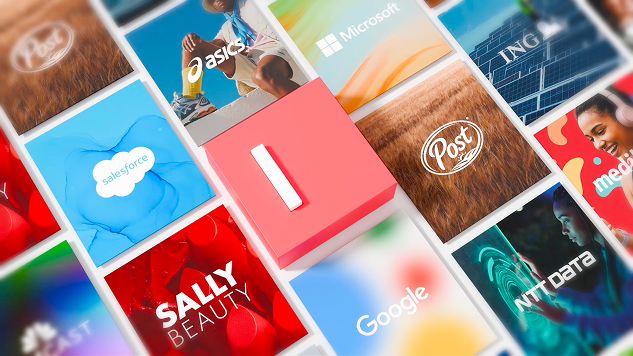
Named customers include ASICS, Marks & Spencer, Johnson Controls, and TradeStation. The full customer list spans retail, financial services, insurance, telecommunications, and consumer packaged goods - which tells you something about how the platform scales: it is not industry-specific. Any large organization that produces content at volume, and needs that content to stay on-brand across hundreds of variations, is a potential customer.
The Acquisition Strategy
In 2024, Typeface made four acquisitions. That number alone is notable - most startups at the growth stage pick one thing and build it. Typeface went shopping, and it went shopping with a specific list.
TensorTour (January 2024) brought deep machine learning capabilities for multimodal content - video, audio, and 3D specifically for eCommerce. Cypher (May 2024) added conversational AI and chatbot infrastructure. Treat (September 2024) contributed AI-generated personalized photo products - founded by former Drizly CTO Hugh Hunter and Matt Osman, with Greylock backing. Narrato (September 2024) was an Australian AI content creation and management platform backed by AirTree Ventures.
Read together, the acquisitions paint a picture of a platform deliberately filling in the missing pieces of a complete content supply chain. Text was already there. The acquisitions added video, 3D, conversational interfaces, and content workflow management. By the end of 2024, Typeface had most of the ingredients of a full-stack marketing production studio - not as a collection of features, but as a coherent set of agents working from the same brand graph.
The Partnership Stack
The strategic partnerships tell the same story as the investor list. Typeface is not trying to win by replacing existing enterprise infrastructure. It is trying to win by becoming the intelligence layer that sits on top of it.
The Salesforce partnership - announced alongside the Series B investment - means Typeface integrates directly with Salesforce Data Cloud, Marketing GPT, Agentforce, Slack, and Salesforce's digital asset management tools. For Salesforce customers, which include a substantial portion of the Fortune 500, that is not a plugin. It is a native workflow extension.
The Google Cloud partnership, expanded in April 2026 with Typeface joining the Google Cloud Marketplace, runs deeper than a distribution deal. Typeface uses Google's Veo 3 model for AI video generation - cinematic output from text or image prompts. The relationship also includes Gemini ecosystem integration and a joint architecture called Composable CX. When Google deepens a partnership like this, it signals that the company is solving a problem Google's own tools are not positioned to solve.
Cognizant joined in January 2026 as a systems integrator partner - the kind of relationship that matters when a Fortune 500 company needs not just the software but the deployment expertise and change management to actually use it. Getty Images came on in February 2026 to integrate licensed visual content directly into Arc workflows, closing a rights-management gap that had been a consistent friction point for enterprise content teams.
Revenue, Growth, and What It Means
~4.3x growth in approximately 18 months
Revenue grew from $8 million in 2023 to $34.3 million by mid-2025. That is roughly a 4x increase in eighteen months, at a company that was simultaneously making four acquisitions, building out a completely new product architecture, and expanding headcount to 247 people across five continents. The growth is happening, and it is happening while the product is getting more complex - which is either very good news or a sign of a company running hot. Given the Series C in October 2025, the investors appear to have an opinion.
Recognition
The Gartner recognition is the one that matters most in enterprise sales cycles. Getting named a Cool Vendor in the inaugural edition of Gartner's Generative AI for Marketing report means that procurement teams at Fortune 500 companies now have analyst coverage to point to. It reduces the "is this real" conversation significantly. The Adweek AI Company of the Year and the Webby Award say something different - that the creative and marketing community has taken notice too. Both matter for different reasons in different buying conversations.
Why This Company, Why Now
Every investor deck in enterprise AI says the same things: velocity, personalization, compliance, scale. The question is always: who actually builds something that all four of those things live inside at once, rather than trading one off against another?
The answer, for large companies, has been: nobody. Until recently. The reason Parasnis left Adobe is the same reason the company raised $65 million before it had a public product: people who understand what large organizations actually need - not prototypes, not demos, not promises, but governed workflows with real brand controls and real security - could see clearly that this problem was real, solvable, and extremely large.
The fact that Parasnis was at Adobe is not incidental. Adobe is the company that turned creative tools into enterprise software. It is the company that figured out how to sell to individual designers and to Fortune 500 procurement departments simultaneously. That experience, applied to the problem of AI-generated content, produces a different kind of product than what comes from a team that has only ever built for developers or only ever thought about marketing automation.
What Typeface is building is the infrastructure for enterprise brand intelligence in an age when content production happens at machine speed. The question of whether that infrastructure becomes the default layer - the way Salesforce became the default CRM or Adobe became the default creative suite - is still open. But the team, the funding, the partnerships, and the early results all point in the same direction.
The bet Parasnis made in 2022 - before the hype, before the funding wave, before everyone had a generative AI story - is paying out in a way that is harder to dismiss every quarter.