A takeaway order is a small event with an inconveniently large backstory. Someone is tired of cooking. Someone else has come round. It is Friday, or payday, or simply raining. By the time a researcher asks about it weeks later, the meal has vanished and much of the explanation has gone with it. A tick in a box can hardly be expected to bring dinner back.
Tugce Bulut kept running into that problem as a strategy consultant. Helping a food delivery business consider new countries, she needed information about markets such as Brazil. Even establishing how many takeaway restaurants existed could be difficult. The companies had expansion plans; the ordinary life on which those plans depended remained stubbornly hard to see.
Bulut, originally from Istanbul, moved to the UK in 2005 to study at Cambridge. Her academic interests centred on poverty alleviation and living standards. Business strategy later gave those interests a practical edge: decisions about where to invest depended on what companies could know about people far from their offices. Missing information had consequences beyond an untidy presentation.
She was also caught between two clocks. Consulting assignments could run for four or six weeks. Commissioned research might take six to eight weeks, sometimes twelve. By the time an answer arrived, the decision it was meant to inform could already be due. Then came the more irritating possibility: perhaps the research had asked the wrong question.
Multiple-choice surveys bothered her because the researcher had already supplied the possible answers. They were efficient at sorting responses into categories that existed before anyone spoke. Bulut wanted room for something unexpected. She argued that new growth required discovering things the business had yet to understand. There is a pleasing awkwardness in building a business around admitting that you need to listen.
“growth doesn't come from what you already know.”
Tugce Bulut / on asking better questions
Nine months without the machinery
Streetbees began in 2015, co-founded with Oliver May. Its eventual proposition involved a mobile app, machine learning and accounts from people's daily lives. Its earliest operating system was considerably less imposing. For roughly nine months, Bulut said, the team distributed work through WhatsApp and used Google tools to analyse what came back. There was no dashboard. The humans did the joining-up.
That sequence is worth pausing over. An enterprise customer could eventually buy the convenience of software; first, someone had to establish whether the underlying exchange made sense. Would people contribute useful observations? Would a business pay to understand them? A more elaborate interface would have made the experiment prettier without answering either question.
Her decision to leave consulting carried a rather immediate domestic calculation. Bulut later recalled moving out of her central London flat and staying with a friend for about four months to save money. She gave herself a year and a first-year revenue target of $200,000. Those were her chosen terms for continuing. Rent, unlike a pitch deck, prefers a number.
Her boss initially thought she was having a bad week. After hearing her out, he became an early investor. It is a useful little reversal: the person who might have persuaded her to stay helped her leave. The story also gives her leap a shape more precise than entrepreneurial courage. She had a deadline, a threshold and someone prepared to back the experiment.
Manual work before the technology: WhatsApp for distribution. Google tools for analysis.
Let the person finish the sentence
The Streetbees approach asked participants, known as bees, to share moments through text, photographs and video. The interesting material lay around the purchase as much as inside it: what was happening, who was present, why this choice made sense now. Natural language processing helped turn that untidy material into something a brand could use.
Bulut's earlier fieldwork mattered here. She described living in India for a year while doing research, getting close to people's routines through observation. Later, she framed Streetbees as an exchange with two sets of customers. Brands needed usable insight. Contributors needed an experience that fitted into their lives. Treating the second group as a convenient raw material would spoil the first group's purchase.
Payment was part of the arrangement. So was choice about what to share. Bulut argued that contributors should receive a portion of the value their information created and retain control over participation. It was a business model with an explicit transaction: tell us something about your world, understand the exchange, receive compensation. The person behind a data point was supposed to remain a participant.
In a 2022 conversation, she credited early customers with helping shape what the company could become. Businesses including Unilever, PepsiCo and IKEA were willing to experiment with the proposition. Technical colleagues then expanded her understanding of what could be built. Her account is less solitary than the usual founder portrait. Customers brought problems; researchers brought methods; the company grew through their conversation.
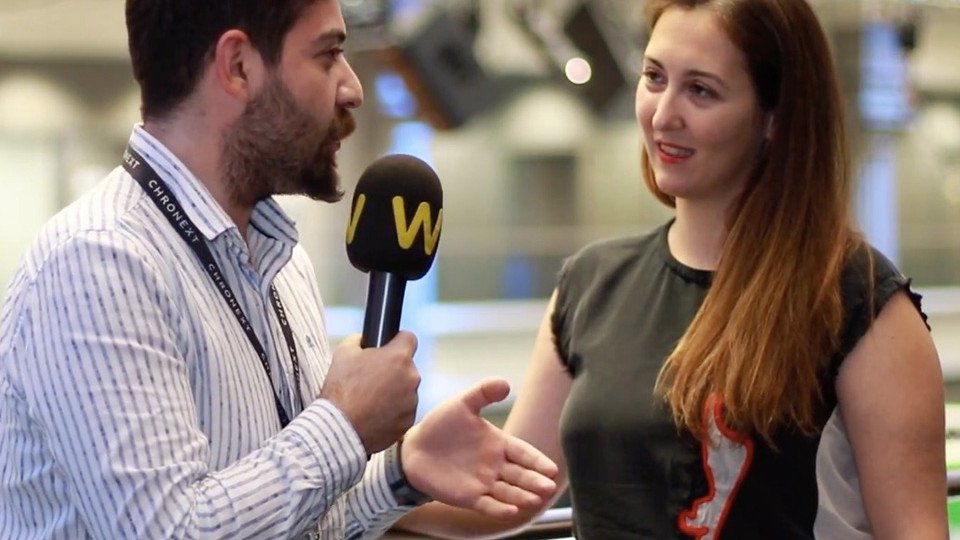
A very international hive
The work had to travel. By her 2021 account, Streetbees had operated in 40 markets within its first twelve months. Language was part of the engineering problem, rather than decoration applied at the end. Bulut explained that some analysis happened in the original language, including Arabic and Mandarin, because translating first could discard meaning that the system needed.
That is a more demanding ambition than collecting an impressive country count. A phrase that sounds straightforward in one language may carry another implication elsewhere. The business had to make people's accounts comparable enough to analyse while preserving the distinctions that made those accounts valuable. Standardisation could help the customer read the results and also erase the reason for gathering them.
The company attracted capital for that work. Its $12 million Series A in 2018 was led by Atomico, with Octopus Ventures and LocalGlobe participating. In January 2021, its community was reported at more than four million bees. The scale changed what the company could attempt. It also made the original question more difficult: how do you keep listening carefully when the conversation gets this large?
Bulut treated an international team as a practical requirement for understanding international customers. In her 2020 account, she pointed to her Turkish origins, British citizenship and an Australian co-founder. Diversity, in this setting, had a job to do. People expected to interpret everyday life in many places needed more than one cultural reference point of their own.
- 2015Streetbees begins
What is happening in people's lives? - 2023The founders depart
Bulut leaves Streetbees in September. - 2025Eloquent AI joins YC
How can software carry out the work?
Books, paint and the people beside her
Away from the operating model, there is a canvas. Bulut has described making art as a way to step away from work and concentrate on something creative. She also reads and gives books to friends, relatives and colleagues at Christmas. Two titles she has singled out are Ben Horowitz's The Hard Thing About Hard Things and Malcolm Gladwell's Blink. Her presents come with an invitation to compare thoughts.
That small habit suits a career spent trying to understand how other people arrive at their answers. A book is an unusually patient conversation starter. It can sit unopened for months without sending a follow-up email. When the conversation does happen, the recipient has had some time to think. For a founder whose business depends on useful responses, there are worse gifts.
She has also spoken about the value of visible women in technology leadership. The point was practical: seeing someone lead changes what younger women can imagine doing. Her own account of support included an old boss and her team, rather than a single distant idol. The people close enough to argue through a problem mattered as much as a name worth quoting.
Her advice about getting started was similarly unceremonious: “Don't solve a problem that doesn't need solving yet.” There would be new difficulties soon enough. That attitude fits the WhatsApp beginnings. She was willing to let a company look provisional while finding out whether it deserved a more permanent form.
September, then another beginning
On 6 September 2023, Bulut announced her last day at Streetbees. May was leaving too. Vidisha Gaglani and Sean O'Connell took over as chief executives. The handover closed eight years of building the company together. Bulut said she intended to continue working with generative AI. The Streetbees chapter had an ending; her interest in how technology mediates ordinary experience continued.
By 2025 she was building Eloquent AI with Aldo Lipani, a machine learning professor at University College London. The company joined Y Combinator's Spring 2025 batch, with Tom Blomfield as its primary partner. Her base had shifted to the San Francisco Bay Area. The next customer problem sat inside financial services, where staff move between systems to complete work that a conversation with a customer has set in motion.
Eloquent's proposed AI operator learns from procedures and people's actions, then navigates existing software to carry out tasks. The company describes uses including account requests and customer operations. Its emphasis is on completing a workflow. For a customer waiting for something to happen, an articulate explanation is only one part of the service. Someone, or something, still has to do the work.
The company announced a $7.4 million seed round in September 2025, led by Foundation Capital. In a March 2026 recruitment post, Bulut described a $10 million seed round and hiring across San Francisco and London. Those are dated company announcements. The latest chapter is still being written through products, customers and the people she persuades to join.
Her stated ambition now is to free people from repetitive operational work. There is a connection to the consultant who could not get the information she needed in time. Both businesses begin with the friction between a person's intention and the machinery meant to serve it. Bulut keeps returning to the activity in between: the dinner before the survey, the employee between screens, the explanation that an orderly box leaves out.