The quiet rebellion
The wealth-management business has a wonderfully polished way of hiding its plumbing. A client sees a mahogany table, a reassuring forecast and perhaps a pie chart. Behind it may sit commissions, proprietary funds, referral arrangements and an adviser paid to move whatever happens to be on the shelf. Scott Wood and Mark Gehlbach knew that machinery from the inside. In 2000, the two left traditional money-management firms and opened True North Advisors in Dallas around a blunt premise: advice should not depend on what the adviser is trying to sell.
That first move was not glamorous. The product-led model failed them before a portfolio did. They had watched clients receive recommendations constrained by inventory and incentives, so they chose an independent, asset-fee business designed to make the client the payer. The cost today is negotiated and can vary. The firm's regulatory brochure allows annual advisory fees of up to 1.5 percent, plus underlying costs for outside managers or private funds where applicable, and says it generally prefers new portfolios of at least $5 million. This is not mass-market robo-advice wearing cowboy boots.
It is closer to an outsourced financial headquarters for families whose money has become a coordination problem. The typical client might own a company, hold concentrated stock, be considering a sale, have trusts in several generations, support a foundation and employ three professional advisers who rarely speak to one another. True North puts planners, portfolio specialists and transaction advisers around the same table. The service is less "pick a fund" than "make the whole picture behave."
A family office with a loading dock
The conventional family-office promise is bespoke attention. True North adds something more industrial: an investment platform built to source, examine, package and monitor investments that a smaller adviser could struggle to reach. The firm says its team reviews more than 250 private and alternative opportunities each year, completes roughly 1,400 investment reviews and builds more than 100 tailored strategies. Those are company-reported operating figures, not a promise of performance, but they reveal the bet. Scale the research, not the relationship.
Its portfolio vocabulary is functional. Equities are expected to grow. Fixed income is meant to preserve capital and generate income. Diversifiers are intended to behave differently from stocks and bonds. Private investments accept illiquidity in pursuit of a different return stream. That sounds obvious, which is part of the appeal. A family can understand what each sleeve is hired to do before anyone debates a manager's cleverness.
The firm's differentiator grew from a second frustration. The alternatives market is enormous, but its menus can be awkward: famous funds with high minimums, niche managers that are difficult to diligence, subscription paperwork, late tax forms and allocations that look interesting by themselves but make little sense in a total portfolio. True North built an internal answer in 2011. That operation became Western Alternative Strategies.
The clever part was not finding one secret fund. It was turning repeated due diligence into a reusable product.Western's platform logic, in one sentence
Western pools access to private equity, private credit, real assets, hedge funds, equity hedging and multi-strategy investments. The structure can lower minimums and consolidate administration. Founders, shareholders and clients invest alongside one another in the strategies, the firm says, while consulting staff help fit each sleeve into the investor's existing portfolio. In March 2026, Western placed its Tail Risk and Multi-Strategy limited-partnership solutions on the iCapital Marketplace, a significant step from internal toolkit to distribution business.
The check they finally took
For 24 years, True North stayed founder-led without institutional outside capital. What changed their minds was not sudden affection for private equity. It was a specific growth problem: adding capabilities and geography through acquisitions without surrendering day-to-day control. In January 2024, Wealth Partners Capital Group and HGGC bought a minority stake for an undisclosed amount. True North's management remained the majority owner and kept operational authority. WPCG brought an acquisition machine; HGGC brought capital and experience building financial businesses.
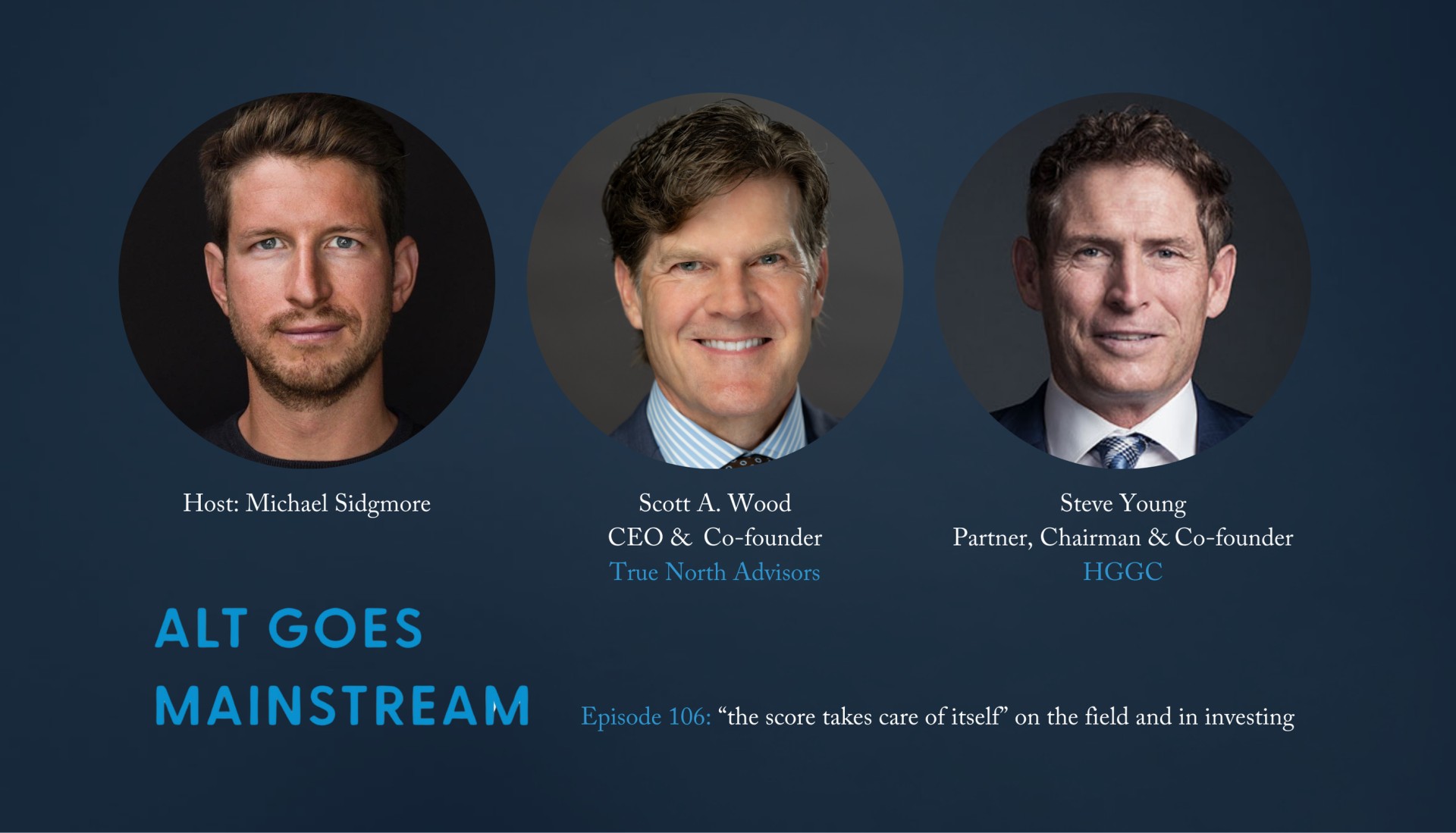
The governance detail matters. Wood and Gehlbach had spent a career arguing that incentives shape advice. Selling control to the highest bidder would have made for a rather short philosophy. Instead, they described the deal as a cultural match, with the relationship defined before the transaction. On a podcast with HGGC co-founder and former NFL quarterback Steve Young, Wood returned repeatedly to long horizons - "decading" - and the Bill Walsh maxim that the score takes care of itself.
Then came the acquisitions. True North bought Clear Rock Advisors in September 2024, adding $470 million in assets and offices in Austin and Kerrville. In June 2025 it acquired Blue Investment Partners, a $353 million firm in Danville, California, with ties to the New York metro area. In both cases, the acquired advisers stayed in front of their clients. That continuity is not a decorative detail. In wealth management, the human being is usually the switching cost.
What the customer is really buying
True North's stated mission is "Fulfilling Lives," language that risks floating off into the scented-candle aisle. Its practical interpretation is better: understand the life before optimizing the balance sheet. For a business owner, that can mean improving company value years before a sale, reducing dependence on the founder, coordinating tax and estate work, running the transaction and designing a next chapter before the congratulations wear off. For a family, it can mean governance, philanthropy, education and a plan for transferring both money and judgment.
The company also advises foundations, endowments, nonprofits and other institutions on investment policy, allocation, manager selection and portfolio review. Here, its private-client and institutional sides reinforce each other. The family office gets a research bench built with institutional habits; the institution gets a team accustomed to explaining complexity to people who did not spend their twenties memorizing basis points.
Culture is part of the delivery system. True North's Dallas office uses an open plan intended to break down adviser silos. The firm has promoted from within and appeared repeatedly on workplace lists, including a number-one medium-company finish in a 2023 Dallas Business Journal employee survey. Awards should never be confused with investment results. Still, in a relationship business, retaining people is not a soft metric. It is how a client avoids retelling the family story every eighteen months.
The practical customer journey begins before the portfolio. Advisers inventory the family, entities, liabilities, tax exposures, concentrated positions and decisions already in motion. A plan sets priorities; an investment policy turns those priorities into constraints; the portfolio team decides which risks are worth owning. Reviews then connect market changes back to the plan instead of treating every squiggle on a chart as a fresh emergency. Around a company sale, the sequence gets more demanding. The transaction team can work on owner readiness and value creation before an investment banker arrives, coordinate the advisers during the deal and plan liquidity after it closes. That order is easy to copy even without a family office: write the life objective first, assign every asset a job, list conflicts in plain English and decide in advance what would force a change. The expensive mistake is starting with a product and inventing the reason later.
Where the compass stops helping
The model does not work for everyone. A household with straightforward finances may be better served by low-cost index funds and hourly planning. Private investments can be illiquid, opaque and expensive; qualified investors must tolerate long lockups and possible loss. Asset-based fees compound into meaningful dollars, and a beautifully coordinated plan cannot guarantee returns. The approach works best when complexity is real, the relationship is long, the client values delegation and the after-tax benefit of coordination has a fighting chance to exceed the full cost.
The market position
True North sits between a local adviser and a national private bank. It competes with Dallas family offices such as Tolleson, expanding firms such as Cresset and Pathstone, and the private-wealth arms of J.P. Morgan, Goldman Sachs and Northern Trust. Its pitch is founder-led independence with enough scale to do institutional work, plus an alternatives factory it controls. The obvious risk is that acquisition-fueled growth creates the bureaucracy clients hired an independent firm to escape.
That makes the next chapter more interesting than the origin story. Getting from two founders to $5.86 billion proved that objectivity, teams and private-market access could form a business. Getting larger without turning "Fulfilling Lives" into hold music will prove whether the business is an institution. True North has its compass. Now it has to keep the needle steady while the map expands.