At five or six, Tristan Pineiro was handed the wrong cast. Action Man could march into battle, flex a rigid elbow and meet a heroic end, but the plot kept arriving at the same gloomy destination. Pineiro preferred the living. His grandmother Joan introduced a brunette Sindy ballerina, and suddenly the possibilities widened: clothes, rooms, friendships, occupations, small social dramas. Decades later, that ballerina still presides over a collection that has numbered in the hundreds. She is also a neat clue to the career her owner built. Long before Pineiro became Grindr's chief marketing officer, he was fascinated by how characters inhabit a world - and why anyone else might care to look inside.
The collection eventually became an apartment block assembled from cardboard and old shelves. Its residents might gather at a disco, appear in a salon or become entangled in some mischievous tableau. Pineiro learned to restore tired dolls and reroot their hair. The hobby has the affectionate precision of a model railway with better shoes. It is play, but it is also editing: choose the cast, set the scene, adjust the details, tell enough of a story that the viewer supplies the rest.
Imagination
Community
Craft
Attention
Behavior
Belonging
An island, an exit, a room with a beat
Pineiro grew up on Menorca, the Mediterranean island whose modest scale makes everybody's expectations feel close at hand. His father was a self-made chef who ran a restaurant. The assumed route for his son was local and legible: stay, enter the business, continue what had been built. Pineiro rebelled. At 14, helped by his English mother's family ties, he moved to Britain. The departure was both geographic and imaginative. It replaced one expected script with the unfinished business of writing his own.
At the University of Manchester, from 1992 to 1996, he studied linguistics with languages and French drama. Outside class, he promoted underground queer club nights in the city he jokingly called “Gay-chester.” This was audience development before the dashboards arrived. A promoter had to know the crowd, the codes and the promise of the night. Get the tone wrong and nobody came. Get it right and strangers made a community for a few charged hours.
A friend watched him doing this work and suggested he continue in public relations. Pineiro did not yet have a grand theory of PR; he had already been practicing it. The observation turned a talent into a vocation. His education in language had taught him that words carry identity. Nightlife taught him that culture cannot be reduced to vocabulary. A phrase may open the door, but only an earned feeling of belonging keeps the room alive.
“It's storytelling.”Tristan Pineiro, on the miniature worlds he builds
The shop that changed everything but the clothes
There was another early lesson, delivered by retail theatre. As a teenager, Pineiro worked in a fashion shop that was struggling. It closed for a refurbishment, then reopened with a new appearance and name. The clothes were essentially the same, only relabeled. Customers now formed a line around the block. Nothing about the fabric explained the transformation. Perception had changed first, and behavior followed.
A lesser marketer might take from this only the seductive power of packaging. Pineiro's later work suggests a more demanding reading. A new label can make a first impression, but a community will quickly notice whether the substance honors the promise. He is wary of proposals that treat queer culture as an easy kit of rainbows, sparkles and borrowed slang. Fluency comes from proximity and listening. The clever sign above the shop earns a visit. Respect earns a return.
His first major institutional chapter was at Age Concern UK, where he led communications and worked against ageism. The experience placed him alongside a community routinely described by others and showed how prejudice can hide in casual language. Agency roles followed at Grayling and Zeno. There, he worked on narrative-led campaigns for brands including British Airways, Microsoft, Diageo and Hilton. Agency life also taught him what a good client owes a creative partner: context, trust and access to the untidy internal process behind the polished brief.
Learning to compete with the next swipe
Netflix brought Pineiro to Los Angeles and moved content to the center of his marketing philosophy. Screens had multiplied; attention had splintered. A message now had milliseconds to create curiosity before a thumb or remote control dismissed it. The answer, in his view, was not to shout more loudly. It was to make something interesting enough to produce a feeling, then allow the rational message to land inside that opening.
At Badoo, part of Bumble, the material became more explicitly human. Dating invited questions of psychology and sociology: how people present themselves, what they hope to find, what makes a connection feel honest. Pineiro spent nearly three years leading communications and global brand marketing there. The category offered a near-infinite supply of stories because its product was never only an interface. It was anticipation, awkwardness, self-presentation, rejection, chemistry and the occasional excellent anecdote.
He moved to King in 2022 as senior director of brand communications, working on Candy Crush. The assignment looked different - sweets instead of dates - but the central question survived. How do you refresh cultural affection for something familiar? A durable game lives by ritual and play. Pineiro, who still watches doll-customization videos and believes nobody is too old to play, was hardly visiting foreign territory.
A global brief with a neighborhood test
Pineiro joined Grindr in 2023 as vice president of brand and communications. He became senior vice president in 2024 and chief marketing officer in January 2026. The promotion formalized work he had already been doing: joining brand, communications, content and experience into an operation that could move at the pace of culture. Grindr described the shift as turning marketing into a growth lever. Pineiro described the title change more calmly, as recognition for a team already affecting the business.
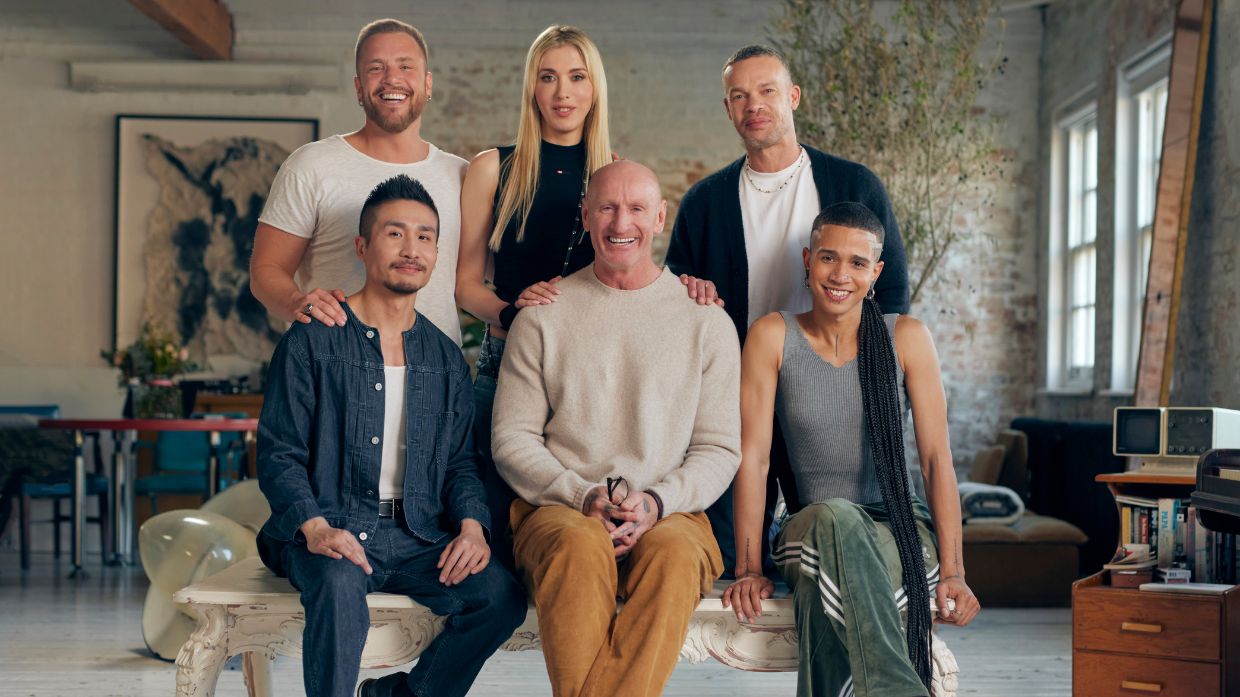
The organizing idea is the “Global Gayborhood,” a phrase meant to enlarge how people understand the app. A gayborhood is neither a broadcast tower nor a glossy demographic. It is a living network of conversation, culture, commerce, advice, flirtation and recognition. Treating it as a neighborhood gives the marketing a useful test: does this contribution feel as if it belongs here, and does it give residents something worth sharing?
That logic runs through Grindr Presents, an in-app content hub, and through projects made to travel outside the app. The Rainbow Wool collaboration turned fleece from rescued gay rams into a New York fashion presentation. The premise was funny enough to invite attention and precise enough to carry a message about homosexuality in nature without a lecture. In 2026, a Madonna partnership around Confessions II brought limited-edition vinyl, in-app moments, merchandise and original conversation into one cultural event. Different executions, same editorial instinct: begin with a story the community will recognize as its own.
“The internet moves fast, but the gay internet is driving.”Tristan Pineiro
The line is witty, but it also states his strategic premise. Pineiro does not regard queer audiences as a niche waiting for mainstream culture to arrive. He sees a community producing language, taste and behavior that the mainstream often adopts later. Marketing to that community therefore requires more than representation in the final image. It requires people close enough to the culture to know when a joke is alive, when a phrase has expired and when a serious moment deserves restraint.
The collector's eye
His doll collection makes the philosophy tangible. Pineiro has hunted through flea markets, car-boot sales and online listings; restored battered finds; collected celebrity editions; and once shipped the whole population to Los Angeles. He has arranged dinners and domestic scenes. The practice is nostalgic - his grandmother taught him to sew and remains attached to his first Sindy - but it is not frozen in nostalgia. He keeps altering the world.
Collectors are often caricatured as people who prevent objects from changing. Pineiro's version is active. A worn doll gets new hair. A shelf becomes architecture. A childhood object enters an adult joke. The pleasure comes from preservation and revision working together. That balance also describes the marketing challenge around an established platform: protect what makes it recognizable while allowing new uses and stories to emerge.
Pineiro's career appears eclectic on a résumé: a charity, agencies, streaming television, dating, mobile games, a social platform. Read as a story about rooms, it is unusually consistent. He has moved from a Mediterranean restaurant he chose not to inherit, to Manchester clubs he helped fill, to the agency “sausage factory,” to screens fighting for a second of attention, to a digital neighborhood operating across borders. Each room asks who is present, what they value and whether the host has done the work.
The miniature apartment block offers the closing image. Somewhere inside, the brunette ballerina remains queen. Around her, characters change clothes, occupations and positions; odd events unfold; the set is rebuilt. Pineiro's gift is less about inventing people than noticing how they already live, then framing a scene that lets them recognize themselves. The dolls taught him to prefer life over the inevitable battle. Marketing, at its most observant, makes the same choice.