The refinery’s heater kept shutting itself down. Operators increased the firing rate; the safety system intervened. One instrument suggested there was plenty of oxygen. A portable analyzer, brought in by TRC Companies for a routine compliance tune-up, told a different story. Oxygen was dangerously low. The discrepancy led maintenance staff to a probe damaged earlier that day. They replaced it, calibrated it, and resolved the problem.
There is a useful introduction to TRC in that small disagreement between two instruments. Infrastructure depends on people who can move between a measurement, a machine and a regulatory requirement. TRC sells that ability, across settings considerably larger than a refinery heater.
- It connects disciplines: environmental science, power engineering, construction and utility technology.
- It stays after installation: services include running and maintaining utility data systems.
- It has a new owner: WSP completed its acquisition of TRC on February 24, 2026.
A weather company learns to read the ground
Incorporated in Connecticut in 1969 as The Research Corporation of New England, TRC began with meteorology and air-quality analysis. Its corporate history traces its lineage to Travelers Insurance. Weather, pollution and financial exposure were connected problems long before anyone put them on a sustainability dashboard.
That background helps explain the present business. TRC works for utilities, industrial operators, developers and public agencies. Its services cover air testing, permitting, environmental remediation, transmission and distribution engineering, transportation infrastructure and digital systems. Customers hire it when a physical asset needs scientific evidence, engineering judgment and permission to proceed.
The company describes an entrepreneurial culture. Its leadership page says Christopher Vincze joined in 2005 to lead turnaround, integration and rebuilding efforts. That is a revealing job description for a business assembled around so many specialties: the technical work needs people who can make those specialties cooperate.
Nine acres. A century of complications.
Consider the former Con Edison generating property on Manhattan’s waterfront. Nine acres of valuable land came with an industrial biography: manufactured gas, coal-fired generation, then oil and natural gas. Changing its use required an encounter with everything earlier owners had left behind.
TRC served as prime contractor for demolition, environmental work and project management. The inventory included three 200-foot smokestacks, six eight-story boilers, a 255,000-gallon underground oil tank and 20,000 tons of contaminated soil. There were also twelve-foot cooling-water tunnels to seal beside the East River. A redevelopment drawing could fit on a conference table. Its prerequisites occupied a neighborhood.
TRC reports that the resulting redevelopment includes a school and mixed residential and commercial uses. Its RE POWER program brings planning, decommissioning and site reuse into one assignment. The appeal is practical: an owner can address the relationship between today’s liabilities and tomorrow’s land value.
Who carries the surprise?
Environmental cleanup presents an awkward purchasing problem. The buyer wants a budget before excavation reveals the full problem. TRC’s guaranteed fixed-price remediation program, offered since 1996, uses site investigation, risk modeling, contracts and site-specific insurance to structure a defined cleanup obligation.
This is a different commercial proposition from simply supplying advice. TRC says it shares the financial outcome when remediation goes smoothly and when complications arise. Its wider business combines professional services, construction and program management, software and ongoing managed services. The contract determines which responsibilities the customer retains.
A cleanup budget is also a decision about who carries the surprise.YesPress analysis
The useful lesson for buyers is to define the outcome and its boundaries together. A fixed price needs an agreed scope. A site’s uncertain history, changing requirements or poorly characterized contamination makes that negotiation consequential. Transferring risk requires someone to understand it first.
The meter is only the beginning

At Snohomish County Public Utility District in Washington, the challenge was information. Its Connect Up advanced metering program needed a data-management system that could grow without loading another specialized technology stack onto internal staff.
TRC implemented Siemens’ Gridscale X meter data management software as a cloud-based managed service. Its assignment covered integration, configuration, testing and commissioning, followed by maintenance, upgrades and monitoring. The utility’s enterprise architect, Marc Rosson, put the staffing logic plainly: “A managed service cloud checked all those boxes.”
Meter readings02 / MANAGE
Cloud MDMS03 / APPLY
Utility operations
For a utility buyer, this distinction matters. Procuring software and operating it are separate responsibilities. TRC’s offer joins them. The approach makes sense when a customer wants outside implementation expertise and continuing support; it demands clear expectations about data access, security and service responsibilities.
Maps for people with work to do
Lemur, TRC’s mobile mapping product, tackles another ordinary complication: field crews lose connectivity. It brings enterprise geographic information into field workflows, including asset lookup, redlining and recording completed work, with offline operation and later synchronization. Esri lists it as a configurable platform for non-GIS specialists.
The attraction is familiarity with the job around the software. A maintenance crew needs to find the correct asset and document a repair. Useful mapping must fit that sequence. Software alone cannot correct every defective asset record or decide how an organization should govern its data.
The $3.3 billion connection
WSP announced a US$3.3 billion cash purchase price for TRC in December 2025 and completed the acquisition the following February. Approximately 8,000 TRC professionals joined the group. The ownership sequence had already included New Mountain Capital’s 2017 take-private and Warburg Pincus’s 2021 investment.
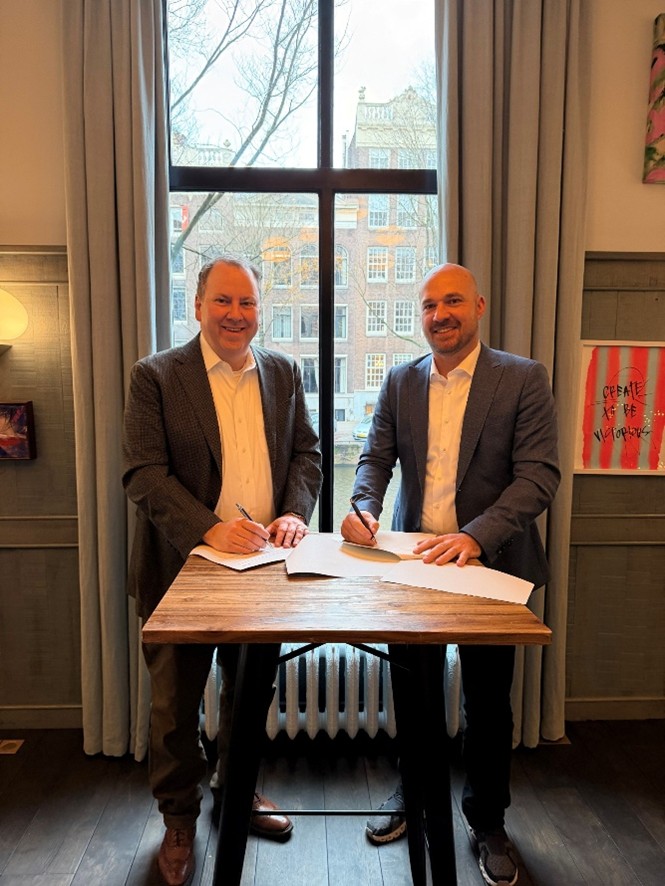
In March 2026, TRC also announced an implementation partnership with IPS covering utility software across North America and EMEA. The agreement extends work in asset performance, network models and outage management. Its May announcement reported seventeenth place in ENR’s Top 500 Design Firms.
AECOM and other multidisciplinary consultancies offer overlapping environmental and engineering services. TRC’s pitch rests on the particular connection between field science, power assets and the systems used to operate them. The refinery probe is the small version of that argument: a reading becomes useful when somebody knows what to do next.