A passenger entering the Riyadh Metro sees a station. An engineer sees interfaces: between trains and signals, tunnels and utilities, contractors and the city above them. The passenger needs none of this explained. The train simply has to arrive. Somewhere between those two perspectives sits Parsons Corporation.
- Parsons sells engineering, software, and the work of connecting them.
- Its customers run transport networks, defense missions, and difficult cleanup projects.
- Its advantage is coordination; its financial setbacks show coordination has limits.
Riyadh is a useful introduction because the scale invites a mistake. The metro cost $27 billion. Parsons did not pocket that sum or build the whole thing. Its joint venture with Egis and SYSTRA provided project and construction management for two contracts covering three of the network’s six lines. The distinction is the business.
The station is the easy part to see
Parsons helps owners turn separate technical packages into something people can use. On a metro, that means coordinating civil engineering, electrical systems, construction schedules, traffic diversions, and commissioning. In a defense program, the ingredients change to sensors, data, software, and command systems. The recurring problem is getting the parts to agree.

The company describes two financial segments: Critical Infrastructure and Federal Solutions. Their offerings stretch from water engineering and environmental remediation to cyber operations, intelligence, space, and missile defense. That range can look like a corporate junk drawer until you consider the buyer: an institution responsible for an expensive system that cannot be allowed to misbehave.
Transportation departments, transit agencies, water authorities, and defense organizations buy different combinations of that expertise. In October 2026, Parsons described work ranging from BART train-control modernization to Danish railway signaling. These are assignments where replacing equipment is only one part of the job. Maintaining service while changing the system is another.
“Success is measured in operations.”Mark Fialkowski, Parsons infrastructure president · October 2026
A road network with a software layer
For something more tangible than “integration,” consider iNET. Parsons’ traffic management platform brings information from road equipment and operational systems into a common environment. Cameras, vehicle detection, message signs, traffic signals, and incident tools become things an operator can monitor and coordinate. The product sits between the road and the person trying to keep it moving.
In July 2026, New York’s transportation department awarded Parsons a $33 million contract for a statewide iNET deployment. The scope included design, development, integration, testing, operations, and maintenance. This is how the company earns its keep: proprietary technology travels with the services needed to make it useful in a particular customer’s environment.
There are software licenses and SaaS arrangements, too. Parsons’ Texas procurement offering explicitly includes implementation, configuration, project management, business analysis, and technical support. For a transport agency, the practical question is therefore bigger than which software to buy. It is who will connect it to the existing network and remain responsible after installation.
Microsoft is part of that picture. A strategic partnership announced in 2023 combines Azure cloud and AI capabilities with Parsons’ infrastructure and security experience. Competitors bring substantial capabilities of their own: AECOM, Jacobs, and WSP in infrastructure; Leidos, CACI, and Booz Allen Hamilton in federal services. Parsons’ proposition is the breadth it can assemble around an assignment, rather than ownership of every component.
Buying the people behind the technology
The origin story is pleasingly modest. Ralph M. Parsons started the firm in Los Angeles in 1944 with eight people: six engineers, an administrative assistant, and himself. He intended it to stay small. The company’s own anniversary account credits the hiring of capable people with upsetting that plan.
Today, buying specialist teams is part of the method. In January 2026, Parsons acquired Altamira for $330 million in cash at closing, with another $45 million contingent on performance. Altamira brought analytics, signals intelligence, cyber, missile-warning, and space expertise. More than 90 percent of its 600-plus employees held security clearances. Some capabilities cannot be reproduced by installing another software package.
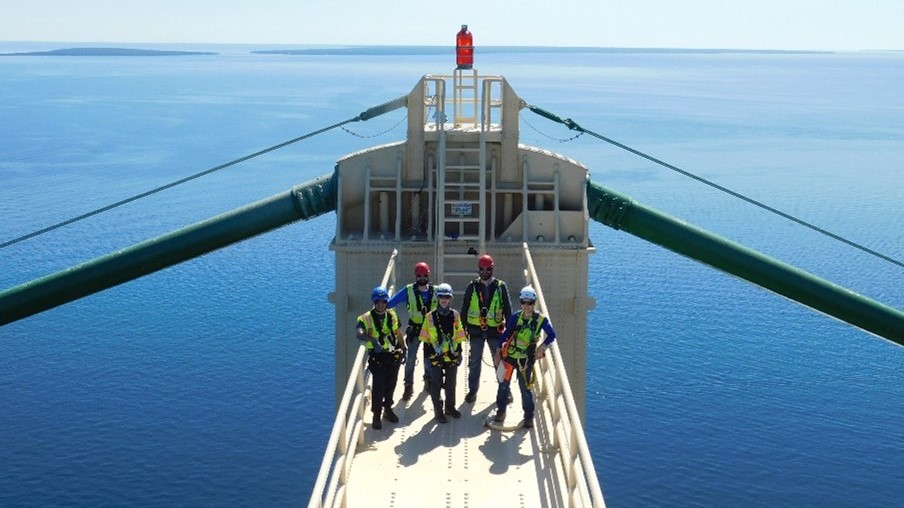
That dependence on people also explains the less glamorous cultural machinery: internships, employee recognition, a military-transition program, and internal career opportunities. Flexible working is offered where the assignment permits it. A cleared mission or a bridge inspection sets its own boundaries. The culture described by the company puts safety and technical quality alongside innovation.
Environmental cleanup offers another example of the mix. In October 2026, Parsons announced completion of a PFAS soil-remediation prototype with federal technology programs and receipt of a Defense Innovation Unit Success Memo. The company said that milestone permits buyers to pursue follow-on production contracts without another competition. Here, a treatment process and a route through procurement reinforce each other. For a site owner, the relevant questions still include the contaminants present, the treatment target, site conditions, and how the result will be verified.
The bill for getting it wrong
The complications become clearer in the accounts. Parsons reported approximately $6.4 billion in 2025 revenue, down 6 percent. Excluding a confidential contract, revenue grew 12 percent. Earlier, management had explained that reduced volume on that contract followed a pause in related work performed by others. A dependency outside Parsons’ own assignment had become its revenue problem.
Total company revenue
Excluding the confidential contract
Reported growth rates compare 2025 with 2024. The second measure excludes a contract; it does not replace the total.
Then came a different warning. Second-quarter 2026 results included $118 million in charges related to programs marked for divestiture and a joint venture. The joint venture project had been affected by historic rainfall and delays. Parsons reduced annual guidance and emphasized tighter bidding discipline. Demand for the company’s work had not removed the risk of executing it.
Start with the handoffs
The lesson worth borrowing is to map dependencies before celebrating capabilities. Ask who owns each interface, how the finished system will be tested, and what happens when an adjacent program stops. Parsons’ experience suggests that integration needs both technical competence and commercial boundaries. Neither automatically supplies the other.
For buyers, the fit is strongest when software, engineering, field delivery, and institutional requirements overlap. A straightforward standalone tool may need far less machinery. A metro that must keep running during modernization needs considerably more. Parsons occupies that crowded space between the drawing, the contract, and the operating system - where an impressive collection of parts finally has to become useful.