The offending number arrived at the end. It had survived the model, the analysts, the meetings and the spreadsheet tabs. Then somebody looked at it and felt uneasy. A little high, perhaps. A little low. With a final human nudge, a sophisticated forecast became an expensive hunch wearing a tie. Tony Nash watched this happen often enough at global forecasting firms that the nuisance turned into a company.
Nash had built and led the global research business for The Economist and later led Asia consulting for IHS, now part of S&P Global. He had worked with hundreds of multinational companies. Their budgeting and forecasting rituals could be long, costly and intensely manual. The calculations were complex; the final edit could be strangely casual. His objection was less philosophical than operational: why assemble all that machinery if the answer could still be moved by mood?
“Why have a complex forecasting model if you're just going to manually change it at the end?”Tony Nash
Complete Intelligence grew from that question. Nash founded the business in Singapore in 2014, initially as a consultancy. Client work paid the bills and, more importantly, exposed the actual habits of finance teams, supply-chain leaders and market professionals. The software came later. Its aim was to generate a data-driven baseline, measure error and make the route to a result inspectable, keeping human judgment in the room while preventing it from sneaking through a side door and pretending to be mathematics.
The Nash operating thesis
His first model was the world
The oddity in Nash's AI-founder story is how little of it began in AI. He studied business management at Texas A&M. His first career was in global logistics, where cost is never merely cost. A shipment carries fuel prices, labor, currency, customs rules, timing, politics and the occasional surprise at a border. At 24, an overseas assignment took him to Amsterdam. London and Florence followed, along with work involving North Africa, the Middle East and Eastern Europe.
Logistics taught him that a number is a system in miniature. A price contains a route; a route contains policy; policy contains people. He moved into media in Silicon Valley, then went to the Fletcher School of Law and Diplomacy at Tufts for a master's degree in international relations. Nash describes his formal training as the study of information, power politics and power dynamics rather than programming. On one podcast, he compressed the distinction into a joke: “I was trained to be a diplomat, although I'm not very diplomatic at the moment. I have my moments.”
A career built in layers, not lanes
Each move added another variable: trade, infrastructure, geopolitics, research, consulting, then software.
In 2003 he moved to Singapore to help turn around a privately funded telecom company. Three years later came a new telecom venture in Sri Lanka during the country's civil war. The company was sold after two years. Then came The Economist and IHS. Through it all, Nash kept accumulating views of the same puzzle: how information travels through institutions, and what happens to decisions when incentives meet uncertainty.
The launch with comic timing
Complete Intelligence's consulting years let Nash refine the problem before turning it into a product. The first release, now known as CI Markets, launched in December 2019. Nash has called the timing “absolutely terrible.” History, with its taste for slapstick, had placed a market-forecasting debut immediately before a period when nearly every tidy assumption about trade, work and demand was about to be revised.
Yet the awkward date also clarified the company's premise. Forecasts are not marble tablets. They are working estimates with tolerances, refreshed as evidence changes. Complete Intelligence expanded into tools for market assets, corporate budgeting and financial review. Its current product family includes CI Markets, BudgetFlow and AuditFlow. The company says its platform validates data, flags anomalies, generates forecasts and gives users the reasoning needed to review them.
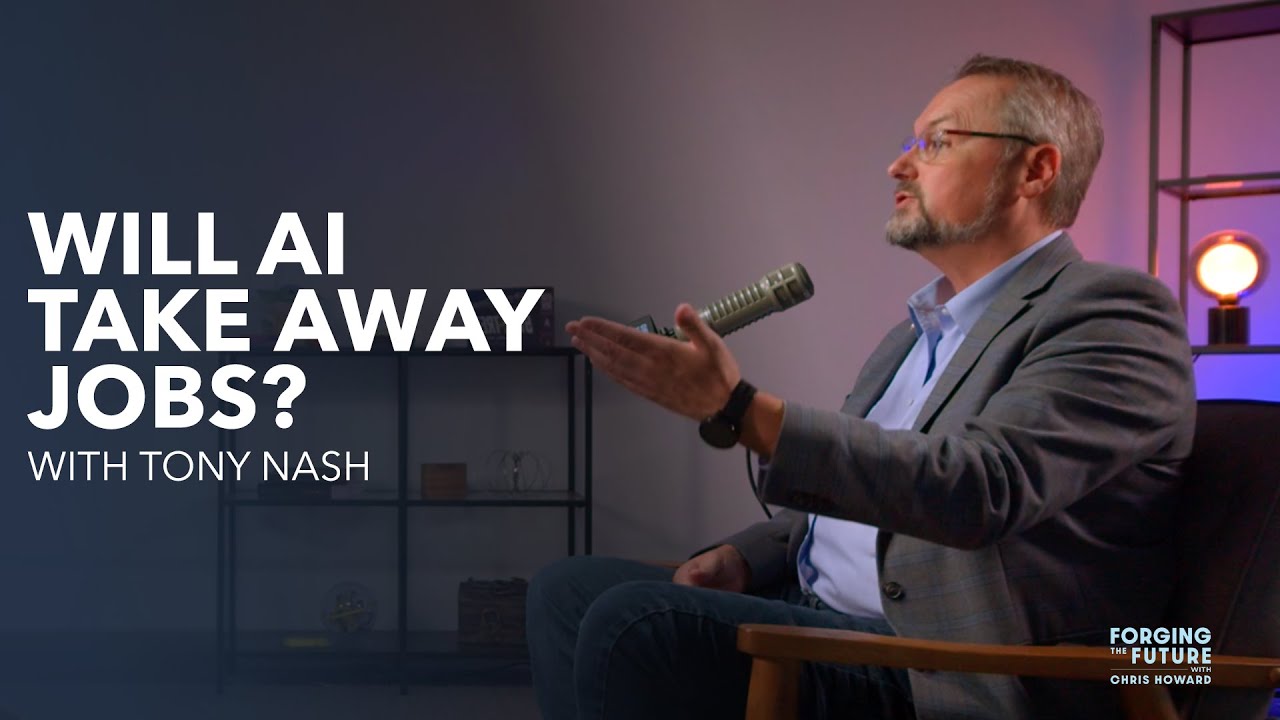
Nash's language around AI is notably practical. He has said he did not set out to create an artificial-intelligence company. He started with “the idea that the world is a number problem,” one that could be approached within tolerances. In interviews he draws a line between automation and autonomy. Today's systems can absorb repetitive analytical work, but the expert remains responsible for interpretation. For finance employees, that means less time preparing data or sitting through budget meetings and more time investigating the exception that deserves attention.
“I think humans don't like change, right? And AI can be rapid change.”Tony Nash
This is not techno-utopian romance. Nash talks about adoption as a change-management problem. People need to understand which parts of their work will move and where their expertise becomes more valuable. He has also raised concerns about the personal data gathered by consumer AI tools. His enthusiasm comes with a ledger: capability on one side, consequence on the other.
A founder who likes the error bar
Forecasting tempts people into performance. The forecaster is invited to sound certain, the audience is invited to forget uncertainty, and everyone reconvenes later to explain why the world misbehaved. Nash prefers the error rate. Complete Intelligence publicly emphasizes forecast accuracy and continuous reforecasting. More revealing is his description of development as iterative: establish a baseline, inspect what comes out, refine the process, and discard approaches that fail. Humility, in this setting, is less a personality virtue than a technical requirement.
That does not mean Nash lacks opinions. His media work ranges across tariffs, currencies, commodities, China, supply chains and central-bank policy. His years outside the United States give those conversations a lived geography. He spent much of his twenties in Europe and a long stretch of adulthood in Asia. He saw Singapore after SARS and through the global financial crisis before returning to Texas and bringing Complete Intelligence with him.
The international career also widened his civic interests. Nash has served on Texas A&M's international advisory board and as a non-executive director of Kredit Microfinance Bank in Cambodia. In 2013, he joined a three-person climb of Mount Kinabalu in Malaysia that raised S$8,000 for the Sailors' Society. His explanation of service is characteristically grounded: people do not need an exotic journey to find need; they can begin in their own town.
Then there is the coffee. On social media, Nash identifies himself not only with Complete Intelligence and geopolitics but as a coffee roaster. It fits the pattern rather neatly. Beans, like forecasts, respond to origin, temperature, timing and the person making the final adjustment. He promotes Nerd Roaster, a side identity that makes “Tony Nash Nerd” feel less like a handle than a small operating system.
Clarity before scale
Asked for advice to entrepreneurs, Nash does not begin with fundraising or personal brand. He begins with vision. “Have a clear understanding of your vision before you start,” he has said. The business will change, but without that fixed point the product loses focus and market fit becomes elusive. He applies similar plainness to hiring. A persistent difficulty in building Complete Intelligence, he has said, was finding people who were capable, enthusiastic and committed to the reality of startup life.
The advice reflects the company's own long apprenticeship. Consulting first. Product later. Pilot projects before scale. The path is unglamorous and legible, which may be the point. Nash wants Complete Intelligence to automate budgeting and forecasting for finance teams across large organizations. But his case for growth begins with a narrow irritation that he understands deeply: the gap between the model on the screen and the thumb on the scale.
Houston is an apt home for the work. Energy, logistics, manufacturing and finance collide there every day, each exposed to prices that refuse to sit still. Nash has joked about surviving the Texas summer by telling himself only two weeks remain, immediately adding that it is not true. The line is funny because it is a forecast, a coping mechanism and a confession in eleven words.
That may be a fitting summary of his project. People will always have a preferred number. They will always want the heat to break sooner, the revenue to arrive faster or the input cost to behave itself. Nash wants to label that wish, separate it from the baseline and show the work. In corporate forecasting, honesty may begin with the modest admission that a number can be useful without becoming personal.