In 2016, Tommy Jenkins was not talking about attackers, identities or cloud workloads. He was talking about a different kind of noise: marketing numbers that looked impressive and explained very little. As director of global demand generation at the network-performance company SevOne, Jenkins wanted account-based marketing to answer questions that could survive a meeting with the finance team. Was the investment improving conversion? Were deals moving faster? Which channels deserved another dollar?
His shortest version was also his clearest: “I want to know what works and what doesn’t.” It is a sentence with no ornamental foliage. It also turns out to be a useful key to his career. Jenkins has spent more than two decades moving through the machinery of technology companies, from project management and sales development to lead management, ecommerce, global campaigns and the C-suite. The nouns changed. The test did not.
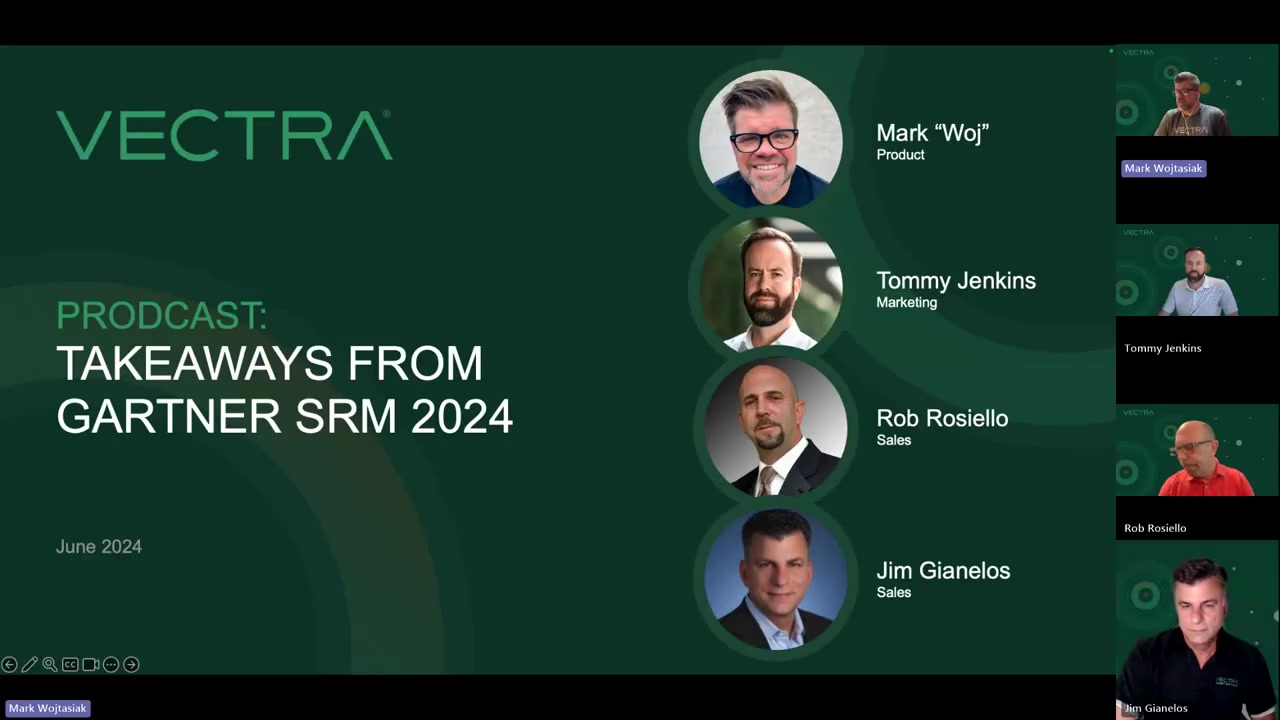
Today he is chief marketing officer at Vectra AI, a cybersecurity company that uses artificial intelligence to help security teams identify which activity is a real attack. The symmetry is almost suspiciously neat. A marketer who learned to separate revenue signal from vanity metrics now markets technology designed to separate threat signal from alert noise.
Learning the machinery before narrating it
Jenkins graduated from Wake Forest University in 1999 with a communications degree. His early documented work includes project management at SpectraSite, the wireless-infrastructure business. By 2010 he was at Red Hat, where his job titles formed a compact education in how enterprise software reaches a customer: manager of sales development and lead management, senior manager of global lead management, acting head of global marketing operations, and later director of digital optimization and ecommerce.
Nearly a decade at one company, interrupted by a spell at SevOne, gave him something more durable than a tidy ascent. It gave him a view of the handoffs. A lead moves from campaign to sales development. A regional process meets a global one. A website visit becomes a commercial conversation, or does not. Every handoff creates both information and the opportunity to lose it.
Former Red Hat colleagues remember a manager who was pragmatic and positive, could handle difficult internal and external customers, and could bring people around to an idea even when they began on different pages. One remembered his humor and stories. This matters because operations is never only plumbing. It is negotiation with a spreadsheet open.
The operator’s route to the C-suite
A funnel is only useful if something comes out
At SevOne, Jenkins emerged publicly as an advocate for attribution that could guide a decision. Account-based marketing was fashionable in 2016, but fashion was not his metric. His questions centered on conversion, deal speed, channel performance and investment. He also joined the speaker roster for a FlipMyFunnel roadshow in San Francisco, part of a B2B marketing movement then challenging the traditional lead funnel.
The language can sound antique after a decade of martech churn, but the principle has aged well. Activity is easy to count. Effect is harder. A crowded dashboard may signal diligence, anxiety, or simply a taste for crowded dashboards. Jenkins wanted the numbers that made the next choice easier.
“I want to know what works and what doesn’t.”Tommy Jenkins, on measuring account-based marketing
That instinct found a larger canvas at AvidXchange. Jenkins joined the financial-technology company in 2017 and spent roughly three years building and executing its demand-generation strategy. Corporate biographies credit that work with helping the business double revenue and prepare for an eventual public offering. The claim is striking, but the more revealing point is the verb: build. Demand generation, in his telling, was an engine to design, not a bag of campaigns to shake.
Veeam added global scale. From 2019, Jenkins oversaw global demand-generation activity, including campaigns and digital programs. In 2022 he served as acting chief marketing officer. In a company post that year, he connected Veeam’s 27 percent annual recurring revenue growth in 2021 with customer trust, customer reviews and product recognition. The post was celebratory, but its structure was operational. Start with the commercial outcome, look for the behaviors beneath it, thank the people who produced them.
From the funnel to the firewall
Vectra AI appointed Jenkins CMO in July 2022. The remit included growth, global brand recognition, creative storytelling and marketing technology. He joined at a moment when cybersecurity already had an attention problem. Organizations were adding cloud services, identities and remote access. Attackers had more surfaces to test and more ways to move quietly. Security teams had more tools and alerts, but not necessarily more certainty.
Jenkins’s arrival statement focused on that uncertainty: how, when and where many attackers enter remains unknown. His task was to turn Vectra’s technical answer into a market story. The company’s product watches behavior across networks, identities, cloud and software services, then prioritizes activity that looks like an attack. It is complicated work in service of a simple human outcome: tell an analyst where attention is worth spending.
One operating problem, two vocabularies
The bars are conceptual, not performance data. They show the recurring decision Jenkins has framed in both marketing and security.
There is a moral hidden inside all this instrumentation. More information is not automatically more knowledge. Marketing teams can drown in impressions; security teams can drown in alerts. In both cases, the person at the screen needs context, priority and permission to ignore the rest. Jenkins did not invent that problem, but his career has made him unusually fluent in it.
The brand catches up with the product
In June 2026, Jenkins published the clearest statement of his Vectra philosophy. The company had refreshed its website and made “AI” more visible in its logo. He opened with a joke: “Shocking development from a company named Vectra AI.” Then he explained why an apparently obvious branding move mattered.
AI had become the most overbooked word in enterprise technology. Vectra, meanwhile, had applied machine learning to security for more than a decade. Jenkins argued that the new identity was not a pivot or costume change. The brand was catching up with the company. Its organizing ideas would be observability, signal and control: see what is moving, understand which behavior matters, and act before the damage.
This was positioning, certainly. It was also a refusal to pretend that volume equals confidence. Jenkins described a world of “more tools, more data, more alerts, more claims, more AI noise” and less time. The line could have been written for a marketing operations meeting ten years earlier. Noise had merely acquired more expensive consequences.
“Security teams do not need more fear. They do not need another acronym. They do not need AI theater.”Tommy Jenkins, 2026
Co-defender, not carnival barker
Jenkins calls Vectra’s desired posture a “co-defender mindset.” The company should not shout from the sidelines, he wrote; it should show up in the fight with the people doing the defensive work. For a CMO, this is a revealing choice of relationship. A vendor seeks a transaction. A co-defender has to earn trust after the conference booth is packed away.
His interest in customer advocacy follows the same logic. When hiring for that function in 2024, Jenkins described the job as amplifying customer voices and nurturing a community of champions. Customer stories carry commercial value, of course, but they also act as a reality check. A brand cannot remain useful if its customers only appear as logos on a slide.
The warmer side of his style surfaces in small public exchanges. When a colleague posted a “five-minute pitch” that ran seven and a half minutes, Jenkins responded with the time discrepancy and a laughing emoji, then added: “Kidding. Well done!” It was gentle ribbing from a person professionally committed to editing. Elsewhere, a commenter congratulating him on the Vectra appointment noticed guitars and a banjo hanging in the background. Even a CMO announcement can be interrupted by the six-string décor.
What the title hides
The conventional version of Jenkins’s biography ends with the promotion: communications graduate becomes CMO. The more interesting version stays with everything underneath the title. Sales development taught him where curiosity becomes qualification. Lead management taught him what gets lost between teams. Operations taught him to design the handoff. Ecommerce taught him to watch behavior. Demand generation taught him to connect attention with revenue. The CMO role asks him to make all of those systems tell one coherent story.
That story now lives in cybersecurity, where coherence is scarce and stakes are plain. Attackers exploit gaps between systems. Security teams work across too many screens. The market throws AI at both the problem and the sales pitch. Jenkins’s public answer is notably restrained: be clearer, more direct and more useful.
Restraint is not modesty for its own sake. It is an operating choice. If the audience is busy, remove friction. If the data is noisy, rank it. If the language is crowded, edit it. If a campaign cannot change a decision, do not admire the dashboard. From the funnel to the firewall, Jenkins keeps returning to the same unfashionable question. What actually works?