A house can be old while its address remains desirable. Tommy Beadel built a company around that gap. Buy the tired building, keep the neighborhood, start again. For years, the result was a new house for a buyer with the money to purchase it. His next business poses a more crowded question: how many households might that same piece of city accommodate?
The question follows him from Thomas James Homes, which he co-founded in 2006, to HVN Development, the affordable apartment company he now leads. The buildings have changed. A familiar preoccupation survives: people want access to places where jobs, schools and daily life are already established. The land is there. Making its economics work requires another round of arithmetic.
The bread, the couch, the condo
Beadel’s first customers were neighbors buying bread. At four, he was baking and selling it through a home bakery, an early enterprise he later recalled when discussing his career. It is a pleasingly literal beginning for someone who would spend much of his working life thinking about what a neighborhood could support.
The real estate education came later, with a television infomercial. While in college, he watched a late-night pitch for buying property with little money down. It led him to a free seminar near Los Angeles International Airport. He took away the information and declined the next seminar. The sales funnel had encountered a customer with an exit strategy.
In 2001 he bought a condominium in Long Beach, using full financing. His brother and a roommate rented rooms; their payments largely covered the mortgage. Three people under one roof made his first purchase work. Long before he discussed housing at company scale, he had experienced the usefulness of dividing a property’s cost.
Learning the business from the money side
His early career ran through mortgage lending. From 2001 to 2006, Beadel served as senior vice president of loan production at Independent Financial Services Group. His responsibilities covered loan officers in 14 states and more than 2,000 residential refinancings a year. Houses arrived on his desk as financing problems before they became construction projects.
His studies crossed disciplines too: electrical and electronics engineering at California Polytechnic State University in San Luis Obispo, and business administration at Washington State University. The career that followed would require attention to both the physical product and the calculation supporting it.
Beadel and James Quandt founded their business in 2006. Its early work included buying and improving existing homes around Los Angeles. Between 2011 and 2015, the company bought and sold approximately 259 single-family houses. The eventual replacement-home model emerged from working through those properties, rather than arriving fully formed on the first day.
When the lot became the product
In 2014, the company concluded that replacing an existing house could improve profitability compared with remodeling it. From 2015 to early 2018, it built and sold 127 homes in the Los Angeles area, representing more than $400 million in sales value. The address, with its established surroundings, carried an appeal that new construction could meet.
This approach made Beadel a particular kind of homebuilder. Rather than gathering every customer into a new subdivision, Thomas James Homes worked across individual sites in existing neighborhoods. Each project had its own location. Running many of them at once created an organizational problem; in 2016, the company began building its Fuse360 operating platform.
Oaktree-managed real estate funds invested growth equity in 2018. Expansion followed the Southern California foundation into other markets. By 2020, Beadel was explaining the company’s plans for the San Francisco Peninsula, where it established a Redwood City office and assembled a team with local experience. Familiar streets became the setting for unfamiliar new buildings.
Arizona offered another version of that search. By spring 2023, Thomas James Homes had closed on its first house there and finished a second in Phoenix’s Arcadia Lite neighborhood. Beadel described an interest in areas around Piestewa Peak, where established amenities coincided with aging housing. The locations changed, but the question he brought to them was consistent: where did people already want to be, and what kind of home was missing?
The company also approached a different threshold. In 2021 it filed a registration statement for a proposed public offering. It did not become a public company through that filing. For Beadel, the period joined two scales of work: deciding which individual properties made sense and building an organization capable of operating across regions. The neighborhood-level decision remained essential even as the company acquired the reporting demands and leadership structure of a larger business.
One expensive parcel, two sets of keys
Beadel also understood the limit of replacing one house with one more expensive house. The process served a buyer, but it could move the neighborhood’s entry price higher. In 2020, while discussing Trademark by TJH, he laid out the problem using a parcel purchased for $1 million. Put one new home on it and the land cost sits beneath one sale. Build two homes and each carries half that land cost.
His example described homes priced closer to $1 million each rather than a single home selling above $2 million. The illustration depended on a site’s legal configuration and what could actually be built. The appeal was clear: spread an expensive input across more front doors.
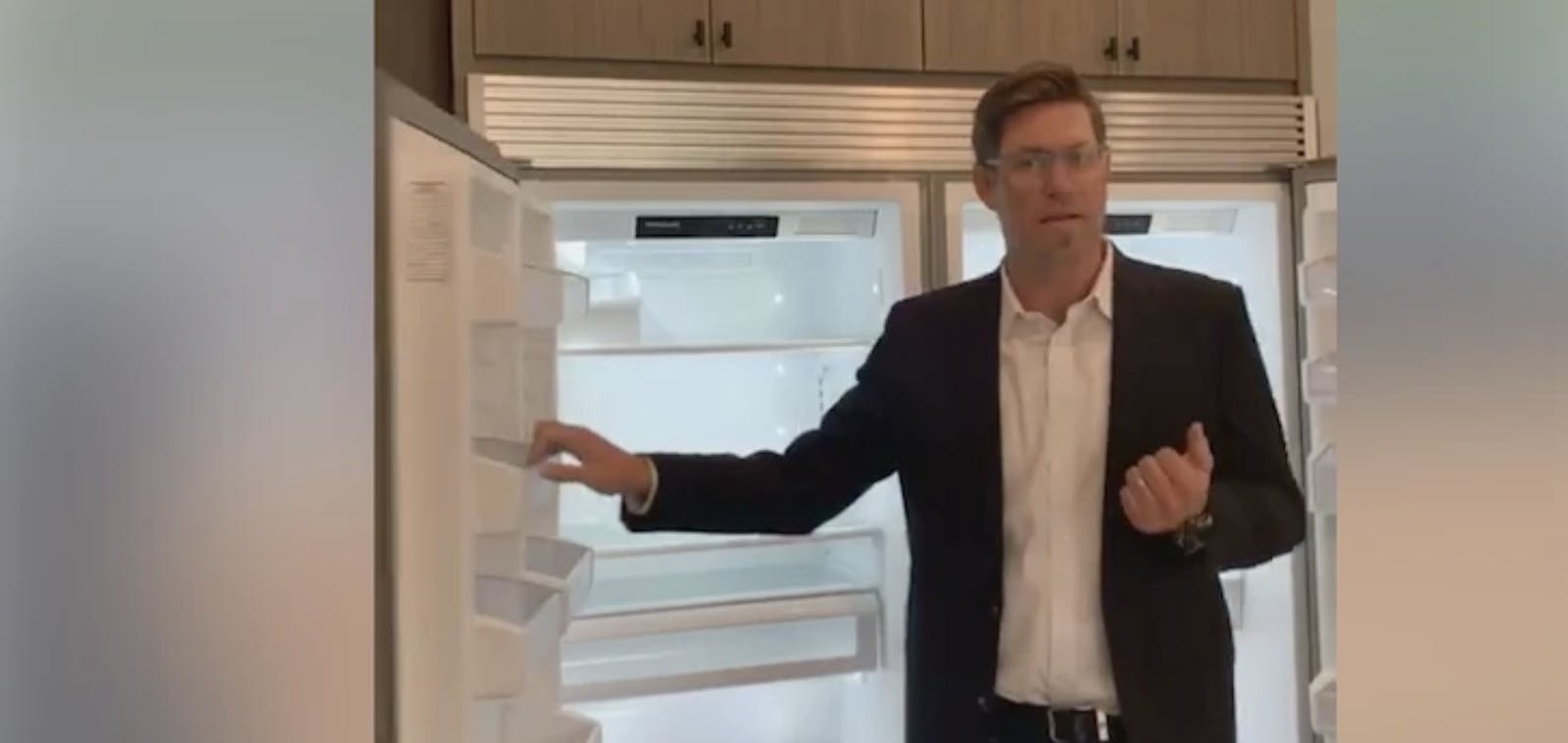
There was also the business of explaining the finished product. In 2020, Beadel hosted a virtual tour of Trademark homes, at one point demonstrating a six-foot refrigerator and freezer combination. A founder can discuss market segmentation all afternoon. Eventually, someone wants to know what will fit in the kitchen.
A different customer for the same city
On June 15, 2023, Thomas James Homes announced that James Mead would succeed Beadel as CEO. Beadel moved into the co-chairman role. He had spent the previous year assembling a leadership team for the company’s next phase, and spoke publicly about his confidence in Mead. After leading the business since its beginning, he was handing over its daily direction.
He retained a board connection, confirming that continued service in May 2026. Meanwhile, he started another company. California Municipal Finance Authority records date HVN’s founding to late 2023. The name is pronounced “haven,” and its stated purpose is to bring affordable apartments within reach of people who need access to established neighborhoods.
The motivation had a concrete human dimension. While running the earlier homebuilding business, Beadel had noticed workers building and cleaning upscale houses commuting as much as two hours to reach their jobs. Their labor helped produce access to a neighborhood they could not afford to live in themselves. HVN turned his attention toward those excluded households.
“What makes me tick is the people.”
Tommy Beadel, 2022
He had expressed that interest before the new venture. Discussing his leadership in 2022, Beadel described growing a business in terms of the contractors, real estate agents and employees it could affect. HVN extended the group to apartment residents. His ambition now includes retaining the properties over time, adding ownership and management to the work of development.
Thirty-four homes make the argument tangible
Haven on Orange, in Los Angeles’ West Adams neighborhood, was HVN’s first completed project. The four-story building contains 34 apartments: eight with one bedroom and 26 with two. It offers an elevator, on-site laundry and bicycle access, with no on-site parking. The building puts the company’s neighborhood argument into a specific form, close to transit rather than organized around a parking space for every household.
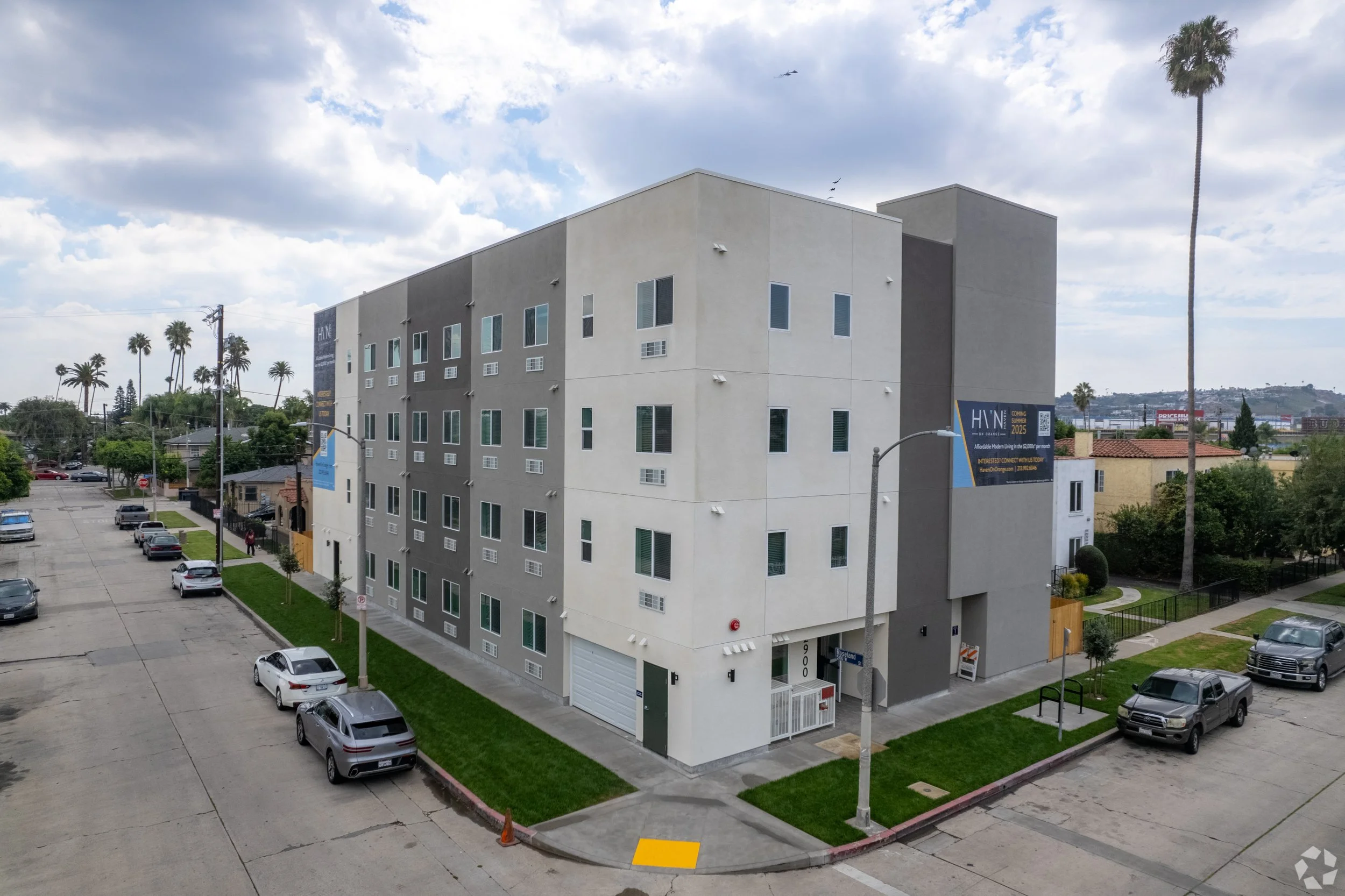
These are income-restricted apartments, with eligibility requirements. The practical offer is a new home with a compact layout, storage and everyday appliances in an existing part of the city. The first project gives Beadel’s second company something more substantial than an explanation of its intentions.
The subsequent construction activity is larger. HVN began ten projects totaling more than 600 units in 2025. In July 2026, the company’s plans called for another eleven starts with close to 800 units that year. It also entered the AHF 50 developer ranking at No. 34. The completed building, construction starts and projected starts describe different stages of the work; the distinction keeps the growth legible.
8 one-bedroom homes + 26 two-bedroom homes.
A completed building, rather than a pipeline total.
The attraction of doing it again
Ask Beadel about the operating method and he returns to repetition. At HVN, he described four floor plans, with two one-bedroom options and two two-bedroom options, combined to fit different sites. Standardizing the components helps his team understand costs. Each building still has an address and a site to solve; fewer moving parts give the calculation a firmer starting point.
He applies a similar preference to approvals. His enthusiasm for Los Angeles rests on his view that clear rules and a by-right development path can make building predictable. That is his assessment of the opportunity. His practice is selective: avoid sites whose added complications would undermine that clarity.
The financing combines housing tax credits with private capital to cover funding gaps. Beadel has described raising private equity for the HVN platform, while pairing private gap funding with 4% housing credits on later projects. His mortgage years, construction years and years working with institutional investment now meet in a different financial structure.
The career has traveled some distance from a condo shared with a brother and a roommate. Yet the recurring calculation is recognizable. A place becomes reachable when its costs, its design and the people using it line up. For Beadel, the next test is carrying that calculation across apartment buildings, then keeping them working as homes over the years he intends to own them.