The house can change. The address is the point. Thomas James Homes has built its business around a homeowner’s stubbornly reasonable wish: a new place to live without giving up the neighborhood already chosen. The company replaces older houses on individual lots, selling new construction where a sprawling subdivision would have trouble finding room.
That means the product includes more than bedrooms and a kitchen island. It includes the work of finding land, choosing a workable design, securing approvals and coordinating construction. TJH packages those chores with a guaranteed price and a promised construction deadline. For buyers who can afford its luxury homes, predictability is part of what they are purchasing.
The proposition has a revealing test case in Pacific Palisades, where a company showcase home completed after the January 2025 fire became a demonstration of speed. It also has a less photogenic backstory: an abandoned stock-market debut, institutional financing and a new chief executive who says making the model work took time.
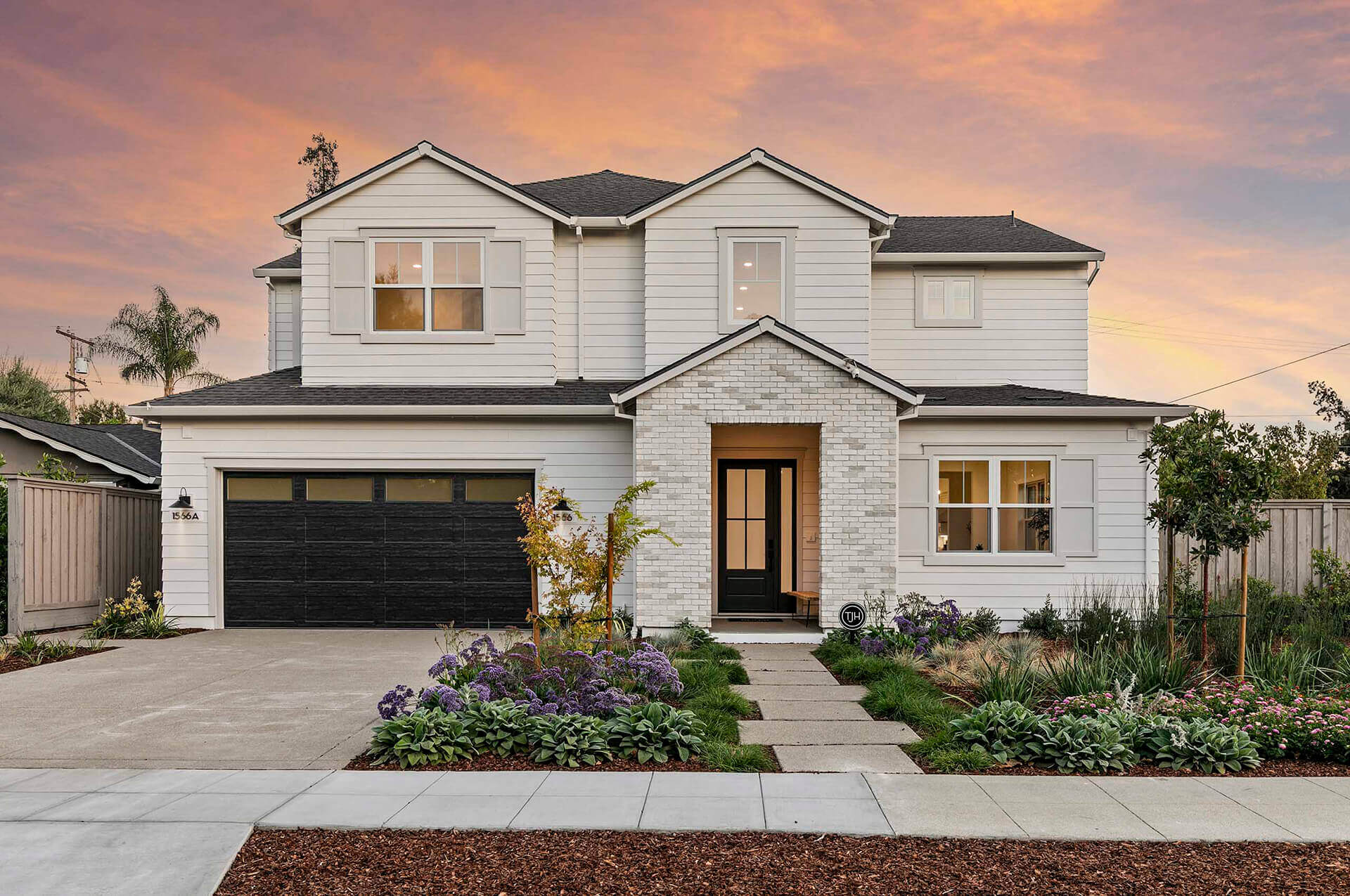
A builder that shops for one lot
Thomas “Tommy” Beadel and James Quandt founded the business in 2006. Pro Builder’s 2020 account describes its starting point as flipping foreclosed homes. The subsequent emphasis on replacement construction made the land beneath an older property central to the proposition. A dated house could occupy an address that buyers still wanted very much.
Oaktree Capital Management invested in 2018. TJH expanded beyond its Southern California base, adding Northern California and, later, operations in the Seattle and Phoenix markets. Today its advertised footprint comprises four regions: Southern California, Northern California, the Pacific Northwest and Arizona. The company reports more than 1,400 homes delivered.
Its niche sits between several familiar choices. A buyer might purchase an existing home and accept its compromises, hire an architect and contractor for a custom project, or choose a new house in a planned community. TJH offers another route: new construction on scattered sites in established neighborhoods, using a coordinated process and a collection of designs.
The distinction matters. “Custom” can suggest a blank sheet of paper. TJH’s current Build offer starts with curated plans, exterior options and permitted personalizations. A buyer gets choices inside a framework. That arrangement suits someone who cares deeply about the result but has little appetite for managing a small construction enterprise.
The kitchen choices have a deadline
There are four principal ways in. Buy is the completed-home route. Buy & Build, also marketed as Buy & Customize, allows a purchase during construction, with available selections narrowing as work progresses. Build serves people who already own the lot. Find & Build adds homesite sourcing for those who know the neighborhood they want but lack a property there.
Timing changes the shopping experience. Early buyers can make more selections, while a nearly completed home offers fewer decisions and a shorter wait. TJH advertises pre-completion pricing as another reason to commit early. Actual prices and available finishes belong to the particular home and contract, rather than a universal discount schedule.
For owners considering demolition, the company offers a Build Analysis examining feasibility, design possibilities and project economics. Its financial comparison materials include construction costs and recently sold neighborhood comparables. That is a useful starting discipline: evaluate what can fit on the site and what the finished house would represent locally before falling in love with a rendering.
The business earns money through home development and sales, along with construction for client-owned properties. Homeowners and property investors can commission builds; agents and sellers help connect the company with buyers and sites. The economic question remains recognizably old-fashioned: can the finished home justify the cost of land, building and delivery?
Twelve months, with a starting line
TJH’s price guarantee depends on decisions made early. Its Build materials say architecture, construction management, interior design, landscaping, permits, demolition and specified related services are included. Selections and upgrades are settled before signing. Fixing that scope gives the builder a more knowable job to price and the customer a clearer commitment.
The construction promise is completion within 12 months of the start of construction. That starting point deserves as much attention as the number. Searching for a property, assessing feasibility and preparing for the build are part of the journey, but they are not equivalent to months spent constructing the home.
to guaranteed completion*
*Subject to the Build Construction Agreement. This is a process diagram, not a total-project time estimate.
The guarantee page says TJH pays for each day it is late. It also identifies exceptions addressed in the construction agreement, including customer-initiated scope changes, certain jurisdictional backlogs and unforeseeable site conditions. Those details define the promise. They are especially relevant when a home is being fitted to an existing lot rather than a uniform tract.
The practical lesson travels beyond TJH: compare identical scopes, ask which event starts the clock and identify who absorbs specified overruns. A fixed price can be valuable without being the lowest price. Its appeal is knowing more about the commitment before a family starts arranging the rest of its life around it.
A Palisades house, and its head start
At 915 Kagawa Street, TJH produced a tangible advertisement for its approach. Homes.com reported that the house received its certificate of occupancy on November 21, 2025, after construction began in May. The company and Los Angeles Mayor Karen Bass described it as the neighborhood’s first rebuild after the Palisades fire.
The timeline needs its prequel. TJH purchased the property in November 2024 and submitted initial plans before the fire. The completed house demonstrated construction capability, but its schedule was not a clean comparison with a displaced owner starting from scratch after the disaster. Earlier preparation was part of the result.

December 2025 reporting in the Los Angeles Business Journal described TJH’s Palisades pledge at $650 per square foot. That was a specific rebuilding offer, not a nationwide price list or the cost of buying land and a finished house. At that quoted rate, 3,000 square feet implies $1.95 million before treating any other project-specific items or land as part of the calculation.
A construction-rate illustration, not a current quotation or a land-and-home purchase price.
Finishing a building also leaves a larger problem outside the door. Homes.com’s December account described commercial services and schools still recovering around the showcase. A builder can deliver a house faster than an entire neighborhood returns. For a family deciding when to move back, both timetables matter.
The stock ticker that never arrived
TJH filed for an initial public offering in September 2021 and withdrew it in August 2022. Renaissance Capital recorded a proposed $100 million deal and approximately $431 million in revenue for the 12 months ended June 30, 2021. The proposed offering was never completed; that $100 million should not be counted as capital raised.
The IPO-era description also featured Fuse360, a technology platform said to track roughly 5,000 tasks per home. The number explains the attraction of software in this business: many small jobs must happen in sequence across separate sites. It is a historical description of the operating system, rather than evidence of a present-day software subscription business.
In November 2025, Ascent Developer Solutions announced a $400 million construction debt facility for TJH. That is lending capacity for the building operation, distinct from revenue, valuation or an equity funding round. The announcement linked the facility to expansion and operating efficiency in infill markets.
Seen together, the abandoned offering and subsequent financing show different routes to supporting a capital-intensive builder. Purchasing property and constructing a home tie up resources before a sale is complete. Repeatable designs can simplify parts of the process; they do not make land free or eliminate the financial consequences of a slow project.
First, make the operation work
Steve Schlageter became CEO in April 2026, succeeding Jamie Mead. A veteran of PulteGroup, he had joined TJH as chief operating officer in October 2024. His background brings production-homebuilding experience to a business whose building sites are deliberately scattered.
In a May interview with HousingWire’s The Builder’s Daily, Schlageter said TJH had spent the previous two to three years refining operations rather than concentrating on growth. Competing with established local builders in new markets had proved difficult. He described anticipated growth in 2027 through 2029, making that an outlook rather than an accomplished expansion.
“It took us a minute to really figure out how to make the business model work.”
Steve Schlageter / HousingWire, May 2026
That admission is more instructive than an invented tale of effortless expansion. The repeatable part of homebuilding must still meet local knowledge: regulations, lot constraints, trades and buyers. In June, Realtor.com reported that TJH uses predesigned plans to help reduce review demands, while noting the exposure to rising costs when schedules stretch.

The company’s careers page lists integrity, respect, care and accountability as values. Those are employer statements; the operational test is whether teams follow through. Design studios make one part visible. TJH promoted its REVEAL virtual-reality tool in 2024, giving clients another way to assess choices before construction makes revisions expensive.
Try the floor plan on for size
The next demonstration is unusually literal. On September 3, 2026, TJH announced a September 26 event at Walk Your Plans LA in Culver City. Visitors will be able to experience two new Palisades floor plans at full scale, including a single-story design. Instead of guessing how a drawing feels, prospective owners can walk the dimensions.
That captures the company’s useful idea: resolve more questions before building. Buyers can copy the habit by testing layouts, settling selections and examining the total project scope early. Builders can study the same discipline, although its economics depend on suitable sites, dependable execution and customers willing to pay for the finished product.
TJH is a specific answer to a specific housing frustration. It suits buyers who want new construction in an established neighborhood and accept a curated design process. Someone seeking unlimited architectural freedom, a modest renovation or an inexpensive first home is asking a different question. The company’s next chapter will be judged at the address level: whether the house, the bill and the moving date match what the buyer expected.
Visit, watch, investigate
Explore available homes, Build by TJH and the construction guarantee. Follow TJH on LinkedIn, Instagram and Facebook.
Watch: teardown and rebuild overview ↗
Watch: virtual-reality home design ↗
Continue with the CEO’s operating plans, the Kagawa house story and TJH’s Palisades floor-plan preview.