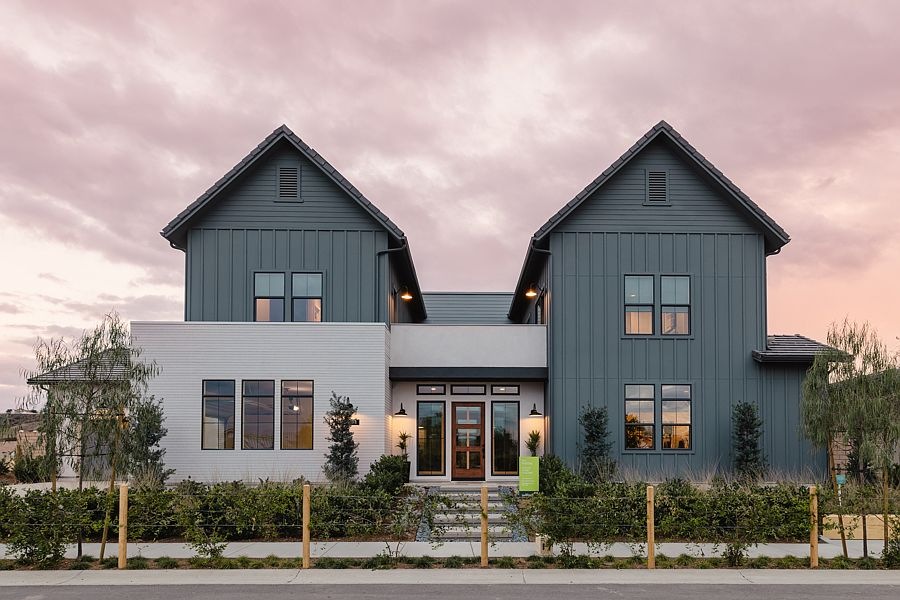
Before the kitchen island, before the paint swatches, there is a joint. In a SHAWOOD house, engineered timber meets a proprietary metal connector. It is an unglamorous place to begin a home tour. But it is a useful place to begin understanding Sekisui House U.S., a company betting that Americans can be persuaded to value what eventually disappears behind their walls.
The story in three lines
- Buy the route: Japan’s Sekisui House acquired MDC for approximately $4.9 billion in 2024.
- Prove the system: SHAWOOD brings engineered timber construction to selected U.S. communities.
- Earn the expansion: local crews, buyer budgets and regional needs determine how far it travels.
The Denver business is the former M.D.C. Holdings, now the umbrella for an American portfolio including Richmond American, Woodside, Holt, Chesmar, Hubble and SHAWOOD. Its customers range from people buying their first home to families moving up and older buyers planning their next chapter. The ambition is to bring the Japanese parent’s research into the practical business of building houses here.
01 / THE ACQUISITIONFirst, buy the neighborhood
There are two histories inside the new name. Sekisui House began in Japan in 1960. MDC’s predecessor began in Denver in 1972, when Larry Mizel and Emil Hecht started with $50,000. Richmond Homes followed in 1977. The American business had spent decades learning where to buy land, how to work with trades and what local buyers would purchase.
In April 2024, Sekisui House completed the approximately $4.9 billion MDC acquisition. The purchase added an established operating platform to its earlier U.S. investments. Woodside had joined the group in 2017; Holt and Chesmar followed later. Buying existing builders supplied relationships and local experience that a foreign construction system could not bring in a shipping container.
APRIL 2024 · ALL CASH
$63 PER SHARE
Then came the organizational work. MDC took the Sekisui House U.S. name in September 2025. By January 2026, the planned consolidation was complete. The existing builder brands continued. The parent’s integration agenda included common procurement, accounting, human resources and technology standards. A familiar sign could remain outside the subdivision while decisions behind it became more coordinated.
02 / THE PROVING GROUNDThe experiment has 57 addresses
At Sommers Bend in Temecula, California, the proposition becomes visible. The 57-lot SHAWOOD community began sales in 2024, following the Chōwa concept home in Las Vegas in 2020 and a six-home Talon Ridge pilot in 2021. That sequence matters: demonstration, rehearsal, repetition. A beautiful prototype can be an exception. A neighborhood asks whether the method can be repeated.
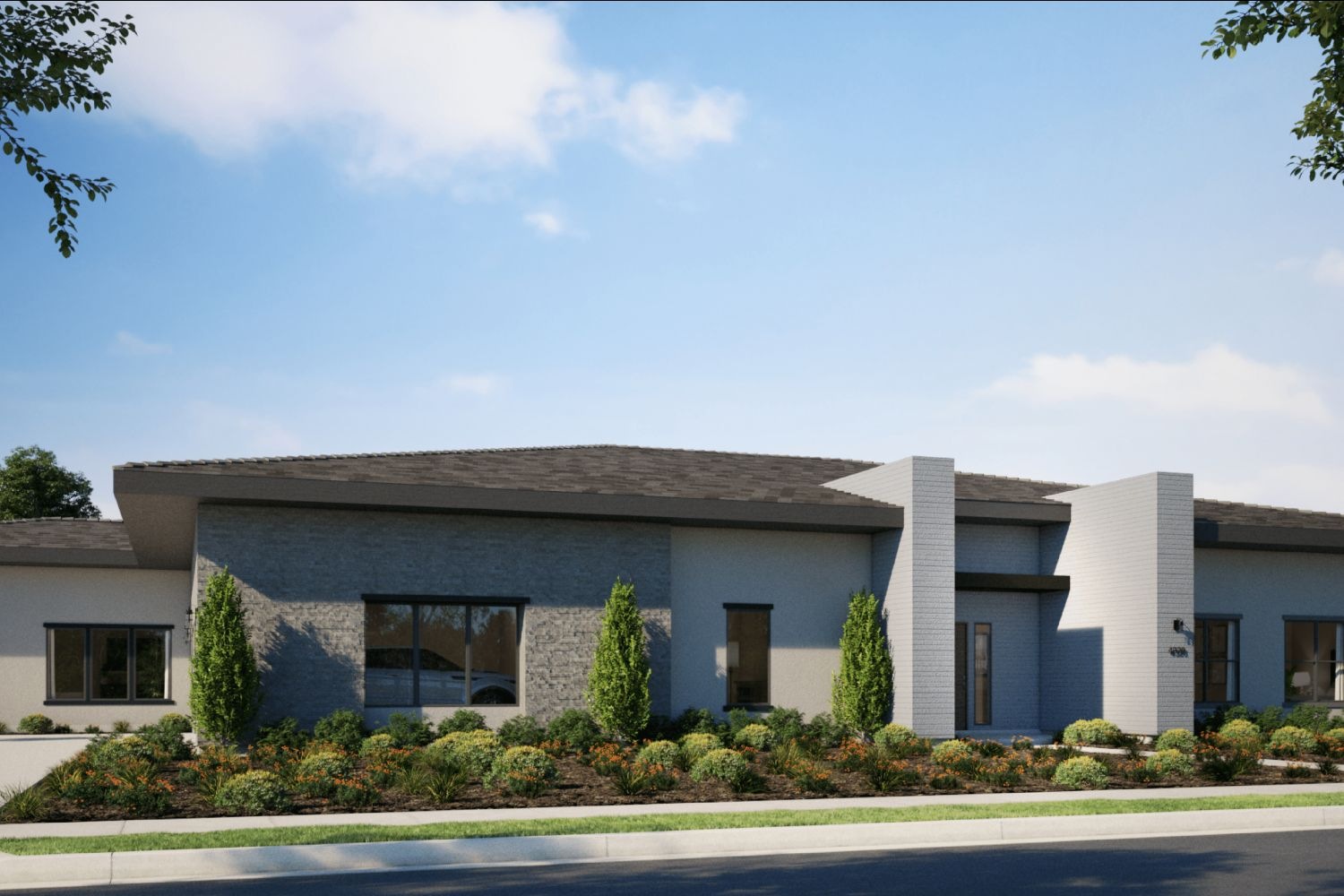
SHAWOOD uses engineered post-and-beam construction, with components prepared under factory conditions and assembled on site. Sommers Bend combines the proprietary Japanese structural system with local two-by-four methods. The aim is repeatable quality alongside the broad openings and connected living spaces buyers can see. Bellburn ceramic exterior panels are another component of the system.
Inside the idea / schematic
Solar panels and battery storage come standard throughout this particular community. That specification should stay attached to its address: the wider portfolio does not automatically offer the same package. In September 2026, Sommers Bend received Japan’s international construction award of excellence. The recognition supports the demonstration; it does not settle the economics of taking it nationwide.
03 / THE PEOPLE WHO BUILD ITTeach the builder before selling the buyer
The export includes teaching. English-language manuals, videos, hands-on U.S. training and visits to Japan help local workers learn the process. This is the less photogenic part of technology transfer. A connector needs someone who knows how to install it, and a quality standard needs someone who will check the work before the next crew arrives.
CEO David Viger describes the parent’s Japanese research facility as an advantage the U.S. operation can draw upon without recreating it. On a 2026 podcast, he recalled holding a Bellburn panel while it was heated with a blowtorch. He also described trying mobility-restricting braces to experience how ordinary movements become harder with age. The research reaches beyond the structure into daily life.
“The jobsite is the business.”
DAVID VIGER · CEO · BUILDER, APRIL 2026
Viger has described expecting extra inspections on early prototypes to irritate supervisors. Instead, he reported enthusiastic crews and faster work. It is an executive’s account, rather than a measured productivity study. Still, it captures a useful change in expectation: additional discipline can feel worthwhile when the people doing the work can see the result.
04 / THE ECONOMIC TESTThe monthly payment gets a vote
The business model remains recognizable. Subsidiaries acquire or develop lots, build homes and sell them. Affiliated services extend the relationship: HomeAmerican originates mortgages, American Home Insurance Agency offers coverage, and American Home Title and Escrow handles title services in applicable markets. Buyers can move through several stages of the transaction within the same corporate family.
The demand test / first-half home sales revenue
But improved engineering still meets a household budget. The June 2026 filing showed first-half home sales revenue falling to about $2.54 billion from $3.25 billion a year earlier. Higher incentives and land costs pressured margins. Those results expose a constraint on the strategy: buyers must be able to finance the house before they can reward its construction.
SHAWOOD remains a premium offering, with Japanese practices spreading progressively through other products. Local builders and national competitors offer alternatives at different prices; existing homes compete too. Imported components, workforce training and regional climates complicate expansion. Precision can address construction quality. It cannot choose the right land price or remove mortgage-rate uncertainty.
05 / THE USEFUL LESSONCopy the sequence
For another business, the transferable lesson is the order of operations: demonstrate the product, train the people, repeat it locally, then expand. That is an interpretation of the rollout, rather than a promise of success. For a homebuyer, the practical move is simpler: visit a community, ask which structural and energy features are actually included, and compare them with the price and location.