A white shirt was a questionable choice for dinner at Mala Tang. In 2011, Tomer Molovinsky was helping introduce Arlington diners to individual Sichuan hot pots: bubbling broth, raw ingredients, a selection of sauces, and considerable scope for decorating oneself. His advice was practical. “I wouldn’t wear all white the first time.” A restaurant can offer many forms of customer education. This one had the advantage of being immediately useful.
Years later, Molovinsky would be talking about branded apps, reservation funnels, and repeat orders. The setting had changed from a dining room to a phone screen, but the guest still had to understand what to do next. His career offers an unusually literal connection between serving a customer and designing the machinery around that service. Before he became Per Diem’s co-founder and CEO, he had a restaurant to help run.
A useful warning about white shirts
Mala Tang was a collaboration between chef Liu Chaosheng and brothers Tomer and Oren Molovinsky. Liu brought the cooking of his native Chengdu. The brothers brought restaurant experience. The Arlington restaurant opened in 2011 with individual hot pots and Sichuan street snacks, giving guests several ways into a meal they might not have encountered before.
The individual pot was a considered choice. Diners could select their broth and ingredients, then cook at the table. Servers explained the process. The arrangement made the experience approachable to an audience less accustomed to sharing a communal pot, while leaving room for the food’s character. Hospitality involved helping people participate without making them feel they had enrolled in a course.
The partnership also depended on knowing where each person’s work belonged. Liu had autonomy in the kitchen; the Molovinskys handled the operation. It is a revealing early chapter for someone who would spend so much of his subsequent career building products for restaurants. The restaurant’s own name, cooking, and guests came first. Everything around them had to earn its usefulness.
The reservation that never happened
At OpenTable and later Resy, Molovinsky moved into the systems surrounding a restaurant visit. His OpenTable career included account management and product work. By 2015, he was appearing on a payments panel as a senior product marketing manager. The territory was becoming familiar: a guest’s intention, a merchant’s business, and the sometimes awkward technology standing between them.
At Resy, where he worked as a senior product manager on consumer products, one problem was particularly prosaic. Returning guests were encountering trouble when asked to log back in. They had found a restaurant and wanted to reserve. Then came the password. For a business hoping to fill tables, that small interruption mattered.
The product team examined the booking funnel and tested a route using phone numbers and text messages for login. The results reported for the team included website bookings increasing 20 percent month over month. Text confirmations also helped reduce the no-show rate by 10 percent. These were team outcomes, grounded in changes to an ordinary customer journey. A password field can be a remarkably expensive piece of furniture.
in website bookings
reservation no-show rates
Reported outcomes from the Resy team’s login and confirmation work; separate measures, not percentage-point changes.
Two colleagues, several years, one phone call
Per Diem’s founding partnership began well before its product. Molovinsky met Doron Segal at OpenTable in San Francisco in 2014. Both had previously been founders. They swapped ideas during coffee breaks, discussing startups and problems at work. Their careers then took different routes: Segal went on to build a product and engineering team at Saildrone, while Molovinsky moved to New York to lead consumer product at Resy.
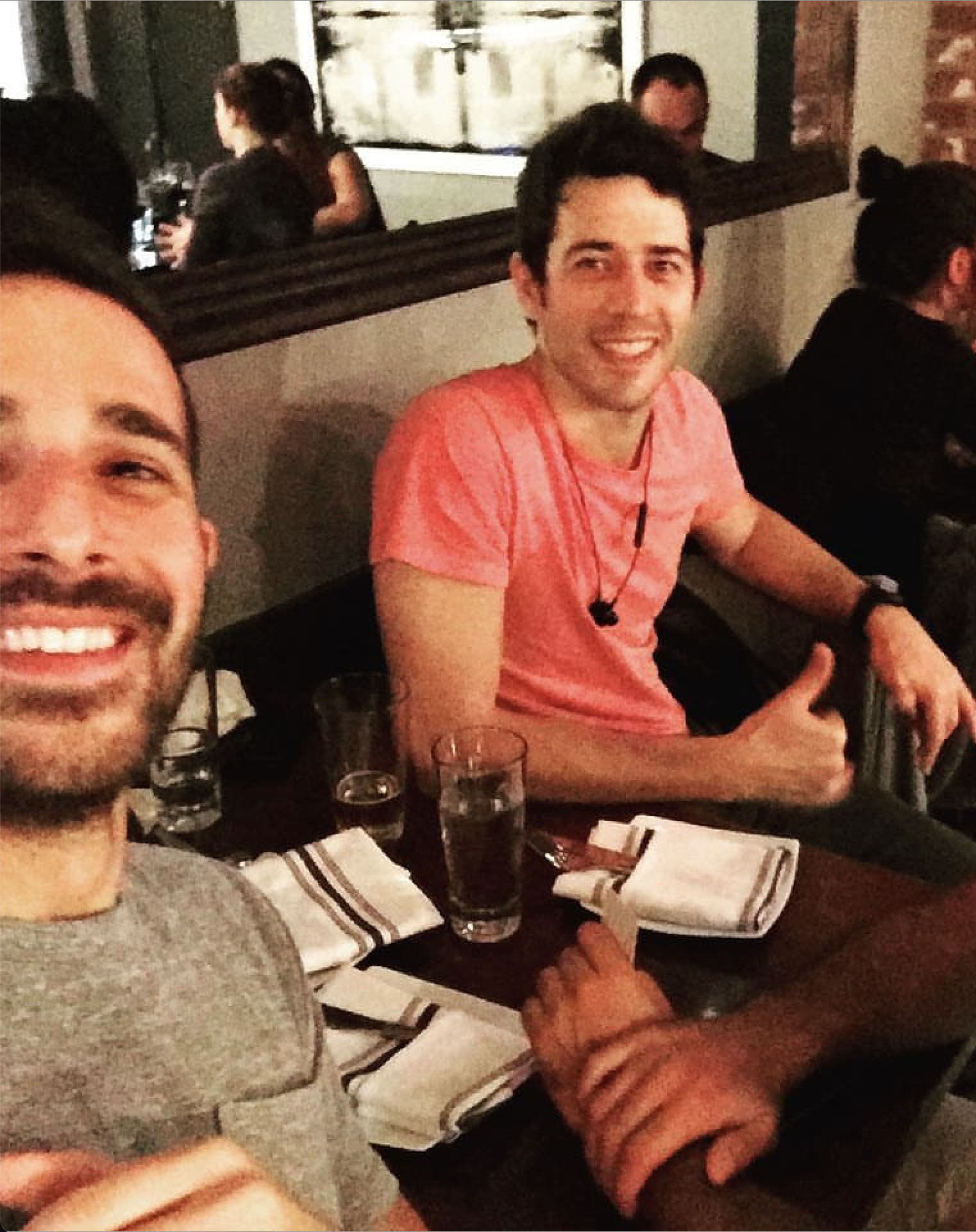
The conversation continued. Eventually, John Norman called with a problem at Norman’s Farm Market in Maryland. Its produce-subscription business had grown beyond the tools being used to run it. Here was something specific enough to build around. The founders launched a proof of concept in early 2021 and saw more than 500 vegetable-box subscriptions sold in the first month.
The company entered Y Combinator’s Winter 2021 batch and announced a $2.3 million seed round that April, led by Two Sigma Ventures. Its initial proposition centered on helping local businesses manage subscriptions. Produce boxes were an effective beginning: the relationship already existed, the recurring purchase made sense, and the operational problem was visible.
Keeping the name above the door
By 2023, Per Diem had moved from its subscription beginnings toward branded mobile ordering. Molovinsky’s explanation was consistent with the earlier project: independent businesses needed ways to develop their own customer relationships. An app could carry the café’s name, accept an order, recognize a loyalty reward, and give the shop a route back to a guest.
Its first restaurant partner for the app was a Jersey City coffee shop. Regulars downloaded it and used it repeatedly, sometimes more than once a day. The important audience was already there, buying coffee. Molovinsky’s premise was that restaurants often underestimated their own ability to bring those customers along when introducing a direct ordering channel.
“We’re trying to level the playing field.”
Tomer Molovinsky
That ambition puts Per Diem in a crowded business. Restaurants have choices about ordering software and dedicated apps. Molovinsky’s focus on merchants using Square gave the proposition a practical home: connect the customer-facing app to systems a business already uses. The appeal lies in fitting into the working day, when nobody behind the counter has time to admire a complicated integration.
His public launch discussions in 2023 included coffee businesses such as Hidden Grounds and Matchaful, with 50 stores in the beta described at the time. The pitch covered ordering, rewards, push notifications, Apple Pay, and Square integration. It was a collection of familiar conveniences assembled around an independent merchant’s identity. A cookie shop could have its own small piece of screen space.
A founder with a teaching timetable
Molovinsky’s public work includes explaining what merchants should do with these tools once they have them. Per Diem’s webinars spend time on subjects that can sound modest beside a funding announcement: getting app downloads, sending push notifications, improving weekday sales, and making a loyalty program useful. This is the part of software adoption that continues after the congratulatory launch post.
One session draws on Will Guidara’s ideas about hospitality and examines how an app can help identify regular customers and offer appropriate treatment. Another considers first-party ordering alongside delivery services. The questions are about operating choices: which customer sees an offer, how an order reaches the shop, and how much control the business has over the interaction.
In his June 2025 feature recap, Molovinsky walked through additions including store-credit barcodes, loyalty streaks, scheduled offers, subscription groups, and an Order & Pay flow. The variety is instructive. A founder selling the promise of a better customer relationship still has to explain how someone redeems credit at the counter. The philosophy eventually meets a scanner.
- 2021SubscriptionsA recurring reason to return
- 2023Branded appsThe shop’s name on the screen
- 2026A broader toolkitOrdering, loyalty, marketing & AI
That teaching role follows naturally from the products he has worked on. A merchant has to understand a feature well enough to use it, just as a guest needs to understand an unfamiliar menu. The webinar format gives Molovinsky room to connect an abstract promise about retention with a concrete action in the dashboard. The explanation is part of the work: software can only help with a repeat visit if the operator knows what to do with it.
The regular is the point
There is a softer side to this practical vocabulary. Asked about a restaurant he admired, Molovinsky praised Miami’s Cush for feeling distinctly local. Asked about guest experience, he emphasized understanding who guests are and what they prefer. He also singled out a Per Diem gifting feature, which let people give items from participating venues to others. A transaction could introduce another person to a place.
Those examples give his ambition a recognizable scale. The technology is meant to help a particular business know a particular guest a little better. An independent restaurant has its own atmosphere and habits; its digital presence has to carry enough of that identity for customers to recognize the connection. A loyalty system earns its place when remembering someone becomes easier.
The company has since broadened its scope. In August 2026, Per Diem launched its own customizable loyalty engine for businesses using Square. A September partnership brought ordering and loyalty to PITA Mediterranean Street Food, a chain reporting more than 50 locations. That announcement put Per Diem at more than 1,000 restaurant brands and 500,000 monthly orders. These are company-reported figures. Molovinsky had separately announced more than 1,000 live stores in 2025. Brands and stores count different things; one brand can have several counters.
For Molovinsky, the question running through this career remains pleasantly concrete: what helps the guest come back? A clear explanation of hot pot, a less troublesome reservation, a café app that remembers a reward. His tools have become more elaborate. The desired scene remains easy to picture: a customer returns to a local business, and the business has another chance to make the visit worthwhile.