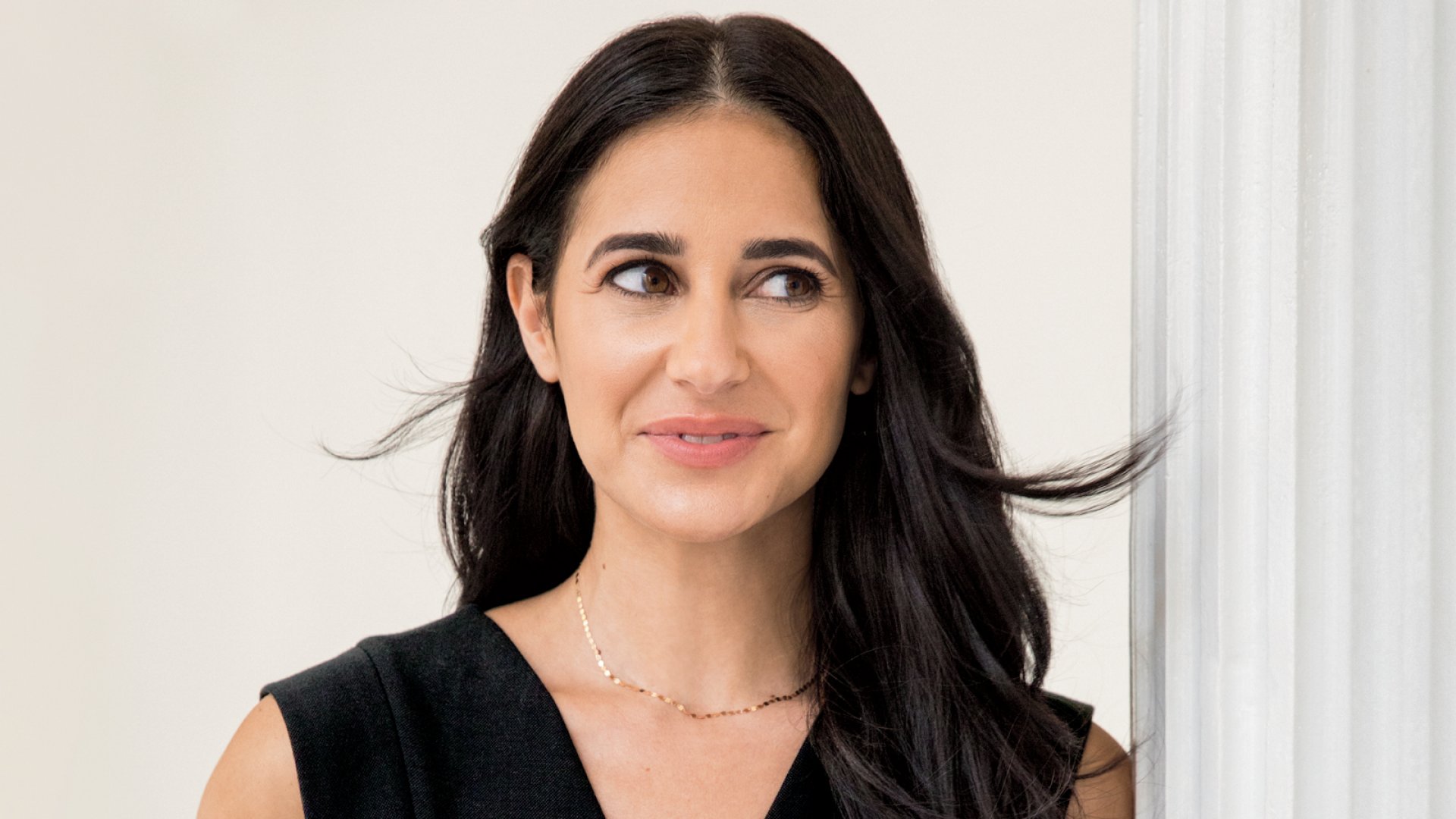
Krystle Mobayeni once wanted to design rave flyers. It is a pleasingly unruly beginning for someone who would spend years helping restaurants put their affairs in order online. Before the venture rounds, before BentoBox, before a payments company came calling, there was a designer interested in how things looked, how people felt, and what happened when the two met.
Her childhood home contained a room with at least five computers. Her father had a doctorate in computer science; she spent hours there trying to get through Leisure Suit Larry. At Philadelphia University, a digital design program arrived during her sophomore year. A professional direction began to take shape somewhere between the family computer room and the dance floor.
New York supplied the next education. She worked at Agency.com and Big Spaceship, then started Neon & Sons in 2010. Running a small creative studio required the usual entrepreneurial costume changes: designer, animator, accountant, cleaner. She enjoyed the range. Her early interests extended to music, travel and photography, with Iceland a particular favorite. Software was already sharing a table with the rest of life.

The table between two worlds
Restaurants had a place in her life well before they became her customers. Mobayeni is a first-generation American whose parents emigrated from Iran in 1976. They had expected to return. The revolution changed those plans. Their daughter grew up with one culture at home and another outside it, a familiar arrangement that can make belonging feel like an exercise in translation.
Going out to eat gave the family somewhere to meet. A restaurant could bring her parents into the American world she inhabited, while everyone received the same welcome. The meal mattered, but so did the room around it. Hospitality offered a small, practical solution to a much larger question: how do people make a shared world?
That history helps explain why a restaurant website would eventually command so much of her attention. She understood the value of the experience behind it. An awkward page, an out-of-date menu or a transaction that sent a guest somewhere else could interrupt the welcome before anyone reached the door. There was something personal at stake in getting the details right.
A client problem with excellent word of mouth
Momofuku was the first restaurant website she designed, before BentoBox existed. Work for The Breslin and The Meatball Shop revealed a recurring set of requests. Restaurants wanted more control over their online presence and better ways to use their websites. The available tools made particular needs costly and cumbersome to accommodate.
Her designer’s eye had commercial consequences. A restaurant website could express the atmosphere of a dining room while also selling a gift card, taking a catering inquiry or supporting an event. Each function belonged to a real business with a finite working day. A beautiful page that demanded endless maintenance was liable to become a particularly handsome nuisance.
She co-founded BentoBox with Pierre Drescher in 2013. The Breslin and The Meatball Shop became its first two customers. The company began with people willing to pay for a solution, giving the founders a useful discipline: build around work restaurants actually needed to do. There were customers to answer to before there was an expansive company story to tell.
By October 2015, BentoBox had brought 200 restaurants in 25 cities onto its platform. Names such as Danny Meyer’s Union Square Hospitality Group helped establish trust in a closely connected industry. A recommendation could travel from one dining room to another. Mobayeni’s route into software ran through relationships, with satisfied customers doing some of the introductions.
The bartender’s cousin has other plans
Mobayeni noticed a detail that complicated the familiar website-builder pitch. Restaurant owners generally were not building their own sites. Someone else did the work: an agency, a freelancer, perhaps a helpful acquaintance. Offering more design controls to a busy operator would not necessarily solve the problem that brought them to her.
BentoBox therefore made room for designers and developers to create the experience, while giving restaurants controls for routine changes. An operator could update information without becoming a coder or commissioning another little project. Menus, gift cards, press mentions and events supplied the specific vocabulary. A restaurant’s needs gave the software its shape.
The distinction sounds modest until one imagines running a dining room and maintaining a website between services. Technology can be very generous with tasks for other people. Mobayeni’s proposition was appealingly economical: understand who does the work, then make that work easier. The restaurant kept its identity; the tools had to fit the restaurant.
The credit card behind the company
The early finances were less elegant than the product. Mobayeni kept taking freelance work to support herself and help keep BentoBox moving. The founders barely paid themselves. Credit cards absorbed some of the strain. Advice to raise money from friends and family was of limited assistance when those friends and family had little spare money to invest.
In 2015, an investor raised concerns about the financial risks she had taken. It was a cruelly circular predicament: the sacrifices made to keep the business alive might now obstruct the funding it needed. She remembered having a difficult phone conversation and then carrying on with customer meetings as though everything were perfectly ordinary. Hospitality does teach people a thing or two about maintaining appearances.
The investment eventually went ahead. Techstars also became part of the company’s development in 2015, bringing mentorship and investor connections. Another useful change was learning to speak confidently from her strengths in product and design. She had been trying to resemble the person she imagined investors wanted. The designer already in the room had rather more to offer.
Investor Semil Shah recalled needing several meetings to appreciate what she was building. Her quiet manner did not announce the scale of the idea. Once convinced, his firm Haystack invested early and kept participating in later rounds. The episode offers a small corrective to the theatrical version of entrepreneurship: a quiet pitch can still contain a substantial business.
A company big enough to need a sash
Growth introduced a different design problem: the organization itself. By March 2018, BentoBox had more than 50 people in New York and worked with a 12-person contract team in Honduras. Mobayeni had to learn how to manage through other people, make expectations clear and give new colleagues enough room to do their jobs.
Her background had prepared her to think carefully about experiences. It had not magically supplied every executive skill. She sought expertise in areas she knew less well and learned that a capable person still had to suit the company’s stage. A role could change faster than the person occupying it. Leaving that mismatch unspoken helped nobody.
The culture also acquired a little ceremony. Twice a year, colleagues nominated people who embodied company principles. In the office, winners wore sashes; later, previous recipients introduced their successors. There are worse fates for a corporate value than being made to wear something conspicuous. At least someone has noticed it.
Her personal milestones remained refreshingly specific. Tria, the Philadelphia wine, beer and cheese spot she had enjoyed as a student, eventually appeared among BentoBox’s new customers. She remembered its Sunday School offering, where a discounted wine and cheese came with an education. Seeing the name arrive in the sales channel prompted a delight no aggregate customer count could quite replace.
The front door opens onto a bigger business
By October 2021, the acquisition announcement counted more than 7,500 restaurant concepts across 14,000 locations using BentoBox. Those are two different measures, and the distinction matters: one restaurant brand may operate several addresses. The software had moved a considerable distance from a pair of early customers.
Fiserv announced its agreement to acquire BentoBox that month; the acquisition followed in November. The combination brought restaurant websites and commerce alongside Clover’s payments and business-management capabilities. For Mobayeni, the opportunity involved the whole relationship between a restaurant and its guests, including the places where online activity and the dining room meet.
Recognition followed the work. She appeared on Inc.’s 2021 Female Founders list and the New York Business Journal’s Women of Influence list. Her earlier design work had earned Webby recognition, and she became a Webby judge herself. It was a return to an organization that had helped give her credibility as a designer.
She stayed after the acquisition and served as senior vice president and head of restaurants at Fiserv. In 2025, Clover Hospitality by BentoBox extended the work into a point-of-sale offering for more demanding restaurant operations. The original concern with a restaurant’s digital welcome had expanded into the mechanics of service inside it.
Still close to the dining room
Mobayeni’s design instincts remained visible in how she discussed technology. Customer feedback deserved further questions: what problem sat beneath the requested feature? A solution might involve the way an operation worked, rather than another piece of software. Knowing when to stop adding things is a useful qualification for anyone selling technology to a busy person.
She also talked about the boundary between helpful personalization and something uncomfortable. A personal message from a restaurant could feel welcoming. A supposedly public website displaying personal information might feel rather different. The experience had to respect the guest’s sense of the occasion, as well as the capabilities of the system.
In 2026, she left BentoBox, Clover and Fiserv after twelve years across the businesses. Female Founders Fund, which had backed BentoBox in 2015, brought her back as an entrepreneur in residence. She now works with portfolio founders on the journey from an early company toward an acquisition. A former customer of venture capital has become a guide to some of its practical consequences.
“Brand outlives the product.”
Krystle Mobayeni, reflecting on her departure
On October 1, 2026, Slang AI announced her appointment to its board. The company handles restaurant phone conversations, including reservations and inquiries. The setting is familiar: another point where a guest wants attention and an operator has several things to do at once.
Mobayeni has said she wants to build and lead again while staying close to hospitality. For someone whose career began with rave flyers, it is a remarkably consistent interest. People arrive with expectations. Someone has to think about the welcome.