John Kuhn had finished exercising. That was the virtuous part. Then came the brew pub, the beer, and the food truck outside. He and his cousin attended a weekly YMCA fitness class, and afterward they were hungry. In Kuhn's account, the evening developed an irritating rhythm: stand in line to order dinner, then wait again while somebody cooked it. Somewhere inside the pub, perfectly good bar stools sat waiting.
- FoodTruck.pub lets customers order from a browser or app, then collect their food.
- The Free plan charges diners $1.25 per order; payment-processing fees still apply.
- Its useful specialty: menus, pickup times, and locations that move with the truck.
Kuhn's question was wonderfully ungrand: why couldn't he sit down with a beer and order on his phone? He took the idea to friends who owned a food truck. They liked it. Food Truck Pub launched in fall 2018. Its founding problem was the first of those two waits: the queue before the kitchen even knew what you wanted.
A restaurant with a changing address
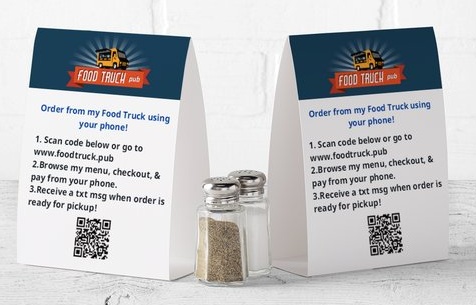
A food truck has an awkward relationship with restaurant software. Its menu may be familiar; its address tomorrow may be entirely different. FoodTruck.pub builds ordering around that movement. Operators publish where they are serving, activate online orders, and appear on a map. A direct link or QR code takes the diner to a particular truck's menu.
The intended customers are truck, trailer, and cart operators, along with the people who organize places where trucks gather. The company says more than 11,000 trucks have registered. Registration is the relevant word: that figure describes signups, rather than a count of trucks serving lunch today.
For an operator, the setup is concrete. Create an account, load a menu or import it from Square or Clover, choose order alerts, and display the ordering link. Customers pay online. The order reaches the operator, who prepares it and sends a pickup text. People can order through the website without installing an app.
Free for the truck. A fee for the appetite.
Kuhn describes wanting a service that cash-conscious operators could afford while still paying the platform's bills. The solution was to charge the customer. On the Free plan, the diner pays a flat $1.25 convenience fee, regardless of basket size. The truck pays no FoodTruck.pub subscription or platform commission on that plan.
Free nevertheless needs a footnote. Square, Clover, and PayPal have their own processing charges. FoodTruck.pub's terms also say a truck may bear card-processing costs on the convenience fee itself. The distinction matters to anyone calculating the margin on a sandwich.
Premium adds a subscription and reduces the customer's fee to $0.60 with Square or PayPal, or $0.85 with Clover. The comparison page lists $29 a month when paid annually; signup advertises limited-time new-truck pricing of $21 a month billed annually, or $34.95 billed monthly. Those are different published offers, so the checkout terms deserve attention.
The flat fee also creates a small behavioral experiment. On a $10 basket, $1.25 is 12.5 percent. On $50, it is 2.5 percent. The platform charges the same amount, but the diner experiences a different bargain. A low-priced snack asks more of someone's willingness to pay for convenience.
The kitchen still has only one grill
Moving orders onto phones removes an ordering bottleneck. It cannot manufacture cooking capacity. FoodTruck.pub offers throttling, including limits on open orders within a 15-minute window, and a pause control. These features acknowledge the practical danger of making it easier to buy lunch: too many people might do it at once.
Pre-orders offer another way to organize demand. Operators specify future dates, locations, and available pickup times. An office worker can order before lunch; a truck can collect paid orders before an event. The useful habit to copy is publishing the pickup promise alongside the menu, then limiting orders to what the kitchen can deliver.
“Easy integration with Square. Seamless menu migration.”Jeff McIntyre, Manny's Munchies, in a company-published testimonial
The product history keeps returning to that kitchen. Category-level inventory tracking arrived in October 2024, allowing different burgers to draw down a shared patty count. September 2025 brought a kitchen display screen for phones and tablets. February 2026 added Star Micronics CloudPRNT integration for automatic receipt printing without a POS system.
March 2026 added alerts for customers following their favorite trucks. In August, the company introduced AI Agent Chat for importing a menu photograph and changing prices or item availability. The emphasis is specific: fewer menu-entry chores, faster updates during service, and a clearer route from an order to a prepared meal.
One table. Several trucks.
Food truck parks extend the original bar-stool idea. Customers can put items from several participating trucks into one checkout; the platform splits the order among them. Park operators get a dedicated ordering page and QR code. The park program advertises $0.20 per order to each truck, giving the organizer a reason to promote digital ordering.
Distribution also runs through partners. A Mobile Nom integration announced in June 2020 shares truck activity and routes customers toward ordering. Shipday connects delivery orders with dispatch services. Delivery adds its own costs and coordination; a pickup system's flat convenience fee does not make a driver free.
Sell the minutes back
FoodTruck.pub fits between payment infrastructure and the mobile vendor's daily workflow. Square and Clover supply connected payment and POS tools; this service adds moving locations, pre-orders, alerts, and park ordering. Its competitive case rests on those details and the customer-paid fee. A walk-up window remains a perfectly real alternative.
The arrangement needs working connectivity, current menus, visible ordering instructions, and customers willing to self-serve. A QR code cannot fix a cold fryer or an inaccurate pickup time. But Kuhn's original observation travels well: before adding staff or chasing more customers, examine how much of the transaction makes people wait. Sometimes the useful invention is permission to sit down.