Todd Greenbaum was 16 when his grandfather gave him a problem that would occupy rather more than a summer. The new family business needed a computer program. Greenbaum liked computers. He played games on them. Writing the machinery that would help run an insurance finance operation was a different proposition. His grandfather’s confidence exceeded his experience, which is one advantage grandparents occasionally have over personnel departments.
Greenbaum bought a programming book and got to work. The software he developed through his college years became the backbone of Input 1. There is something appealingly direct about that beginning: a business had a task, a teenager had curiosity, and the distance between the two could apparently be crossed with enough reading.
Now consider the scale of the assignment. Input 1 reports $16 billion in annual insurance premiums across its platforms and more than two million unique annual users. Greenbaum remains its president and CEO. He has spent much of his adult life working on what happens after somebody decides to buy insurance: the bill, the payment, the financing, and the surprisingly intricate business of keeping them in agreement.
Annual insurance premiums across Input 1 platforms
A useful place to learn the business
Input 1 began in 1984, providing outsourcing for banks entering or operating insurance premium finance businesses. That starting point matters. The company’s work sat at the meeting point of lending, insurance and administration. A computer program could save time, but somebody still had to understand the transaction it was meant to handle.
Greenbaum joined shortly after the company’s founding. He developed its original receivable tracking system, studied business and economics at UCLA, and became president in 1990 before taking on the CEO role. His education in economics and his education in software happened alongside the practical education of a working business. Each offered a rather immediate test of the others.
The standard technology biography tends to hurry past this kind of work. Receivables lack the scenic appeal of rockets. Yet they contain a steady supply of real problems: who owes what, when it is due, whether it arrived, and what happens when the underlying agreement changes. Greenbaum had entered an industry in which those questions kept producing more questions.
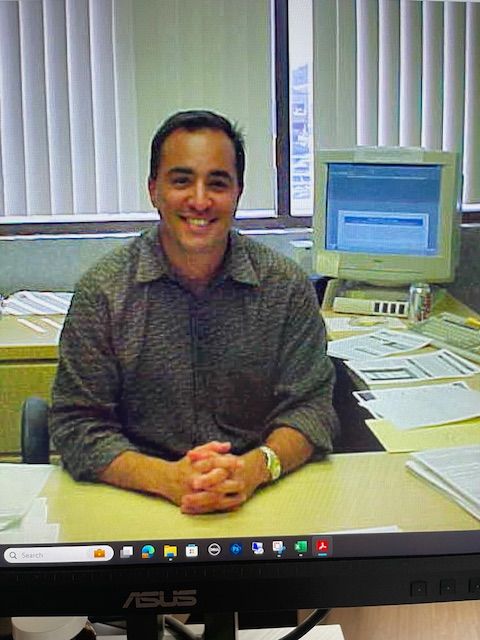
When two yeses became too many
In 1999, Input 1 accepted two large clients at once. Greenbaum chose the opportunity despite doubts about readiness. The business lacked enough structure and training for the workload; employees were stretched and clients were dissatisfied. It is a revealing admission from somebody whose business now sells operational competence.
There had already been a more literal breakdown. In the mid-1990s, a server failed before a trip to Baltimore. Greenbaum and a technically skilled friend traced the fault to an overheating chip and improvised a temporary repair with ice. He made the trip, won the client and returned to arrange a proper fix. The ice bag earns its place in the story; it would make a questionable long-term department.
Put those episodes together and a problem appears. A person can be resourceful enough to save a night and still lead a company that needs better preparation for the next year. The first skill can even disguise the need for the second. There is always another urgent task on which the capable person can demonstrate just how capable he is.
That makes the 1999 decision more interesting than a tidy lesson about saying no. Growth had made the existing arrangements inadequate. The customers had arrived. Input 1 had to change how it worked.
The company cannot borrow the CEO’s brain forever
Greenbaum eventually confronted a less visible capacity problem: too much operating knowledge remained with a handful of executives. More employees could take on more tasks, but they could not reliably reproduce decisions without the context behind them. Giving somebody responsibility is easier than giving them everything they need to exercise it.
His first effort to spread that knowledge produced documents and videos. Both became outdated as the people creating them returned to their regular work. The subsequent answer was a permanent knowledge department, responsible for extracting expertise and maintaining material employees could use. Input 1 also built a middle management layer with authority to act.
“I love to teach.”
Todd Greenbaum
The short sentence helps explain why he still makes instructional videos himself. Teaching makes expertise available beyond the person who holds it. A department gives that work an owner; managers give it somewhere to go. The arrangement is less theatrical than an executive answering every question, and rather more useful to the person waiting for an answer.
The bill is part of the relationship
The commercial argument running through Greenbaum’s work is that payments deserve more attention than their usual back-office address suggests. Buying a policy may be an occasional event. Paying for it can be a recurring encounter with the company that sold it. Each invoice is another opportunity to make dealing with that company straightforward or tiresome.
In conversation with Scout InsurTech, he points to the variety of arrangements inside insurance: some premiums are paid upfront, others in installments, and others through financing. Individual carriers and programs have developed their own systems. A consistent customer experience must therefore work across a considerable amount of inconsistency behind the screen.
He also distinguishes a payment method from payment terms. Offering a card or digital wallet answers one question. The size of the down payment and the length of the installment plan answer another. His comparison is the phone bought through monthly payments: the schedule can help determine whether the purchase happens at all.
These are payment arrangements, separate from the method used to send the money.
Input 1’s own development shows the accumulation of those needs. It introduced web-based quoting in 2000, formed gotoPremiumFinance.com in 2001, launched its Premium Billing System in 2007 and established a Direct Bill program in 2013. Input 1 Payments followed in 2019. The dates trace a company adding connected services over years, with each addition widening the part of the transaction it could handle.
His current public posts keep returning to the work around the payment: reconciliation, notices, reporting and servicing. A successful transfer does not settle every operational question. Someone must still know which account received the money and what that means for everyone else involved. It is a fitting preoccupation for a programmer who started with receivables.
A programmer with questions for the AI salesman
Greenbaum’s enthusiasm for technology comes with a practical condition: the underlying operation has to support it. In his writing about artificial intelligence, he argues that insurers should connect systems, improve data quality and understand workflows before expecting a model to produce dependable results. More sophisticated software does not relieve a business of understanding its own work.
His checklist is concrete. Can the core systems communicate? Is the data consistent and accessible? Can a customer interaction be traced across systems? These questions give a technology discussion something to land on. They also make it harder for a persuasive demonstration to stand in for an implementation plan.
The same emphasis runs through his recent interviews. He discusses operational discipline and customer experience alongside automation, and the business has remained bootstrapped. There is a recognizable continuity here: four decades after buying the book, Greenbaum still wants technology to earn its place by doing something useful.
A different kind of family enterprise
Insurance is only one of the Greenbaum family’s businesses. Todd and his wife, Heather, founded AJA Vineyards on the Malibu Coast. His parents’ interest in wine had become his own; collecting eventually led to cultivation. The family purchased a vineyard in 2011, and Todd studied its soils and assembled a team for the first vintage.
The name AJA comes from their children: Alec, Jack and Amanda. A vineyard honors his mother, Pamela. Another carries the names of the couple’s fathers. Even the naming has the character of a family table, with room made for different generations.
Amanda’s interest grew alongside the winery. She became a certified sommelier and now runs its operations. In describing her upbringing, she recalls a father who worked full time at Input 1 while studying at UCLA. Her account supplies a view of persistence from the household rather than the executive office. At AJA, the next generation has its own work to do.
Keeping the promise manageable
Those colleagues oversee distinct parts of the work. Maj leads operational processes and execution; Jeff Greenbaum guides engineering and platform development. Their responsibilities put names to the organizational question running through Todd’s career. Software needs people who can develop it, and customers need people who can make the service reliable. A CEO’s promise reaches the customer through the decisions of both teams.
The company’s recent recognition has also included more than one name. Input 1 announced that Greenbaum, chief operating officer Ewa Maj and chief information officer Jeff Greenbaum were selected for Insurance Business America’s 2026 Hot 100. Inc. lists Input 1 at No. 3,380 on its 2026 Inc. 5000, following an appearance in 2025. The operation has continued growing long after its first program.
What makes Greenbaum’s story worth following is the tension between its beginning and its later demands. A teenager willing to learn could write the software. A CEO could agree to the business. Keeping those promises required other people to have the training, information and authority to carry them out.
The early stories are memorable because they can be pictured: a book, a desk, a chip cooled with ice. The later work is harder to photograph. It happens when an employee finds an accurate answer, a manager resolves a question, or a customer pays without needing to call. Those are quieter scenes, but they give the growing business a way to keep its word.
There is still a place for the person who figures things out. After four decades, Greenbaum has had to make room for more of them.