Todd Berger’s introduction to logistics produced a fairly decisive career plan: avoid logistics. An internship at American Backhaulers had left him unimpressed. The industry seemed short on the innovation he admired elsewhere. A person could take that experience, file it under useful mistakes, and move on. Berger returned instead. In 2001, he was working as a dispatcher at Transportation Solutions Group, the beginning of a much longer argument with his first impression.
He became one of the founders associated with the business that grew into Redwood Logistics. Its name would change. Its collection of companies would expand. Berger would hold the chief executive’s job, then take a different position after a combination with another logistics provider. The thread through those changes is more interesting than a tidy ascent through titles: he kept coming back to the work of getting different operations, technologies and people to function together.
Two proposals, two objections
One early proposal was to operate a trucking company. Berger wanted the business to compete on something beyond an interchangeable freight service. Management questioned the venture; he was 26. He created Freight Exchange, a full-truckload carrier, and it turned a profit in its first year.
In 2009 came 3PLogic, a contract logistics management provider with customized software. The objection this time had a price tag: developing software and hiring the people to run the operation required capital. Berger took the idea to a current client, who agreed to fund a significant portion. That is a useful detail in a career otherwise easy to compress into job titles. A customer helped turn a disputed proposal into a business.
Profitable in its first year.
Partly funded by a client.
Make yourself replaceable
By 2014, Berger was discussing an unexpected prerequisite for moving up: arrange for someone else to do your old job well. A capable replacement removes the invitation to retreat into familiar work. It is an appealingly awkward instruction for an ambitious employee. The reward for getting good at something is learning to surrender it.
His account of the climb included long working days, a willingness to challenge management and the value of admitting failure. He also found a mentor outside the company: Dennis Springer, a retired BNSF Railway chief financial officer whom he met at a luncheon. Berger’s advice for approaching someone with experience was direct. Ask for another lunch. Explain what you value in their thinking. Be willing to initiate the relationship.
Then came a small, cheerful qualification: “Beers always help.” Executive development, apparently, could survive without a registration desk. Behind the joke sat a fairly demanding idea. Learning required making yourself available to another person’s judgment, even after acquiring a title that might tempt you to stop asking.
“Beers always help.”
Todd Berger, on approaching a potential mentor, 2014
The seating plan is part of the strategy
Berger’s own management essay, published in December 2014, concerned the relationships between younger and older employees. His suggestions were practical enough to involve the furniture. Move desks, he proposed, if people need a push to start conversations outside their usual circles. Bring different ages onto the same team. Make time for colleagues to learn something unfamiliar together.
He also argued for mentoring in both directions and for understanding what motivates individual employees. A common incentive might land differently with different people. Organizing an event was only part of the job; managers needed feedback about whether their efforts actually helped.
There is something revealing about this level of detail. A desk move is not much of a speech. It requires somebody to change the conditions of an ordinary working day. Berger was asking managers to take responsibility for creating opportunities to connect, rather than leaving the office’s social geography entirely to habit. The same people could remain colleagues for years and still need a reason to have a different conversation.
In 2015, his advice for younger bosses put listening near the front of the queue. Understand why a team works as it does before changing the process. Ask experienced employees how they would handle a problem. Take an interest in their development. Find something you can talk about beyond the task immediately in front of you.
“Leaders have to compromise,” he said. For an executive whose early ventures involved pushing through objections, the emphasis is instructive. A proposal can deserve persistence while the people expected to carry it out deserve a hearing. His advice gives those experienced colleagues a place in shaping what happens next. Authority comes with work to do before the announcement, including the unglamorous business of asking questions and waiting for the answers.
A new name, then a different job
In January 2015, Transportation Solutions Enterprises became Redwood Logistics. Berger described the change in terms of bringing technology and services together. The family of businesses included brokerage, transportation management, warehousing and freight forwarding, alongside Freight Exchange’s trucking operation. The new name sat over a collection of capabilities with different jobs to perform.
That matters to the shape of his career. Creating a carrier and developing software-backed logistics were steps toward a business with several ways to serve a shipper. Giving that collection one name made the intended connection easier to express. The freight still needed moving; the organization around it was becoming more involved.
- 2001The dispatch desk
- 20093PLogic proposed
- 2015The Redwood name
- 2018A combined company
Another change arrived in early 2018. CI Capital Partners acquired a majority interest in Redwood and combined it with Simplified Logistics, a business with strength in less-than-truckload freight management. Mark Yeager became CEO of the combined company. Berger, previously Redwood’s founder and CEO, became president and chief operating officer.
The distinction is important. Berger’s story includes a period at the top of the executive chart and a subsequent role beside a different CEO. The combination brought together capabilities in truckload brokerage, managed transportation, technology and less-than-truckload services. The business was expanding through other people’s expertise as well as the operations Berger had helped develop. A founder’s job, like the company itself, could acquire a different shape.
A bigger business, a wider map
Acquisitions continued to change what Redwood could do. In 2019, buying Strive Logistics brought LoadRunner, a tool developed to automate carrier selection and make freight matching faster. The transaction supplied a specific technology capability. It also contributed to an operation whose combined freight under management exceeded $1 billion.
The early company had concentrated on smaller and midsize shippers who needed transportation management with better information systems. By 2013, acquisitions of Defined Logistics and The Treppel Group had helped extend its services into forwarding, intermodal transportation and warehousing. Gross revenue that year reached $173 million. The later Strive deal continued that expansion while adding software of its own. Buying another operation could bring a new way of working along with its customers.
By December 2021, CI Capital was selling Redwood to AEA Investors. CI described seven add-on acquisitions and a tenfold increase in revenue during its ownership. It credited investment in management, technology, sales and marketing. The company Berger helped start had become part of a larger sequence of transactions and investments. Each new capability also enlarged the job of making the pieces cooperate.
Alongside the deals came a repeated emphasis on the workplace. In 2017, Redwood received Chicago’s Best and Brightest Companies to Work For recognition for a fourth consecutive year. Berger spoke about the people who made him look forward to coming to work. In 2021, the company ranked 47th in the midsize category of the Chicago Tribune’s Top Workplaces program, its third consecutive year receiving that award.
Berger’s response again focused on employees and the culture developed over two decades. In 2022, discussing Redwood’s place on the Crain’s Chicago Business Fast 50 list, he situated its growth within Chicago’s logistics and technology communities. That is a less solitary account of a business than the usual founder portrait: colleagues, partners and a local industry all have a place in the frame.
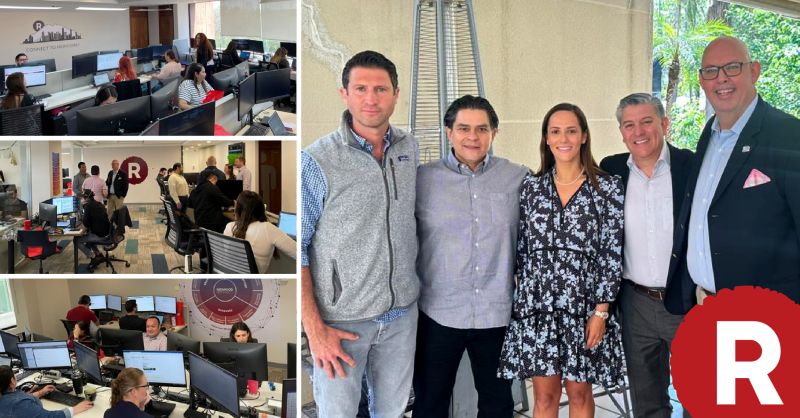
The map widened, too. In April 2023, Redwood announced expanded offices in Monterrey, Mexico. Its Mexico operation was already overseeing more than 25,000 cross-border shipments a year. The larger office was intended to support growing demand from businesses moving production closer to North American customers.
Berger appeared at the opening celebration with Redwood Mexico colleagues and a representative of CANACAR, the Mexican transportation industry organization. The company’s photograph puts him beside the people involved in that expansion. It is a useful image for this particular career: after the proposals, software and ownership changes, there is still an office to open and a group of people to get together.
A different kind of scoreboard
In 2024, the Redwood Games gave the company another set of figures to report. The employee event raised $300,000 for 15 nonprofit organizations. More than 800 supporters participated, and employees contributed over 500 volunteer hours. Redwood put the fundraising total across three years at $750,000.
Berger described the theme as connectedness. Teams represented causes that mattered to them, giving the competition a purpose beyond its internal result. The figures belong to the employees and supporters who did that work. His comments fit a recurring concern in his public career: how to give people reasons to act together.
In 2025, Berger was Redwood’s president, with Yeager as CEO. The title is a long way from dispatcher, though his management advice keeps returning to ordinary interactions: ask for help, listen before changing things, introduce people, make room for someone else to learn. An internship once persuaded him to leave logistics behind. Returning gave him considerably more to work on.
FOLLOW THE THREAD
Read Berger’s writing, explore the company and revisit the milestones.
Redwood Logistics · company website Todd Berger · author profile The early ventures Berger on moving up Berger’s management essay Leading across generations The Redwood name arrives The 2018 combination A closer look at Redwood in 2019 The 2021 ownership change Redwood’s 2017 workplace recognition Redwood’s 2021 workplace recognition Redwood’s 2022 Fast 50 recognition The Monterrey expansion Monterrey opening photo and identifications The 2024 Redwood Games Watch: Redwood’s cross-border logistics summit