A job advertisement has one obvious job: make somebody click. After that, the interesting trouble begins. The candidate meets a career site, a search box, an application form, perhaps an invitation to an event. Each step belongs to somebody. The journey between them can belong to nobody. TMP Worldwide, the recruitment advertising business now called Radancy, has spent its transformation moving into that unclaimed space.
Three things to know
- TMP Worldwide became Radancy in January 2021.
- It combines recruitment software, advertising and employer branding for large employers.
- Its platform connects with existing hiring systems, including Workday and SAP SuccessFactors.
A $45 million exit from the job board
The name carries an unusually crowded family history. Its ancestor, Telephone Marketing Programs, began in 1967 in Yellow Pages advertising. The independent business behind today’s Radancy took shape in 2006, when Monster Worldwide sold its North American recruitment advertising operation for $45 million. Michelle Abbey became president and chief executive of the new organization.
Independence had a practical attraction. An agency advising employers where to advertise had been owned by a company selling a destination for those advertisements. Abbey’s announcement emphasized impartial media selection. Separation made that proposition easier to explain. Monster and the agency could still work together; their commercial identities were now distinct.

By 2018, when Gemspring Capital and management acquired TMP, the investor’s announcement put TalentBrew software alongside digital services. In 2021, the Radancy name brought TMP, AIA Worldwide, Perengo, CKR, Carve and Maximum together. Abbey explained that growth and acquisitions had created brand confusion. The new identity gave a collection of businesses one story to tell.
Sanofi’s problem was the handoff
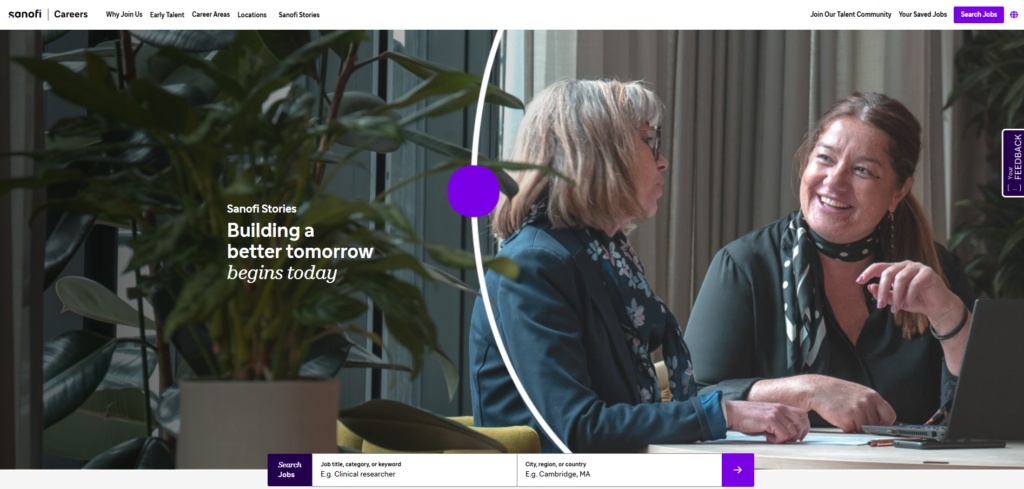
Consider Sanofi. The pharmaceutical company already used Workday as its applicant tracking system. Yet, in Radancy’s account of the project, different business units had separate employer identities, tools and recruitment communications. Measuring the path from a candidate’s first encounter to a hire was difficult. The machinery existed. The connections needed work.
The push came from the broader “One Sanofi” transformation. Radancy combined a multilingual career site, programmatic recruitment media and analytics, with Workday integration and applications completed on the site. The commercial logic was straightforward: an employer should be able to tell a consistent story, make applying easier and see which activity produces results.
“If your data isn’t connected, you lose both efficiency and visibility.”
Andrew Phillips · Employer Brand Manager, Sanofi
That is a useful description of Radancy’s market position. Its buyer might be a recruitment marketing director, a talent acquisition team or an HR technology leader. The purchase sits across disciplines: software, media buying, creative work and the operational business of getting candidates through a process. Its expertise spans both the message and what happens after somebody responds.
Buying the missing steps
The acquisitions make more sense when arranged along a candidate’s route. Ascendify, acquired in April 2023, added candidate relationship management capabilities. Brazen followed that October with virtual and in-person hiring events. In September 2025, myInterview extended AI-assisted screening, interview scheduling and related candidate and recruiter workflows. Each purchase addressed another place where a conversation could stall.
The current Talent Acquisition Cloud includes career sites, programmatic advertising, CRM, employee referrals, hiring events and screening and scheduling. July 2025’s agentic AI announcement added another organizing idea: software agents that perform tasks across the journey. Radancy says its approach keeps humans in control, with oversight and the ability to override AI outputs. These are product commitments worth examining during procurement.
The economics live between the tools
Radancy sells enterprise software alongside recruitment media and specialist services. A buyer therefore has several budgets to examine: the platform, implementation and integration, advertising, creative work, and the people who operate everything. The relevant comparison is the cost of producing an effective hiring process. A subscription fee alone cannot answer that question.
New Mountain Capital invested in 2022, while Gemspring retained a minority interest. The stated purpose included accelerating the software roadmap and expanding services. That combination remains commercially distinctive: Radancy can research an employer’s appeal, build the candidate experience and distribute the message through paid media.
Reported post-launch in Radancy’s customer case study. A traffic measure, not a hiring-rate claim.
At Sony Pictures, the work included a global photoshoot featuring more than 500 employees across eight countries, plus career-site content in seven languages. Radancy reports a 97% increase in site visits after launch. At PG&E, interviews with executives, recruiters and employees informed the employer proposition before the career site was rebuilt. Those examples show the agency craft still inside the software company.
There is a small test of that thinking inside Radancy itself. Its Give Back Day program, introduced in 2016, gives employees one day each quarter to volunteer. For a business selling employer stories, an actual workplace practice provides better material than another adjective. It gives a recruiter something concrete to describe.
Follow one application
Phenom, iCIMS, Recruitics and Symphony Talent occupy overlapping territory, with different mixes of recruiting software, media and brand services. A sensible shortlist begins with the problem. Is it an unconvincing employer story, weak traffic, an awkward application, disconnected candidate records or slow interview coordination? A broad platform becomes easier to justify when several of those problems interact.
A small employer making occasional hires may have little reason to buy that breadth. Neither can smoother software compensate for an unattractive job or an unresponsive hiring manager. The transferable move is modest: follow one application from advertisement to interview. Record every redirect, repeated question and wait. Then assign an owner to each gap. That exercise captures the useful insight behind TMP Worldwide’s reinvention, whether or not Radancy gets the contract.