candidate-experience
(24)
HRMC would rather see your work than your resume
A blueprint, a few pointed questions, and an interview slot: HRMC Acclaim turns the front end of hiring into one continuous encounter. Its wager is that employers lose good people long before they get to meet them.
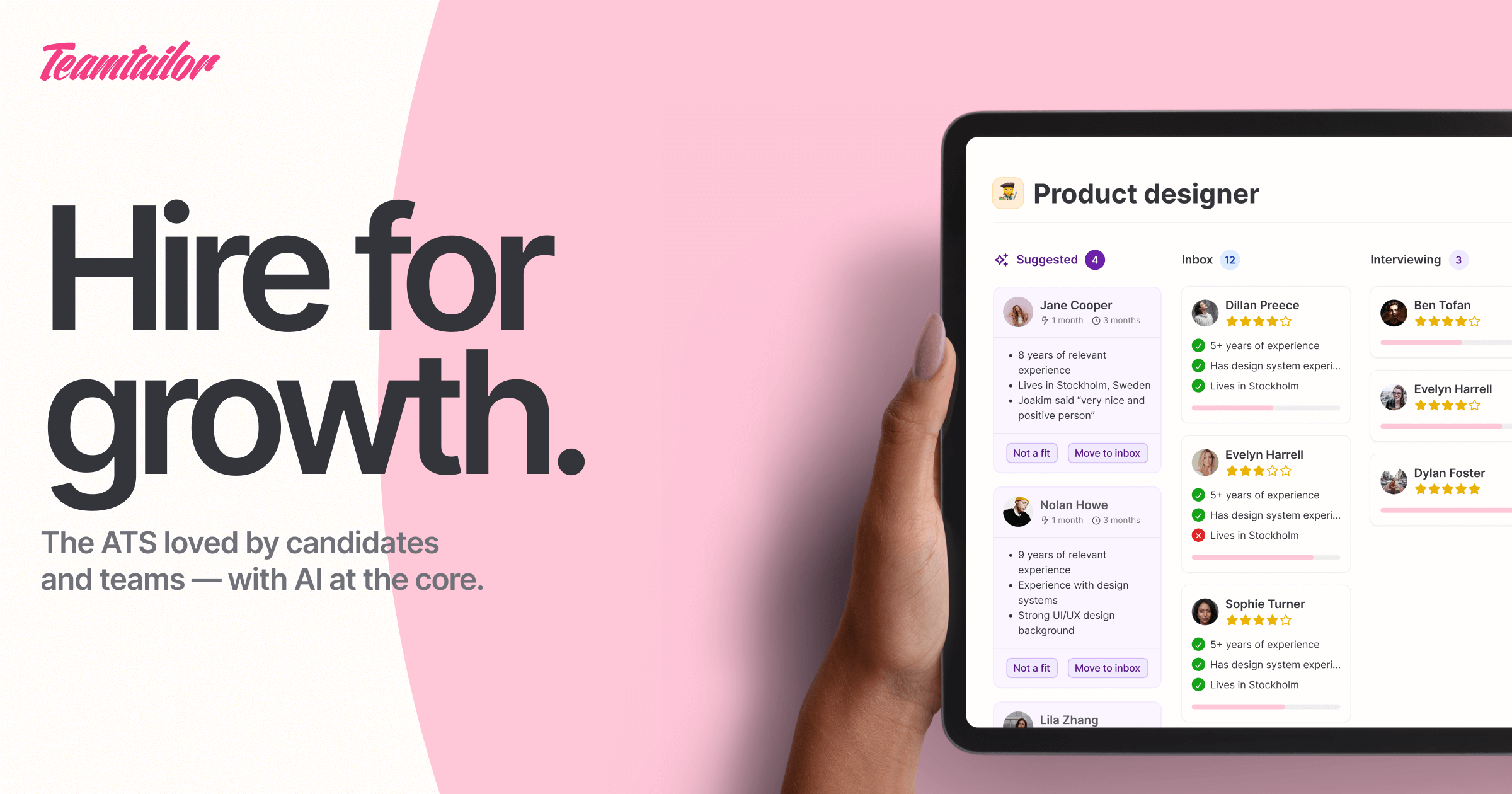
Teamtailor Makes Hiring Feel Less Like Filing
This Swedish ATS puts the career site and the candidate experience in the same room as the hiring pipeline. The result is unusually friendly recruiting software, with one grown-up catch: you have to ask what it costs.
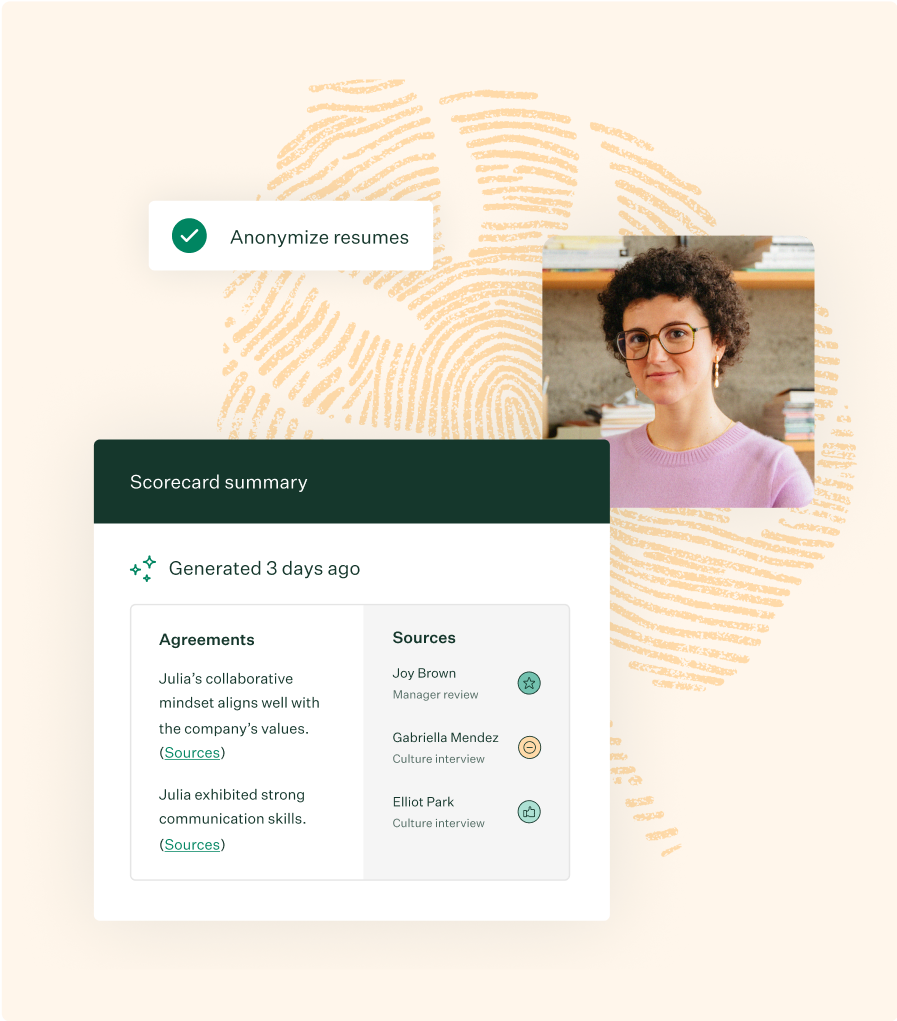
Greenhouse Turns Hiring Into a Team Sport
The hiring platform replaces interview improvisation with scorecards, shared evidence and a process the whole company can follow. It asks for more setup than a lightweight ATS, then pays that effort back when hiring gets busy.

Screenloop Puts the Interview on the Record
Screenloop turns the hiring meeting everyone half-remembers into a searchable, shareable record. For growing talent teams, its real trick is connecting that record to the scorecard, the candidate experience and the eventual quality of hire.

Pinpoint Makes Complex Hiring Behave
The ATS for companies whose hiring process has grown extra limbs. Pinpoint turns regional rules, multiple brands and wildly different roles into one system people may actually use.
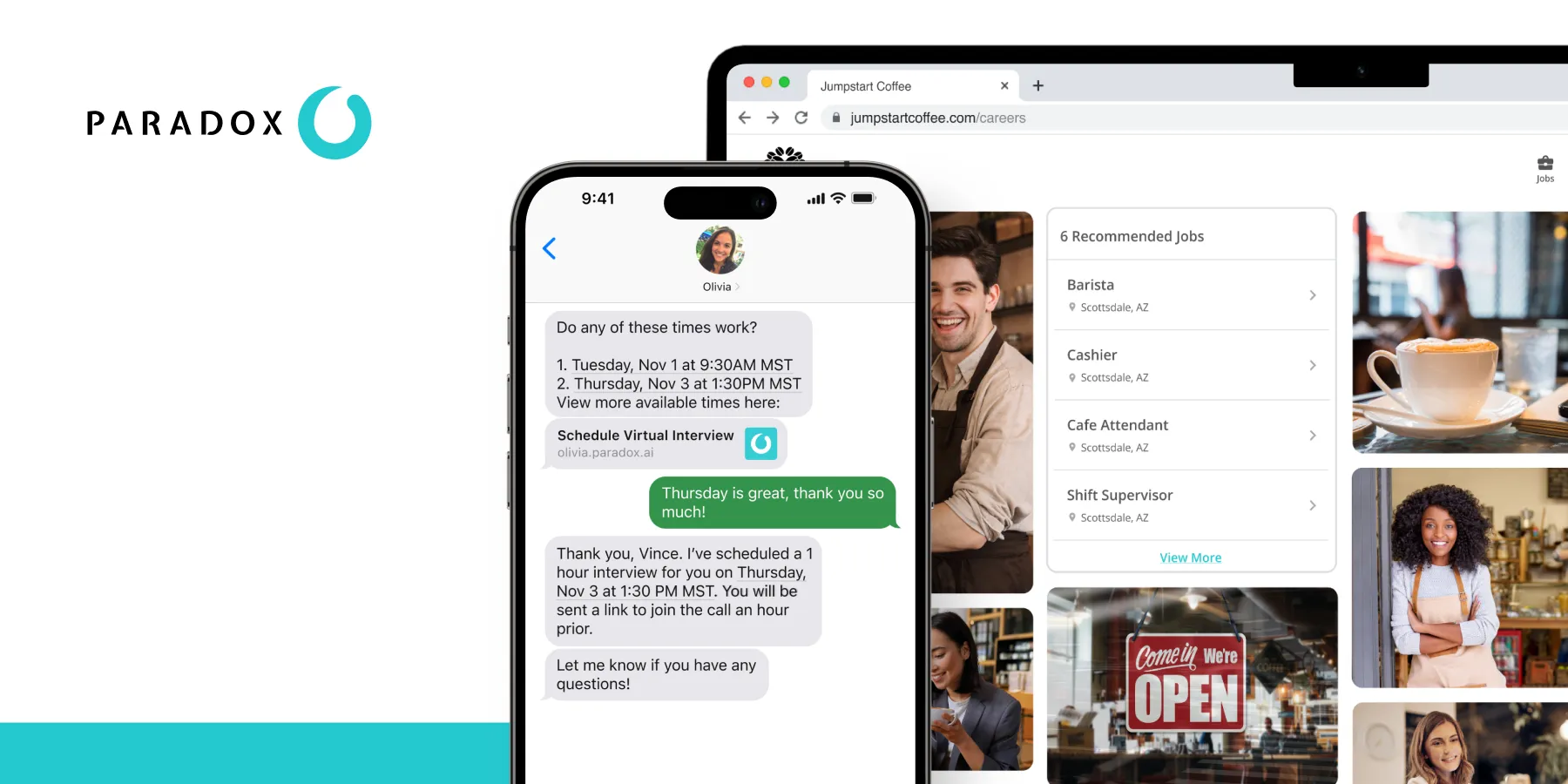
Paradox Put the Job Application in a Text Bubble
Olivia screens, schedules, nudges, and onboards while recruiters get their calendars back. For high-volume employers, Paradox turns hiring paperwork into a conversation - provided the humans keep the jobs and handoffs straight.
GoodTime Turned Calendar Tetris Into an AI Coworker - Now It Wants to Run the Hiring Handoff
Recruiting teams bought GoodTime to stop wrestling with calendars. A decade later, the company is betting that the humble scheduling problem is really a much larger prize: the operating system for everything between application and decision.
The Yellow Pages Company That Refused to Die - and Now Wants to Run Your Hiring Funnel
Radancy began in phone-book ads, helped create Monster.com, and survived the collapse of print by rebuilding itself around enterprise recruitment software. Its latest bet is that AI agents can stitch the whole hiring journey together - without asking companies to replace the systems they already use.

BJ Dodenbier Is Still Climbing
A zombie film, a career in marketing systems, and a 13,528-foot reset: the former Aequor CMO has spent years turning messy journeys into stories people can follow. Now the next journey is his own.

Symphony Talent Is Rebuilding Job Search Before AI Rewrites the Résumé Pile
The enterprise recruiting company spent a decade stitching software, media and employer branding into one system. Now it is betting that the next job-search box will answer questions instead of matching keywords.

Mateo Cavasotto Put the Job Application Where the Worker Already Was
A volunteer project in Buenos Aires exposed a quiet hiring failure: millions of capable people were being judged by paperwork built for someone else. Mateo Cavasotto’s answer began as a chat, survived four Y Combinator applications, and grew into enterprise software for frontline work.

SonicJobs Wants to Kill the Redirect - the 12 Seconds Where Job Hunts Go to Die
Ninety-five percent of job seekers quit before they finish applying. SonicJobs built an AI agent to do the quitting-worthy part for them - and turned the recruitment industry's worst funnel into its pitch.

Phenom Turned a Recruiting App Into the AI Layer for How Big Companies Hire
The Philadelphia-area company escaped the point-solution trap by expanding from a mobile recruiting app into a talent operating layer used by more than 700 organizations. The bet is compelling at enterprise scale - and much harder to justify without the data, integration budget and change management to feed it.

GR8 People Bet the Recruiting Stack Was Broken. Its Answer Was One Big Workflow.
Most recruiting software adds another tab. GR8 People built an ATS, CRM, career-site engine and AI layer around one data model - a bet that the real enemy is the handoff between tools.

Dalia
Dalia is a Boston-based candidate conversion platform that helps employers turn lost career-site traffic into qualified applicants and hires. Its automated software captures job seekers who visit but don't apply, then re-engages them through personalized SMS and email job remarketing. Founded in 2019 by Sam Fitzroy and Jason Whitman, Dalia is used by mid-market and enterprise employers including Compass Group, Ryder, Baptist Health South Florida, and Cleveland Clinic to increase applicant conversion and lower cost-per-hire.

Greenhouse Software
Greenhouse Software is a New York-based hiring platform that helps companies run structured, data-driven recruiting. Founded in 2012 by Daniel Chait and Jon Stross, it centralizes applicant tracking, interview scorecards, candidate sourcing, onboarding and reporting into one system used by more than 7,500 organizations. Rather than pushing automation for its own sake, Greenhouse pitches 'structured hiring' - a consistent, comparable process for evaluating candidates - and has layered in AI tools and fraud detection to keep that process reliable as application volumes surge.

Jibe (Acquired by iCIMS)
Jibe was a New York City-based SaaS recruiting technology company founded in 2010 by Joe Essenfeld. It helped large enterprises modernize hiring with Google-optimized career sites, mobile-friendly job applications, recruiting CRM, and machine-learning-driven candidate matching. Used by Fortune 1000 employers such as Johnson & Johnson, Siemens and Comcast, Jibe raised roughly $36.9M across several rounds before being acquired by applicant-tracking leader iCIMS in June 2019, where its technology became the foundation of iCIMS' recruitment marketing product, Attract.
Emi Labs
Emi Labs builds AI-powered recruiting automation for high-volume, frontline hiring. Its autonomous AI agents attract, screen, schedule, and onboard hourly workers through channels like WhatsApp, SMS, and Messenger, promising faster time-to-hire and a more human candidate experience. Founded in 2018 and backed by Y Combinator, Khosla Ventures, and Merus Capital, Emi counts large employers such as Walmart, OXXO, Coca-Cola FEMSA, Burger King, and Heineken among its customers and says roughly one in ten frontline hires in Mexico runs through its platform.

JobPixel
JobPixel is a San Francisco enterprise video platform that helps talent-acquisition and marketing teams collect, edit, brand, and distribute authentic user-generated video from employees, candidates, and customers. Founded in 2020 by Omar Khateeb and Anthony Duerr, it aims to humanize hiring by moving beyond the resume - letting companies build employer brand and screen candidates with short-form video at enterprise scale.
Joveo
Joveo is a Menlo Park-based AI-powered recruitment marketing platform that helps employers, staffing agencies, and RPO firms attract and hire talent more efficiently. Founded in 2017 by Kshitij Jain, the platform manages programmatic job ad campaigns across 500+ job boards, social media, and search engines using AI-driven bid management and analytics. Joveo's suite — including Mojo Pro, Mojo Gro, Mojo Engage, and Mojo Go — covers the full hiring funnel from job distribution to candidate engagement, career site CMS, and unified analytics. The company has been on the Inc. 5000 list for four consecutive years and was named among the Top 25 AI Companies of 2025.

Omar Khateeb
Omar Khateeb is the co-founder and CEO of JobPixel, a San Francisco video platform that drops TikTok-style, interactive video into the hiring process so candidates and employers can 'virtually shake hands' before a single interview. He started the company in 2020 as a remote-first, deliberately lean operation and grew it past $2.7M in revenue with a team that has hovered around 14 people. A UC Davis grad who once ran events for Instagram and sold for Cisco, Omar is a vocal believer that hiring lost its humanity to the 10-second resume scan, and he is on a mission to put faces and voices back into it.
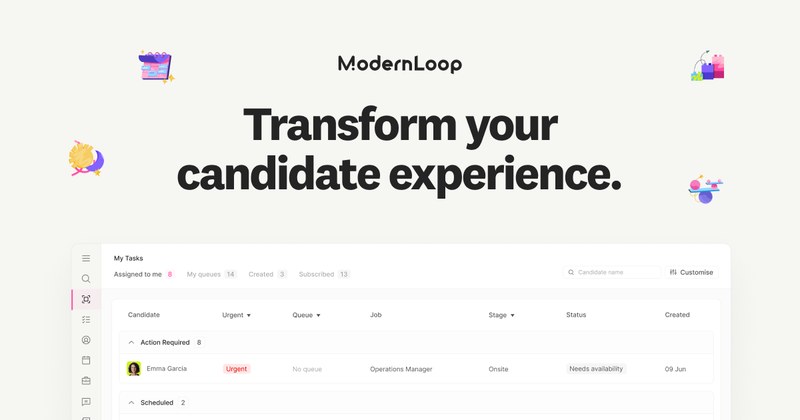
ModernLoop
ModernLoop is a San Mateo, California recruiting operations platform that automates interview scheduling and candidate communication for talent teams. Founded in 2020 by former Slack and Facebook product leaders Lydia Han and Christopher Triolo, it syncs with calendars, Slack, Zoom/Google Meet, and every major ATS to coordinate interviews, balance interviewer load, and run branded candidate portals. In 2025 the company expanded into AI with Taylor AI, an always-on AI recruiter that automates phone screens, FAQs, and zero-click scheduling for high-volume hiring.

Lydia Han
Lydia Han is the co-founder and CEO of ModernLoop, a recruiting operations platform she started in December 2020 to fix the chaos of coordinating hundreds of interviews. A product manager by training, she built Slack's calendar and Zoom integrations and set up Brex's interview process before founding the company through Y Combinator's W21 batch. ModernLoop has raised roughly $12.4M, including a $9M Series A led by Accel with the CEOs of Slack and Zoom writing checks, and powers hiring for companies like Ramp, Benchling, Chainalysis, and VSCO.
Sense
Sense is an AI-powered talent engagement platform that helps enterprises and staffing firms find, screen, schedule, and re-engage candidates through chatbots, SMS, voice AI, and a unified talent CRM. Founded in 2016 and headquartered in San Francisco, it serves 1,000+ companies including Dell, Sony, Coca-Cola and HCA Healthcare.