Tisha Livingston gave herself a year. Her business partner, Mike Zelkind, was talking about their new venture as the last job they would ever have. Livingston had a more practical arrangement in mind: prove the business could work, or find another job. A family budget has a way of editing a founder’s manifesto.
That was the bargain at the beginning of 80 Acres Farms. Founded in 2015, the company would grow crops indoors, in stacked layers, close to the people who would buy them. Livingston brought a manufacturing executive’s impatience with waste to a business full of things that refuse to follow a schedule. Plants, for instance.
Eleven years later, her story contains both an expanding technical ambition and an abrupt commercial reversal. A software platform developed inside the business went on sale to other growers in May 2026. In August, 80 Acres announced it was winding down. In September, the Dutch companies behind its technology arm, Infinite Acres, entered bankruptcy.
The distance between those events is where Livingston’s story becomes interesting. She wanted to make farming repeatable, measurable and teachable. Building that system occupied a decade. Keeping the business financed proved to be a different problem.
A factory education, with leaves added
Before she became an indoor farming founder, Livingston worked in food manufacturing. At AdvancePierre Foods, she served as vice president of manufacturing, overseeing 11 plants and more than 3,000 employees. She later became chief operating officer of Sager Creek Vegetable Company. Those jobs put production, logistics, costs and people at the center of her working life.
Her education included the University of Cincinnati, which her public professional profile lists for 1990 to 1995. A conference biography records a BBA in Operations Business Management. The vocabulary of her subsequent career makes sense in that light: capacity, consistency, capital efficiency, a production line that delivers what was promised.
There is a particular kind of ambition in moving from managing factories to trying to redesign how crops reach a grocery store. Food manufacturing begins with ingredients arriving at the door. Indoor agriculture pushes the operator’s responsibility backward, into the growing conditions themselves. The supply chain becomes something a founder can attempt to rearrange.
Livingston and Zelkind began in a 12,000-square-foot warehouse on Este Avenue in Cincinnati’s Spring Grove Village. Their early operation tested roughly 40 crops before concentrating on commercial products including salad blends and tomatoes. The range narrowed as the business learned what it could grow and sell. Even an indoor farm has to make room for customer preference.
Her mother’s test for a good idea
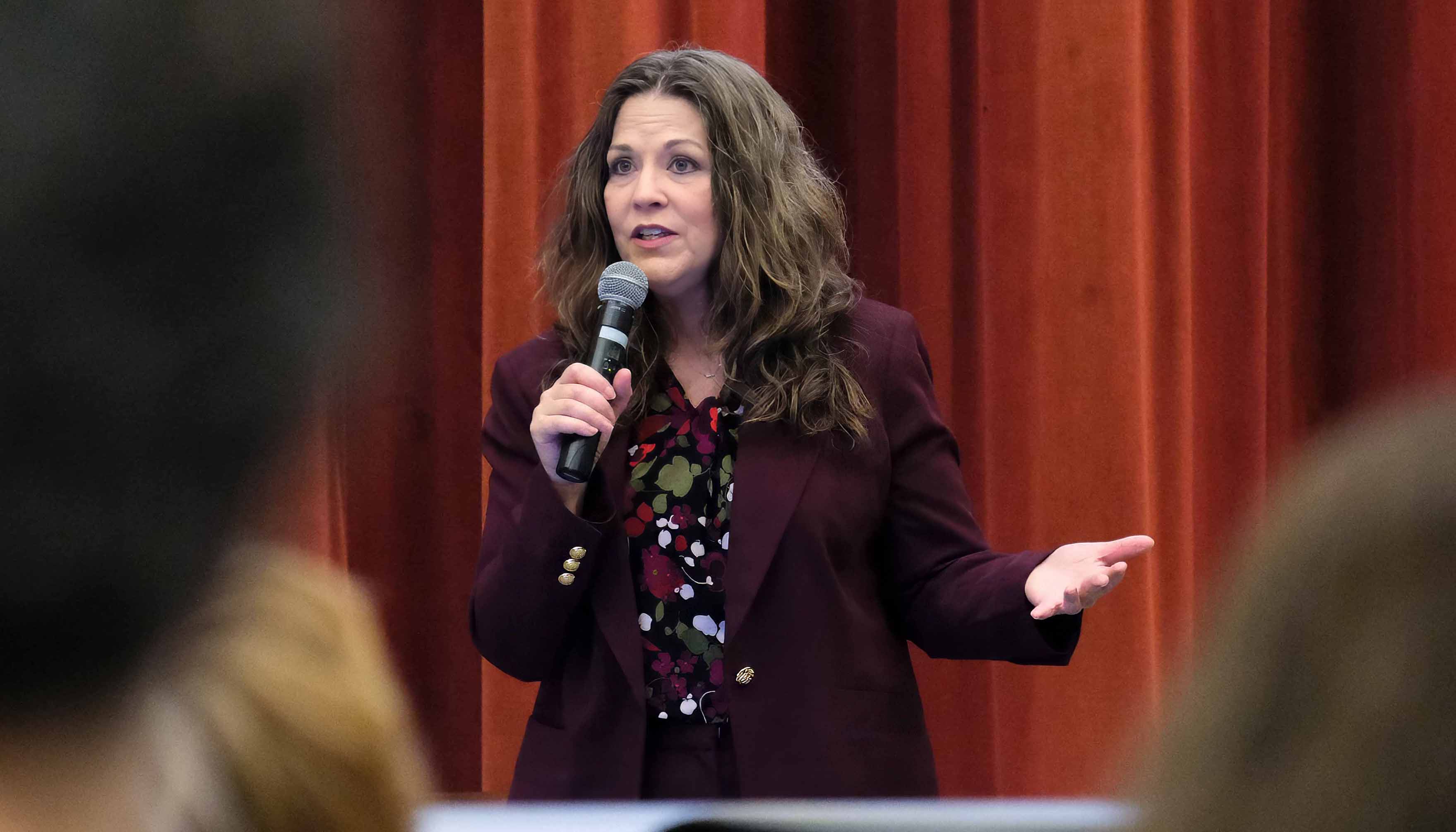
For someone responsible for sophisticated growing technology, Livingston has offered a refreshingly ordinary test of its appeal. “Some of my best consumer insights are from my mom,” she said. An explanation of photosynthesis, faster growing and lower costs did little for that audience. Produce picked hours earlier, rather than days or weeks earlier, was a proposition her mother could use.
That anecdote helps explain the double job Livingston took on. Engineers need an account of how a system works. Shoppers need a reason to put something in the basket. An indoor farm can impress the first group and still leave the second unmoved. Lettuce does not acquire a customer merely by having an interesting childhood.
Her mother’s response also puts a limit on the temptation to tell the whole technical story at once. A grower might care about irrigation controls. A retailer might care about predictable deliveries. Someone making dinner might care about taste and freshness. The same product has to answer each person in the language of the decision they actually face.
Livingston’s public work has crossed those audiences: technology partners, growers, retailers and conference rooms. The challenge of translation runs through all of them. A useful innovation needs people who can explain why another person should bother with it.
“Some of my best consumer insights are from my mom.”
Tisha Livingston
Three companies, one growing problem
By 2019, that willingness to combine different kinds of knowledge had acquired a corporate structure. Infinite Acres became a joint venture linking 80 Acres Farms, Dutch horticultural technology company Priva and British online grocer Ocado. The venture was announced in June; Ocado completed its partnership and investment deal that September.
The partnership’s design joined growing experience with climate controls, software, robotics and automation. Livingston was its chief executive. Each participant brought knowledge accumulated in a different business. The task was to make those capabilities useful together, inside farms producing a perishable product.
That arrangement fits an operator who had already managed large manufacturing organizations. Buying or combining expertise can be a sensible use of time. Rebuilding every specialist’s knowledge inside one startup also means paying for every lesson. The partnership gave Livingston a way to work across company boundaries while pursuing a common operating system.
In January 2021, Infinite Acres opened its reference-design farm in Hamilton, Ohio. Later that year, it became wholly owned by 80 Acres Farms. The structure changed, but the central assignment remained: develop technology that could be applied repeatedly, rather than treat every new farm as an unrelated invention.
Getting the machines to talk
Siemens joined the effort through a collaboration announced in 2023. Its work with Infinite Acres covered industrial automation, connected hardware, environmental controls and the software used to manage crops. Power distribution and building management belonged in the same conversation as growing recipes. The farm had become a place where several engineering disciplines had to agree.
One part of that collaboration involved developing a digital twin: a simulation of plant growth and the production process. The intention was to anticipate what different conditions would do and coordinate growing cycles with shipping schedules. It is an appealing prospect for someone trained to care about what comes out of a production line, and when.
The Siemens collaboration makes Livingston’s role more legible. She was connecting specialists whose equipment and knowledge needed to function as one operation. A lighting decision has consequences elsewhere. A crop schedule has consequences for packing and delivery. Integration is a substantial piece of the work, even when the individual components already exist.
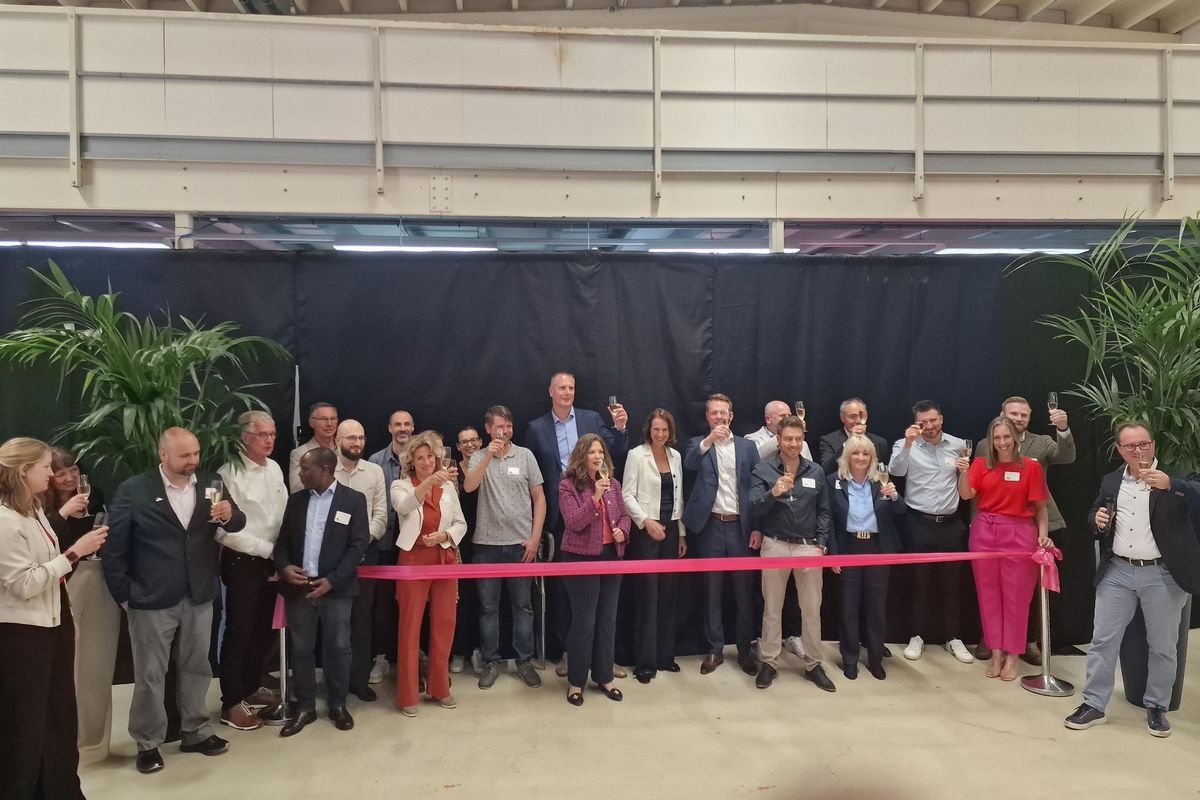
In June 2024, Infinite Acres opened its Field Lab in The Hague. Siemens, Signify, SICK and TTA were among its partners; the company also identified Delft University of Technology and Wageningen University as academic collaborators. A research center gave the partnership a physical address and a place to test ideas together.
The difficult part had calendars and priorities
Livingston described the next stage in practical terms. Signify was working to connect its grow lights with a common Siemens platform so lighting, climate and irrigation could communicate. TTA and SICK were collaborating on vision and sensor technology. These were specific attempts to remove the seams between systems.
By March 2025, she was also talking about the effort required to keep the collaborators collaborating. Each company had its own projects and priorities. Openness took attention. Partners had to keep choosing the shared work when other demands could pull them back toward their own organizations.
There is something recognizable here for anyone who has tried to finish a project involving several departments, let alone several companies. Agreement at the launch event is the pleasant part. Maintaining it afterward takes meetings, decisions and the willingness to expose unfinished work. Livingston’s account gives cooperation the texture of a management responsibility.
Her involvement extended beyond her own company. In 2020 she was elected vice-chair of FarmTech Society, an international association serving controlled-environment agriculture; the association confirmed her in the role again in 2023. Building relationships across the sector was part of her work as well as part of her argument for how the sector should develop.
Conditions & crops→Adjust
Light, climate, water→Measure
Results & demand
Repeat the cycle. Carry the learning into the next crop.
May’s launch, August’s stop
On May 18, 2026, Infinite Acres announced the commercial release of GroLoop. The platform combined software, environmental controls and robotics, and was designed to work with different hardware in vertical farms and greenhouses. Livingston’s team was offering other growers a system developed through its own operating experience.
The launch announcement said GroLoop managed nearly one million square feet under cultivation across six states. Livingston credited it with helping 80 Acres reach farm-level profitability. That distinction matters: the performance of a farm and the financing of the company around it are different measures.
On August 3, 80 Acres announced it was winding down operations. A potential acquisition had fallen through the previous evening. The company said it lacked the funding to continue. In Georgia, the Forest Park closure affected 110 workers. The reversal reached beyond a founder’s plans into the working lives of the people carrying them out.
Livingston continued discussing the industry. The Japan Plant Factory Association’s September 1 program listed her talk as “The Unicorn, the Asteroid, & the Phoenix: Tales of Vertical Farming.” At that appearance, she described a short financial runway following the Kalera and Soli Organic acquisitions, and pointed toward an approach involving genetics, farm design and tailored software.
A different kind of growing season
On September 8, Infinite Acres Holding B.V. and Infinite Acres B.V. were declared bankrupt in The Hague. Management attributed the Dutch failure to its heavy dependence on the American group for revenue. When that work disappeared, the remaining income could not cover its fixed costs.
By October, the trustee was examining possibilities for a restart and had approached interested parties. An information memorandum had been prepared. The work of finding a future for the assets was underway; a completed restart was a separate matter.
Livingston’s career now holds an uncomfortable pair of accomplishments and limits. She helped build farms, a technology business and a network of industrial collaborators. She also helped lead an enterprise whose financing failed. A serious account needs room for both. The bankruptcy belongs to the story just as surely as the opening ribbon.
At the outset, she had allowed a year to find a workable business. What followed was a decade spent moving between factory experience, plant science and the grocery aisle. The question she carried through those rooms remains a concrete one: how do you grow something people want, close to where they live, at a cost the operation can sustain? Her work made that question more specific. The events of 2026 made its financial demands harder to overlook.