Tim Hentschel’s introduction to hospitality included the dishwasher. It also included clearing tables, working the front desk and doing the night audit. Before he could put technology between a hotel and its guests, he had spent time on the hotel’s side of the counter. There are less glamorous apprenticeships than those suggested by a travel-company biography. There are few more useful ones.
He grew up in a family that owned hotels and operated a tour business. A third-generation hotelier, he had an unusually close view of a particular nuisance: arranging rooms for a crowd. A holiday might begin with a pleasant destination and end, for its organizer, in a small administrative career. Someone had to ask the questions, collect the prices and persuade the arrangements to agree with one another.
Hentschel’s early geography ran from Hawaii to Carmel, California, where he moved at thirteen, then east to Cornell. He graduated in 2001 after studying hotel management and taking computer science classes in the engineering school. Hospitality supplied the problems; computing offered a different set of tools for dealing with them. His concentration was micro-computing, a term with a pleasing whiff of the desktop era.
There was a detour into finance. At Commonwealth Associates in New York, he worked as an analyst, reading business plans. Six months spent examining other people’s ambitions proved useful preparation for setting down his own. The career he eventually chose would require both an understanding of hotel operations and the ability to explain why a business ought to exist.
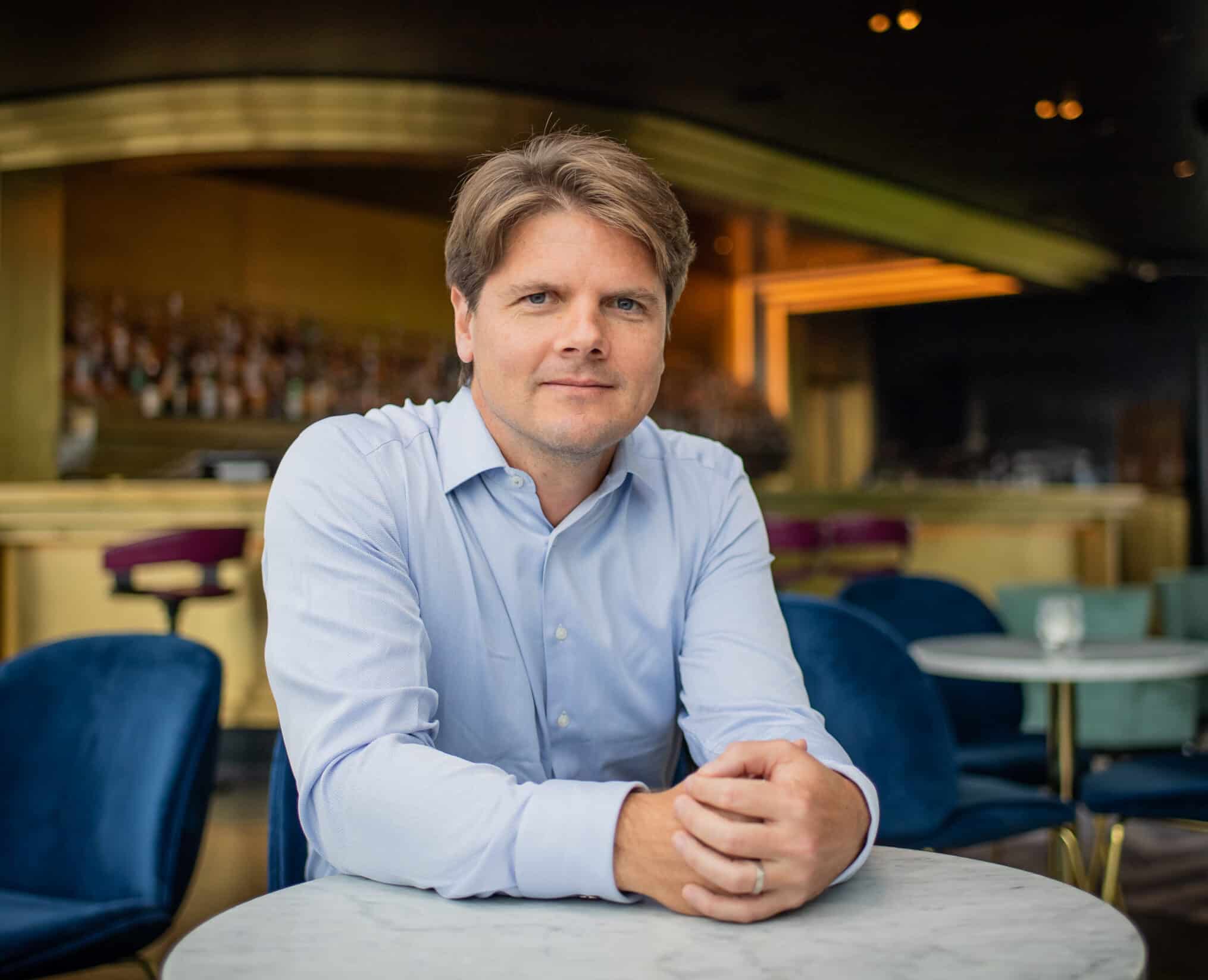
Two founders, one couch, many rooms
By 2003, Hentschel and software engineer John Prince had started HotelPlanner in San Diego. Prince’s apartment served as the office. The division of labor was wonderfully literal: Hentschel handled customers from the couch while Prince wrote the software. A company can acquire quite a lot of terminology as it grows. At this point, the organization chart could have been drawn on the furniture.
Prince brought a computer science education from Northeastern and experience at IBM and Capital One. Hentschel brought the hotel background and familiarity with his mother’s travel business. They raised a modest amount from friends and family. Prince later recalled that they initially paid themselves about $1,000 a month. The business began with practical roles and practical limits.
Their target was group accommodation. Booking one room had already attracted online travel businesses. A block of rooms still involved negotiation between an organizer and hotel sales teams. HotelPlanner let hotels bid for that business online. The organizer could describe a requirement, and interested properties could compete to meet it. The idea gave the hotel a prospective customer and gave the organizer a way to compare offers.
The distinction mattered to Hentschel. His opportunity lay in a corner of travel that his family experience had made familiar. He was applying software to work he understood. A wedding party, a sports team and a company meeting have different reasons for travelling, but each can leave one person responsible for everyone else’s bed. It was a market held together by an easily recognized human predicament.
The price of keeping the keys
Hentschel has described turning down an early offer worth tens of millions of dollars. His explanation was that the company still had work to do and could build relationships across the travel industry while remaining independent. Such decisions acquire an effortless air when told years afterward. At the time, an offer like that would have represented a very substantial alternative to taking customer calls.
Independence also required financing choices with consequences at home. He has said that he and Prince mortgaged their houses to buy out angel investors, then gave shares to employees. Their stated aim was a business whose employees shared in its ownership. This was a personal commitment to retaining control, with the family balance sheet involved in the argument.
His account of early funding conversations has a dry edge. Bankers, he recalled, suggested returning once the business had made its first million in profit. By then, he wondered, what precisely would he need them for? The founders reached profitability in their third year, according to his recollection. His skepticism about outside capital was formed through experience rather than discovered as a slogan.
Control suited a company built to work with other travel businesses. HotelPlanner could supply group booking technology behind someone else’s customer relationship. That kind of work rewards being useful, reliable and willing to let a partner occupy the foreground. Hentschel’s independence argument was therefore commercial as well as personal: keep the company free to connect with a broad range of organizations.
“be an expert and act like one.”
Tim Hentschel / on his guiding approach
An education that kept travelling
The operation outgrew California. The founders explored Florida in 2010 and chose West Palm Beach. International time zones were among the reasons for looking east. Meetings.com joined the business in 2012, extending its emphasis on corporate meetings. Offices in London, Hong Kong and Las Vegas gave the company a wider physical footprint as its booking relationships spread.
Hentschel moved to London to oversee international operations. He remains based there. The move is an instructive detail in a story about online distribution: a business may move information around the world instantly, but someone still has to learn how another market works. His work has involved living abroad as well as selling the convenience of going abroad.
Cornell recognized him with its Hospitality Innovator Award in 2018. At the time, HotelPlanner’s reported reach included more than 4.2 million group event planners and $7 billion in group hotel booking requests during 2017. Requests measure prospective business, so that figure should be read with its proper label. It nevertheless conveys how far the original apartment operation had travelled.
The relationship with Cornell continued through its hospitality entrepreneurship community. He has served as a board member of the Pillsbury Institute for Hospitality Entrepreneurship. In June 2025, he and Prince were named EY Entrepreneur Of The Year Florida award winners. Their names appeared together, as they had on the business from the beginning.
with John Prince
Innovator Award
with John Prince
Expertise, with the volume turned down
Asked about his guiding approach, Hentschel has endorsed a compact instruction: “be an expert and act like one.” His version of expertise includes knowing whom to bring into the room. Discussing the company’s ability to move quickly, he credited Prince’s technology team and hotel executive Bruce Rosenberg’s operational knowledge. He described recruiting specialist AI expertise as that work developed.
His advice to would-be founders follows the same line. Build around an industry you understand from the inside. Someone who knows construction, he argued, has a useful starting point for construction technology. The observation sounds plain because the hard part is the experience that precedes it. There is no shortcut in the instruction to know what you are talking about.
He also speaks about humility as something to practise, rather than an attractive attribute to announce. In discussing industry relationships, he cautioned against letting a run of successes obscure the contribution of partners. A booking platform inhabits a crowded network of suppliers and distributors. Winning a disagreement can be an expensive way of losing a working relationship.
That restraint sits beside a recognizable entrepreneurial appetite for control. The combination makes him more interesting than either trait alone. He wants room to make decisions, and his business depends on cooperation. Hotel distribution gives those impulses plenty of opportunities to meet. The guest may see a single reservation; the people delivering it have rather more relationships to maintain.
The telephone makes a comeback
HotelPlanner’s more recent work returns to an older travel habit: talking to someone before buying. The company built a distributed reservations operation using independent agents, then developed AI voice reservations. Hentschel’s current remit includes both the technology and a global customer service network. A hotel business built around the internet has found fresh commercial interest in the telephone.
In a sponsored September 2026 interview, he discussed Reservations.ai as technology for outside travel partners. His account included a candid admission: “The results were stunningly bad at first.” He put early booking conversion at roughly 1-2 percent, rising to about 14-16 percent over a year. Those are his reported internal figures. Understanding accents, slang and the way customers actually speak formed part of the improvement.
He also said around 30 percent of customers still asked for a person. That makes the human handoff part of the product. His preferred use for AI includes handling overflow and busy periods alongside agents. A conversation can involve live availability, prices, payment and the customer’s understanding of an offer. Pleasantly answering the opening question is only the beginning of the job.
The next ambition is to combine speech with touch, letting a traveller talk through a search and use a screen when convenient. It is a revealing continuation of his original interest: reduce the work between wanting a room and securing it. The interface changes, but the awkward practical details continue to provide employment for the imagination.
Still in the business of arrivals
Hentschel’s outlook on travel remains expansive. In a September 2026 podcast conversation, he pointed to remote work and people with more freedom over their time as reasons for sustained demand. He also discussed investing in physical hotels after years spent in travel technology. The family trade has, in that sense, remained close at hand.
His public work extends beyond booking systems. He created the American Group Travel Awards in 2011, an annual event with charitable proceeds. There is a natural fit between recognizing group travel and convening people in person. The enterprise that began by helping organizers assemble a room block now has its own occasions for bringing an industry together.
The enduring detail is the early experience behind the software. A front desk, a night audit, a mother’s travel business, a colleague writing code across the room: these are concrete places to learn what a customer needs. Hentschel has spent more than two decades changing the machinery around that encounter. The traveller still wants the same modest assurance at the end of it: a room, on the agreed terms, when they arrive.
Continue the conversation
More from Tim Hentschel and the people who have interviewed him.
HotelPlanner leadership ↗Tim Hentschel on LinkedIn ↗Tim Hentschel on X ↗Watch: Suite Success, September 2026 ↗Watch: WTTC interview, 2022 ↗Read: A conversation with Adam Mendler ↗Listen: Tim Hentschel with Dorothy Dowling ↗Read: Reservations.ai interview, September 2026 ↗Cornell’s 2018 award announcement ↗