Three hours can look like a nuisance on a timetable. There is a lecture before them, another commitment afterwards, and just enough time in between to be useful to somebody. At University College London, Sam Schlagman and his brother Sol noticed that students needed money, while the jobs available to them often demanded more of the day than they could spare. Friends missed lectures to make shifts. Sometimes they missed shifts to make lectures. Neither arrangement offered much of a future.
The brothers went looking for the other side of the problem. Nearby businesses also had awkward hours: a burst of customers, a need for extra hands, then a quieter stretch. A student’s inconvenient gap and a restaurant’s inconvenient rush began to look rather compatible. Stint, launched in 2018, was their attempt to introduce them.
For Sam, now publicly identified as Stint’s co-founder and CEO, the idea became a career. It also became more complicated. A short shift sounds wonderfully simple until somebody has to organise it, repeat it and make sure the people arriving know what they are doing. Much of his story lives in those details.
A family inclination, a campus problem
Sam and Sol came from North London and described entrepreneurship as a familiar ambition. Business ran through their family; they singled out their grandfather as an influence. Going into business themselves was already an appealing prospect. University supplied a particular problem to work on.
They began developing the idea while studying at UCL in 2016 and spent two years testing it before launching. The choices that followed were substantial. Sam left university. Sol declined a job in the City. Their paths into the company differed, but both gave up an available next step to pursue something less certain.
There is an irony in leaving university to help other people stay there. Sam’s business depended on taking the student timetable seriously, including the hours outside paid work. A lecture, an exam and a social life all had claims on that time. The conventional part-time job could be a rather demanding guest.
The brothers said they approached more than 1,000 businesses. That figure gives the origin story its useful weight. They had noticed their friends’ frustrations, then gone out to ask whether employers had a corresponding need. It was a long conversation before it became a product.
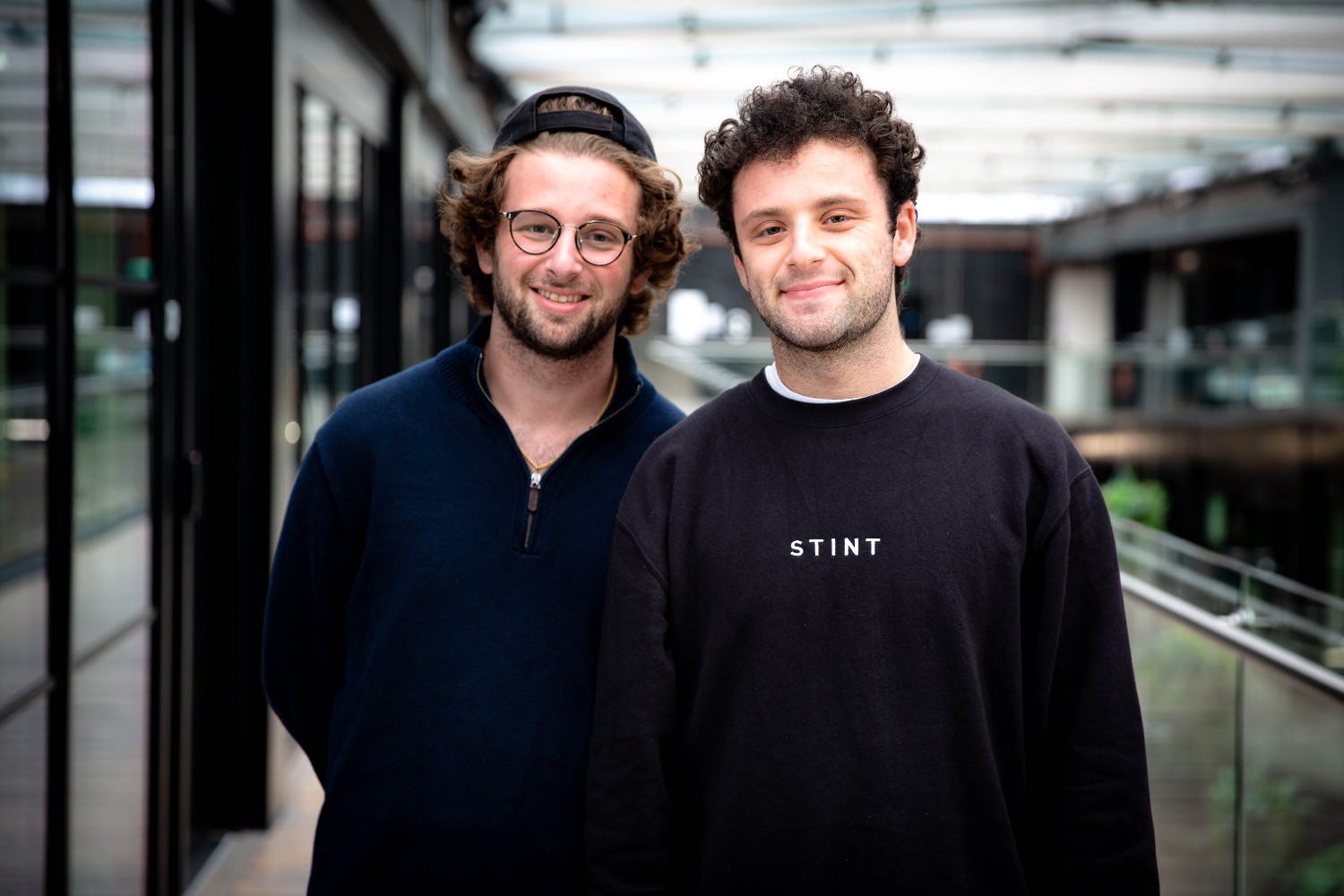
The first software was a conversation
The first version of Stint involved WhatsApp and Facebook groups. The brothers recruited fellow students and arranged work manually. Before an algorithm could make the match, somebody had to find the person, understand the job and join the two together.
This beginning matters because a message is a fairly unforgiving prototype. An app can display an opportunity beautifully; a message still needs an answer. Would the student accept? Would the timing work? Would the business find the extra help useful? The early service had to face those questions in their ordinary, practical form.
In their account of the early company, Sam and Sol described five people working from the ground floor of a shared house. They did Stints themselves. The distance between designing a service and delivering it was short enough to walk across.
By September 2020, more than 20,000 students had registered. The brothers described mistakes as part of learning how to run the company, and feedback as a continuing influence. Their advice to other founders was correspondingly practical: speak to the people the business hopes to help.
“Always make sure you’re speaking to the people you are trying to help or your business is trying to reach.”
Sam and Sol Schlagman · 2020
A few hours, used properly
The original proposition rested on dividing work into smaller pieces. At a restaurant, a short-shift worker could handle tasks such as folding napkins or polishing glasses and cutlery. Those jobs may lack glamour. They do have the advantage of needing to be done.
Helping with them could release experienced staff to spend more time with customers. Sam’s explanation connected that extra attention with the ability to serve more people without sacrificing service. The commercial argument and the student argument met at the same point: a few hours could have value without turning into a whole day.
Busaba was among the early operators using Stint. Its operations director described the benefit of extra help during busy periods, allowing the established team to build a rapport with guests. That is a more specific promise than simply adding headcount. The purpose was to put people’s time to better use.
A short shift still carries practical limits. Travel can consume a large share of a small working window. Tasks need to be clear. The venue needs enough suitable work to make the arrangement useful. Stint’s emphasis on nearby students and basic support tasks follows the logic of the original idea: keep the pieces small enough to fit, and close enough to reach.
The students in the story
Sam’s public writing offers another view of what held his attention. In 2019, he published a series introducing students using Stint. One profile followed Cecilie Lauridsen, studying media and communications at the University of the Arts London. She had worked in different jobs before joining the platform and later helped its media team find events in London.
The detail is useful because it gives the worker a life beyond availability. Cecilie spoke several languages and had interests ranging from graffiti to horse-riding. In Sam’s account, paid work sat among those pursuits, with the possibility of leading somewhere else.
His later public posts also drew attention to students discovering hospitality careers through short shifts. That is an interesting consequence of a service built around fitting work into limited hours. Trying a job for a small part of the day can also introduce somebody to an industry they had not planned to join.
There are lighter fragments in the same public record. Sam joked that Wimbledon had made the office unproductive. He thanked colleagues for drawing Argentina for him in a World Cup sweepstake. Even a company devoted to allocating time apparently has room for discussing the tennis.
Same faces, shorter shifts
Stint’s later Teams model addresses something the first match cannot settle: familiarity. A restaurant may want flexibility without having to explain its routines to an entirely new person every time the lunch rush arrives.
The service shortlists workers near a business. Operators can review introductory videos and choose people for trial shifts. After two Stints, the business can decide whether somebody should join its repeat team. The intention is to bring back workers who become more familiar with the venue and its operations.
This adds a second dimension to Sam’s original problem. The length of a shift concerns time; returning workers concern continuity. A two-hour block becomes easier to use when the person arriving already knows something about the place. The arrangement asks flexibility and familiarity to share a table.
Recognition arrived along the way. Stint placed 26th in the 2021 TechRound 100, with an entry reporting more than 100,000 student sign-ups across 150 university campuses. In 2022, the company announced Sam as a finalist in the Great British Entrepreneur Awards’ Start-Up Entrepreneur of the Year category. These were milestones for a venture that had begun by arranging shifts in group chats.
Sam’s public description of the culture he wanted at Stint adds something to the picture. He named kindness, ambition, energy and integrity as its four values, and advocated a workplace where ideas could be judged without egos getting in the way. It is an aspiration with a practical test in a business built around other people’s working days. Managers, students and the company’s own team each see a different part of the service. Making room for their feedback would seem a sensible place to begin. His earliest advice about listening remains relevant long after the first group chat.
The next job is the rota
Today, Stint sells workforce management software as well as access to workers. Its Stint AI offering includes demand forecasting, suggested staffing levels and scheduling. The company describes the move as growing out of years spent alongside hospitality managers, whose work included wrestling with administrative systems before anyone could be assigned a shift.
The progression has a recognisable logic. Once a business can bring in flexible help, it still has to decide when that help is needed. A service that fills gaps will regularly encounter the process that creates the schedule. Whether the software earns its place depends on what happens in working venues, where a tidy plan must survive an untidy day.
As viewed in October 2026, Stint’s story page reports more than 300,000 accounts created, a waitlist exceeding 60,000 and availability in more than 30 UK university cities. Those are cumulative registrations and advertised coverage. They should not be read as a count of people actively working. The workforce page separately describes more than 100,000 Stinters.
Cumulative app registrations, observed October 2026. A sign-up measures interest; it does not count a completed shift.
For Sam, the ambition expressed in earlier public comments was to help students enjoy university without having to sacrifice their studies, social lives or finances. The company’s newer products widen the business problem while keeping time at its centre. Students have hours to protect. Managers have hours to allocate.
The spare three hours are still there, waiting between commitments. Schlagman’s career began with the observation that somebody else might need exactly that much help. Turning the observation into a service required conversations, messages, early shifts and repeated adjustments. The elegant part was spotting the overlap. The work was getting everyone there on time.