A color theme sounds like a small undertaking. Choose a background, find a pleasing green, persuade the punctuation to behave. Then someone installs it, opens an actual file and discovers that a comment has practically vanished. The designer has acquired a new job: answering for every shade of every line.
Tiago Peter Gerstheimer knows the territory. In 2020, the product designer made a Visual Studio Code theme using colors he had developed for Hack The Box. It began as an experiment in syntax and semantic highlighting. A designer was venturing into the machinery behind the interface, testing whether the visual language of a cybersecurity platform could work where people wrote code.
The small project is a useful entrance to Gerstheimer's larger career. He works on the things that sit between a person and a technically demanding task: how to enter a platform, how to understand a machine, how to recognize what matters on a screen. In that territory, the decorative detail has a habit of becoming a practical problem.
A pocket-sized beginning
His fascination with digital design started with a Game Boy in 1999. Warcraft followed, along with creating visuals for internet forums between 2005 and 2010. A screen offered an appealing proposition: move a few pixels, and something that had not existed could take shape.
Formal study gave that interest a commercial frame. He studied graphic design at ESPM from 2010 to 2015, with an emphasis on marketing, and Digital Futures at OCAD in 2013 and 2014. His LinkedIn account identifies him as ESPM's first student accepted into the Science Without Borders international scholarship program. The connection to OCAD also appears in the program's published selection results.
The contrast between those educational settings is instructive. Graphic design asks how a message takes form. A program called Digital Futures invites questions about what that form might become. Neither makes a cybersecurity designer inevitable. Together, however, they offer a plausible foundation for someone whose work moves between visual identity, interaction and the business purpose of a product.
Gerstheimer describes having launched half a dozen apps, recruited teams, raised money and experienced failure. His account includes starting again. That is a less tidy education than a degree, and a rather useful one when the next interface must survive contact with its users.
Before the green glow
His early professional work included web design at Procempa and a summer UI/UX internship at Konrad Group in 2013. He later worked at Melewi, a design studio collaborating internationally. That sequence took him through local work, a Canadian internship and a studio whose clients crossed borders.
His subsequent projects span financial services, influencer marketing, game textures and AI fashion. Those are different kinds of information to organize. A portfolio of assets and a tool for generating a texture do not ask the same questions of their users. The connection is the designer's need to learn the work before arranging its controls.
Alex Reid, a longtime collaborator, describes Gerstheimer as attentive to research and planning, with an ability to understand technical constraints and turn them into a coherent experience. Filipe Barros emphasizes his openness to feedback and readiness to adapt. These are descriptions of working alongside him, rather than the applause that follows a finished screen.
That distinction matters in product design. A polished mock-up can be admired in isolation. An interface must negotiate with engineers, product managers and users, each of whom has a perfectly respectable way of ruining an easy answer. Gerstheimer's career has increasingly placed him inside that negotiation.
Employee ten, with a design department to build
Gerstheimer dates his advisory work with Hack The Box to late 2018 and early 2019. He became its founding designer in 2019. The company had launched in 2017, offering a way to practice cybersecurity through hands-on challenges. He describes joining as employee number ten.
His remit extended beyond individual screens. He established the design function, built a team of four product designers and developed hiring rubrics, interview approaches and leveling frameworks. He also led branding work from 2019 to 2021 and designed across Labs, CTF and Battlegrounds.
Building a design function means giving decisions somewhere to live. A hiring rubric helps explain what a team values. A leveling framework makes expectations discussable. These documents rarely appear in the attractive part of a designer's presentation, yet they shape who gets to make the next attractive thing.
The company grew around that work. Gerstheimer describes a transition from ten employees to more than 400. That scale changes the character of a design question: a decision once settled among a few colleagues must now travel across teams and products. The person who began by making interfaces also has to help other people make consistent decisions.
The difficult part should be the challenge
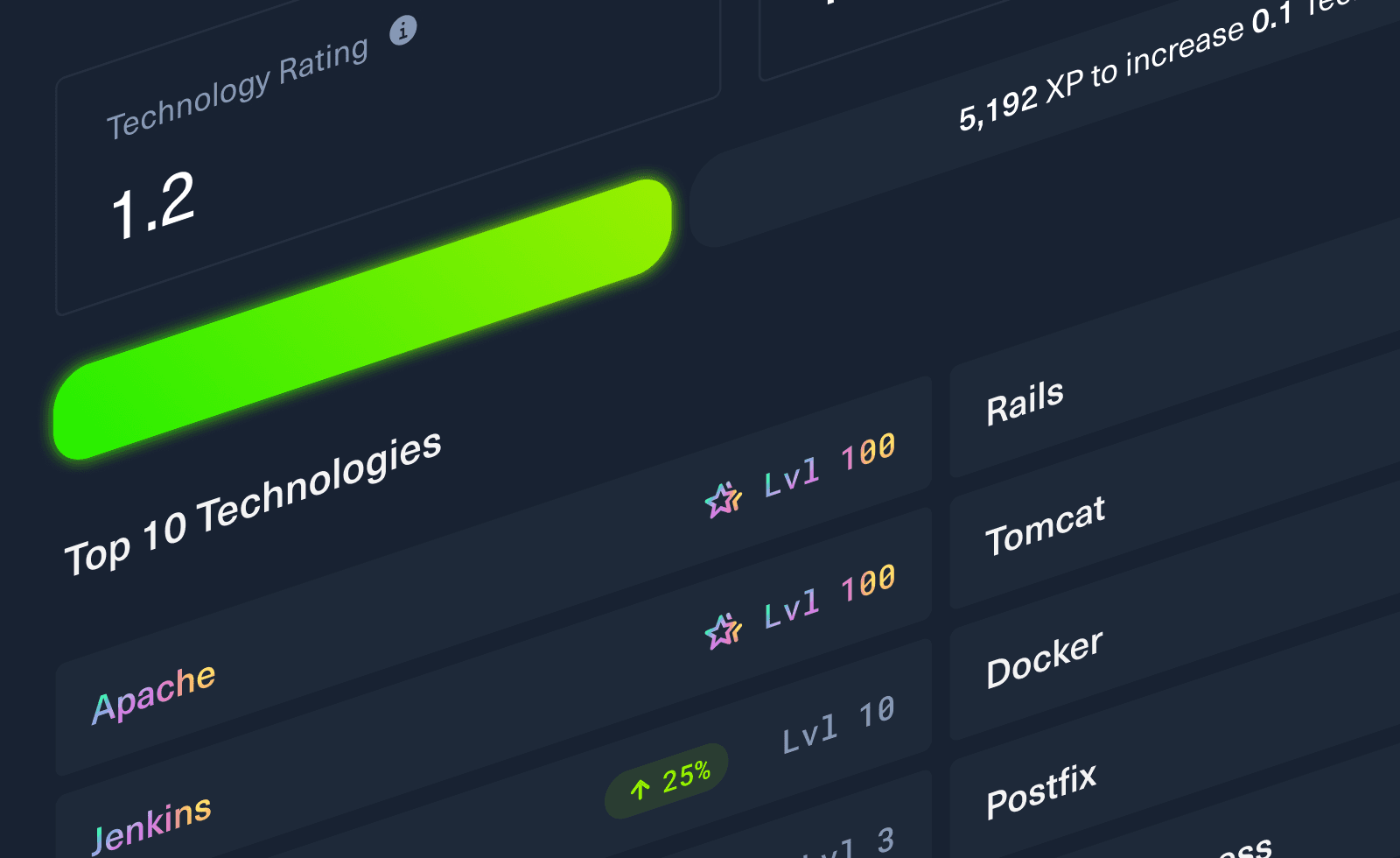
Labs was the first Hack The Box product Gerstheimer took on. Its virtual machines and challenges simulate security vulnerabilities for penetration-testing practice. The subject matter comes with enough difficulty of its own. A learner still needs to understand how to connect, where to begin and what the interface is showing.
His work included making IP addresses understandable as entry points and helping beginners grasp the idea of establishing a foothold in a system. He subsequently worked on information architecture and the strategic direction of the product suite, alongside branding and art direction.
There is an interesting boundary here. A training challenge can deliberately withhold the answer. An interface that obscures its own operation adds a different sort of puzzle. The designer has to judge which difficulties belong to the exercise and which merely prevent someone from reaching it.
Gerstheimer's responsibilities crossed that boundary repeatedly: visual explanations for newcomers, structures for navigating a product, and coordination with developers and project managers. It is easy to picture cybersecurity through its dramatic moments. Much of the design work happens before those moments, while someone is trying to establish a connection and get started.
One account, fewer interruptions
By 2023, his Core work was addressing the connections between Hack The Box products. Research, surveys and interviews informed priorities that included single sign-on, a unified profile, account settings and VPN reliability. A growing collection of tools was asking users to cross too many seams.
Gerstheimer says the resulting work achieved complete product adoption of single sign-on within three months and increased cross-platform engagement by 22 percent. He describes a five-phase design strategy running over a year, working with product management, engineers and other designers.
Those figures concern a team effort. Their relevance to his story lies in what the team chose to measure. Access and movement between products became design outcomes, alongside the appearance of any individual page. A successful sign-in is an unusually modest sort of triumph: the user simply gets on with the work.
The same concern appears in his design-system work. Alongside four other designers, he helped create more than 100 components over two years, connecting Figma design, Confluence documentation and Storybook implementation. Components give repeated decisions a shared form. They also make disagreement more specific: everyone can discuss the same button, rather than five distant cousins pretending to be one.
Team outcomes, as described by Gerstheimer.
A theme leaves the screenshot
The Hack The Box theme brought Gerstheimer into another kind of collaboration. Its public repository credits Silo and friends and invites suggestions. Installation instructions sit beside recommended editor settings. The work is presented as something that can keep changing, with users participating in the process.
A theme occupies a peculiar place in software. It is personal enough to express taste, yet practical enough to influence how a file is read. A color can look delightful in a promotional image and behave badly when it appears hundreds of times in a working window. The screenshot is a charming witness with very limited testimony.
In a 2023 company post, Hack The Box said its Visual Studio Code theme was used by more than 100,000 hackers. For a project that began with a designer exploring editor colors, that was a substantial audience. It also meant plenty of opportunities for the design to meet files, languages and preferences its maker had never anticipated.
The repository's emphasis on syntax and semantic highlighting makes that practical ambition visible. Colors need to help distinguish roles in code. The job continues beyond selecting an appealing palette, into checking how meaning survives the editor's own rules. The design has to function in someone else's working environment.
“Product Designer zooming in on the little things”Tiago Peter, his Dribbble introduction
The next project is a compiler
In April 2026, Gerstheimer published an explanation of a theme compiler written in TypeScript. His approach describes a palette once, organizes it into 30 semantic roles and translates the result for multiple editors. Separate compilers handle each target, while a shared system determines the colors.
The product built around that approach is Themery. It lets people create IDE themes, including with AI, and export them to editors and terminals. Gerstheimer presents it as a response to lessons from maintaining the Hack The Box theme. The recurring problem is consistency: one visual intention has to pass through several different technical vocabularies.
There is a recognizable echo of his work at Hack The Box. Separate products needed a common design system; separate editors need a common description of a theme. The comparison is about his method, rather than their size. In both cases, repeated manual choices create opportunities for things to drift apart.
A compiler makes those relationships explicit. Decide what a string or a keyword should look like, and translate the decision into the form each editor expects. The creative choice remains, but some of the repetitive translation becomes machinery. A designer's experiment with colors has grown into a tool for other designers to use.
There is still a game to make
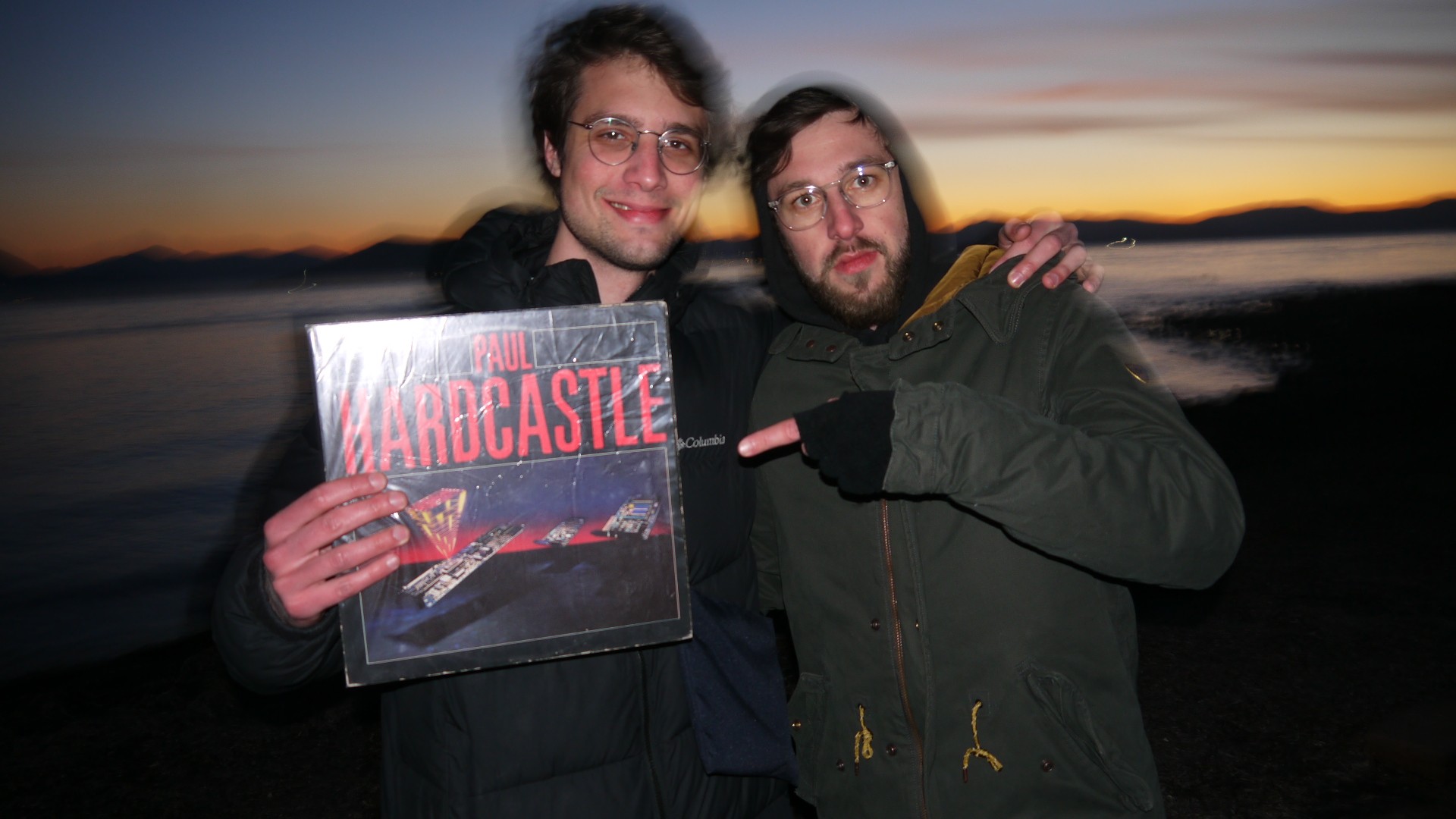
Gerstheimer lives in Porto Alegre. His background crosses Brazil, Canada and Germany, where he was born. Away from digital work, he throws pottery, collects vintage objects and describes his gardening with cheerful skepticism. His candid photo with a Paul Hardcastle record provides a pleasingly physical counterpart to all those pixels.
He also wants to make his own pixel-art game someday. That ambition returns to the scale of the Game Boy: an imagined world assembled from small visual decisions. After teams, frameworks, account systems and compilers, the appeal of arranging pixels into something playable has survived.
The career is easiest to understand through that continuity. Gerstheimer keeps encountering a small detail that has consequences for someone using the result. An address needs an explanation. A component needs a shared definition. A color needs a role. Each decision carries a little more responsibility when the audience grows.
His next game may be years away. In the meantime, there are plenty of pixels already in circulation, and plenty of people trying to do something with them. The enduring design question is close to the one that began the fascination: what can you make happen on this screen?