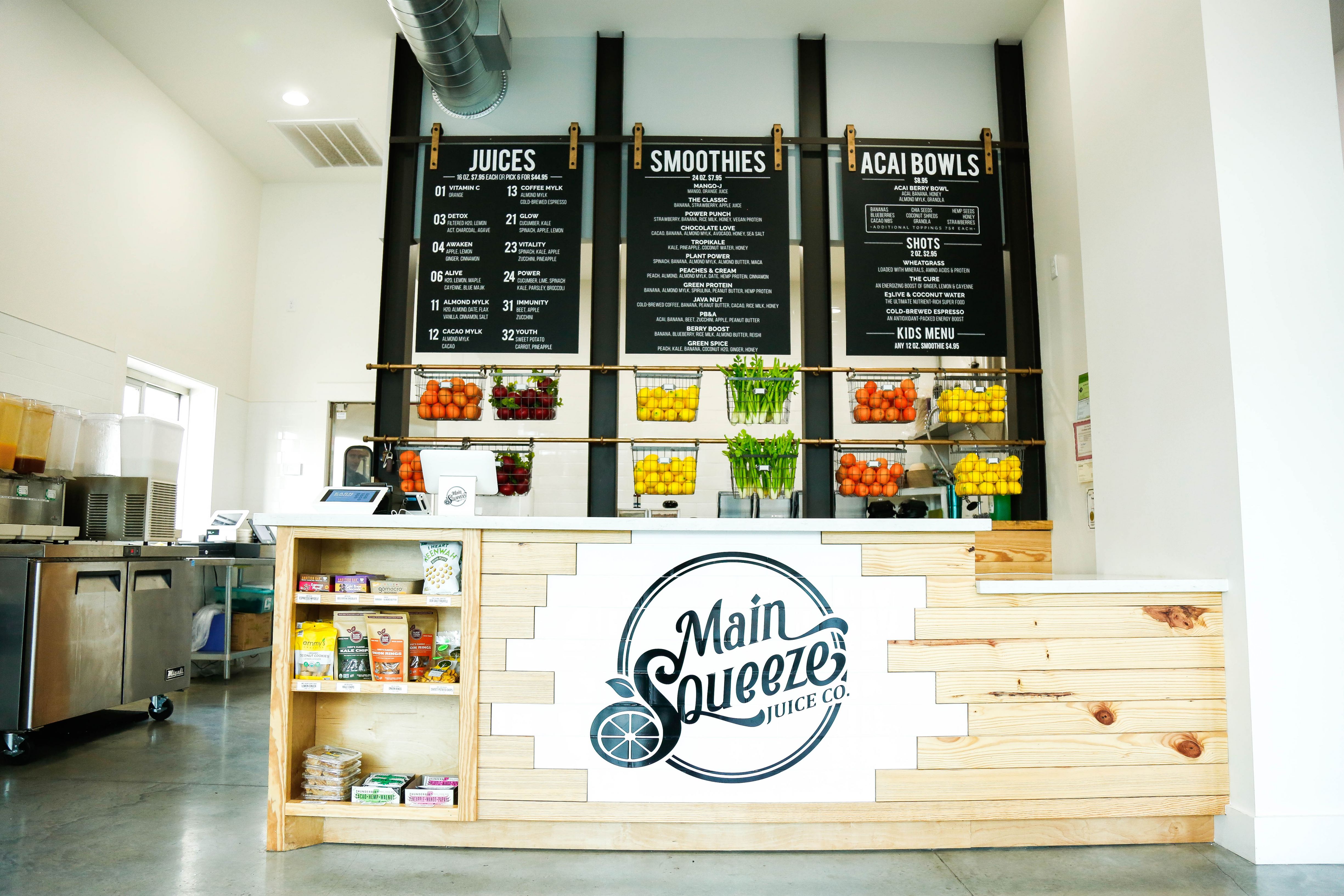
Thomas Nieto went to Lake Charles to look at a phone-repair business. Somewhere along the way, he agreed to help unload produce. The invitation had the modest appearance of a favor. It became a change of industry. Matt and Miranda Duplichan, preparing their Main Squeeze juice bar, offered him samples in thanks. Nieto arrived with retail experience and reservations about juice. He left with a business proposition taking shape.
There is something pleasingly inconvenient about the episode. A career plan generally prefers to make its entrance through the front door, carrying a presentation. This one arrived with a delivery. Nieto was already looking for his next venture after the sale of In & Out Smart Repair. The product surprised him. More consequentially, he could imagine other people buying it, and other operators selling it.
“I’m from South Louisiana. No offense, but I don’t really do juice.”
Thomas Nieto, recalling his first taste test
A salesman before the smoothie
His preparation had happened in a different kind of store. Nieto joined Cingular Wireless, later AT&T, as a retail sales consultant in 2005. He spent about a decade there, moving into management. In his account of those years, the attraction was helping teams develop. Selling a handset was one transaction; teaching another person to become effective at the job offered a longer engagement.
He grew up around New Orleans, one of five siblings, and described an early interest in leading through his church. That experience preceded the corporate titles. It also gives some context to his recurring emphasis on people: the executive vocabulary came later, but the pleasure he described in helping a group make progress was already there.
In 2015, he joined his friend John Mike Heroman at In & Out Smart Repair as COO and minority partner. The move took him from a large employer into a franchise venture. Before its sale to CPR Cell Phone Repair, the team had opened 78 locations, by Nieto’s account. An operating career was becoming an entrepreneurial one.
One book he singled out from his retail years was John C. Maxwell’s The 21 Irrefutable Laws of Leadership. Nieto said he used its principles in a leadership series at AT&T. The choice fits his public way of talking about management: accessible rules, repeated practice, and a belief that people can do more than they initially think possible. The language is expansive. The setting was practical: teams responsible for running stores.
The family business, with job descriptions
Nieto helped establish the Main Squeeze franchise enterprise in 2017. The original shop belonged to the Duplichans; the task he took on was developing a model that could operate beyond it. His brother-in-law Michael Canseco brought legal and financial experience. His sister Julie Nieto Canseco became part of the operating team. The relationships were personal. The responsibilities were specific.
The wider family also supplied construction, accounting, and marketing expertise as the company developed. This was a startup drawing on people close enough to call, and qualified to do particular jobs. Kinship may shorten the introductions. It does rather less for a store awaiting its buildout or a franchise agreement awaiting scrutiny.
Julie joined in quality assurance and became COO in 2020 before later taking the chief dietitian officer role. That progression matters to the family portrait. Her involvement had a professional substance of its own. Main Squeeze assembled related people with different functions, rather than asking one enthusiastic founder to impersonate an entire corporate department.
An introduction from the Saints
The company’s circle soon extended beyond family. Marques Colston and his wife Emily first heard about Main Squeeze through LinkedIn outreach. The timing helped: they had been discussing the absence of a convenient juice and smoothie shop near their home in New Jersey. A message met an existing interest. Even a recognizable recipient is, on occasion, simply someone with an unanswered shopping problem.
For Colston, the Louisiana connection had weight. The former Saints receiver wanted to help build a business with New Orleans roots. He would work with Nieto as the franchise developed. The partnership gave Main Squeeze an association that local customers could recognize before they had ever walked into a store.
Thomas Morstead later joined as a minority partner. A Main Squeeze location was close to his New Orleans home, and he connected with Nieto over their business ambitions. Colston’s involvement was another link. These were relationships with an identifiable geography: a nearby shop, a familiar city, people already connected through the Saints. National ambitions were being assembled from decidedly local introductions.
The machinery behind the counter
Nieto’s responsibilities included franchise sales, site selection, corporate management, and franchisee support. Each covers a different moment in an operator’s life. Someone considering a franchise needs information; someone choosing a site needs judgment; someone with an open store needs answers. Growth connects all three. The agreement is signed once. The operating relationship continues.
Technology became part of that proposition. Main Squeeze developed proprietary systems, mobile ordering, and pickup tools. Nieto described convenience as something the company had to deliver in the actual transaction. An attractive product still needs an order taken correctly and handed over promptly. A customer sees the cup. An operator also sees the sequence of tasks that made it appear.
His approach to selecting franchisees was similarly layered. Available capital came first, but he also wanted a connection to the company’s values and a history of getting things done. Restaurant experience could help shorten the learning period. It was not his only test. He was assessing whether the relationship could withstand the less glamorous portions of operating a store, when enthusiasm has to report for another shift.
A Bossier City episode gave that interest in operators a concrete form. Taylor and Jon Shellhaas were given the opportunity to own the Main Squeeze location they had helped turn around. Nieto praised Taylor’s management and Jon’s unpaid grassroots marketing work. He also pointed to a secret-shopper audit in which Jon scored 99. The number is small enough to belong to one visit, and specific enough to reveal what caught the executive’s attention.
Buying the business he used to study
In March 2023, Main Squeeze announced its acquisition of I Love Juice Bar. Nieto had previously looked at financial information on that company’s website while developing Main Squeeze’s models. A business that once supplied a useful reference had become an acquisition target. There are tidier ways to demonstrate progress, but few with such a satisfying reversal of perspective.
At the announcement, Main Squeeze had 28 locations and I Love Juice Bar had 23. Nieto highlighted the lack of overlapping territory. Expansion could add places the brand had not already reached. The transaction followed Main Squeeze’s 2022 partnership with Conscious Capital Growth, which provided backing for its next phase.
The next stage required conversions: training employees, installing equipment, and introducing the Main Squeeze systems and menu. By March 2024, Nieto was describing plans to keep and convert eight or nine of the acquired units. An acquisition announcement and the eventual operating footprint answer different questions. The distinction becomes especially useful when an appealing sum threatens to do the thinking for the reader.
He also wanted to expand fresh food sales, adding occasions beyond the established juice and smoothie business. His 2023 plans framed that as growth in the overall business, with more reasons to visit throughout the day. It was an operating ambition with consequences for menus, equipment, and staff. New revenue categories have a habit of arriving with new work attached.
When the CEO title changed hands
Nieto’s tenure ended in March 2024. He was removed as CEO on March 20 and challenged the company’s actions in court. Main Squeeze publicly announced Jennifer Dodd as CEO on July 11. A profile of his contribution needs that boundary: the executive who helped build the franchise operation belongs to a particular period in its history.
The dispute produced procedural court decisions. In May 2024, a Louisiana appellate ruling addressed overlapping proceedings; a related federal ruling returned litigation to state court. Those decisions did not determine the underlying ownership dispute. They establish a change in leadership and a contested aftermath, without supplying a verdict on every disagreement between the parties.
It is a less convenient ending than the uninterrupted upward curve favored by business profiles. It is also part of the record. Nieto’s earlier work remains visible in the franchise enterprise he helped organize, the operators it recruited, and the acquisition it undertook during his tenure.
His career’s most revealing turn still happens at the beginning of that chapter. He knew phone stores. He encountered a juice shop. Then came the work of making an unfamiliar product into a familiar operating problem: people, locations, systems, and customers. The produce delivery makes a good opening scene. The years spent after it are what give the scene its consequence.