Thomas Nieto went to Lake Charles to look at a cellphone repair business. He ended up unloading produce. The people opening a juice bar nearby offered him a tasting, which presented a small problem: he did not particularly like vegetables. In his account to 1851 Franchise, he warned them he might spit out what they gave him. Then he tasted it. A few weeks later, the phone-repair operator was helping turn Main Squeeze into a franchise.
- Juices, smoothies, bowls, and food, sold through a franchise network.
- Daily in-store pressing meets software, training, and mobile pickup.
- A once plant-based menu now includes selected non-vegan additions.
The amusing part is the conversion of a vegetable skeptic. The useful part is what followed. A drink that surprises one customer is a promising product. A business that can deliver that surprise repeatedly, through different owners and employees, needs rather more machinery. Main Squeeze’s story lives in that gap.
A handful is not an operating manual
The original Lake Charles shop was the work of Matt and Miranda Duplichan. Nieto brought experience growing a phone-repair franchise; Michael Canseco brought legal and financial experience, while dietitian Julie Nieto Canseco became part of the operating team. The franchise enterprise took shape in 2017, with its headquarters in New Orleans.
One early obstacle was almost comically ordinary. As Nieto recalled to Biz New Orleans, recipes involved informal measurements: a pinch, a handful. That works when the person who invented the drink is holding the blender. It becomes a problem when someone in another city needs to reproduce it. He described writing an operations manual to make the concept scalable. The first bottleneck in this telling was reproducibility.
“If this can win me over, it can win anyone over.”Thomas Nieto · 1851 Franchise
The lesson travels well beyond juice. Before selling someone a system, define what the system does. Measurements, training, vendor arrangements, and service routines turn an appealing shop into something another operator can run. Family members filled several early leadership roles, but the work itself was specific: nutrition, finance, construction, marketing, and operations.
The menu has to win the next visit
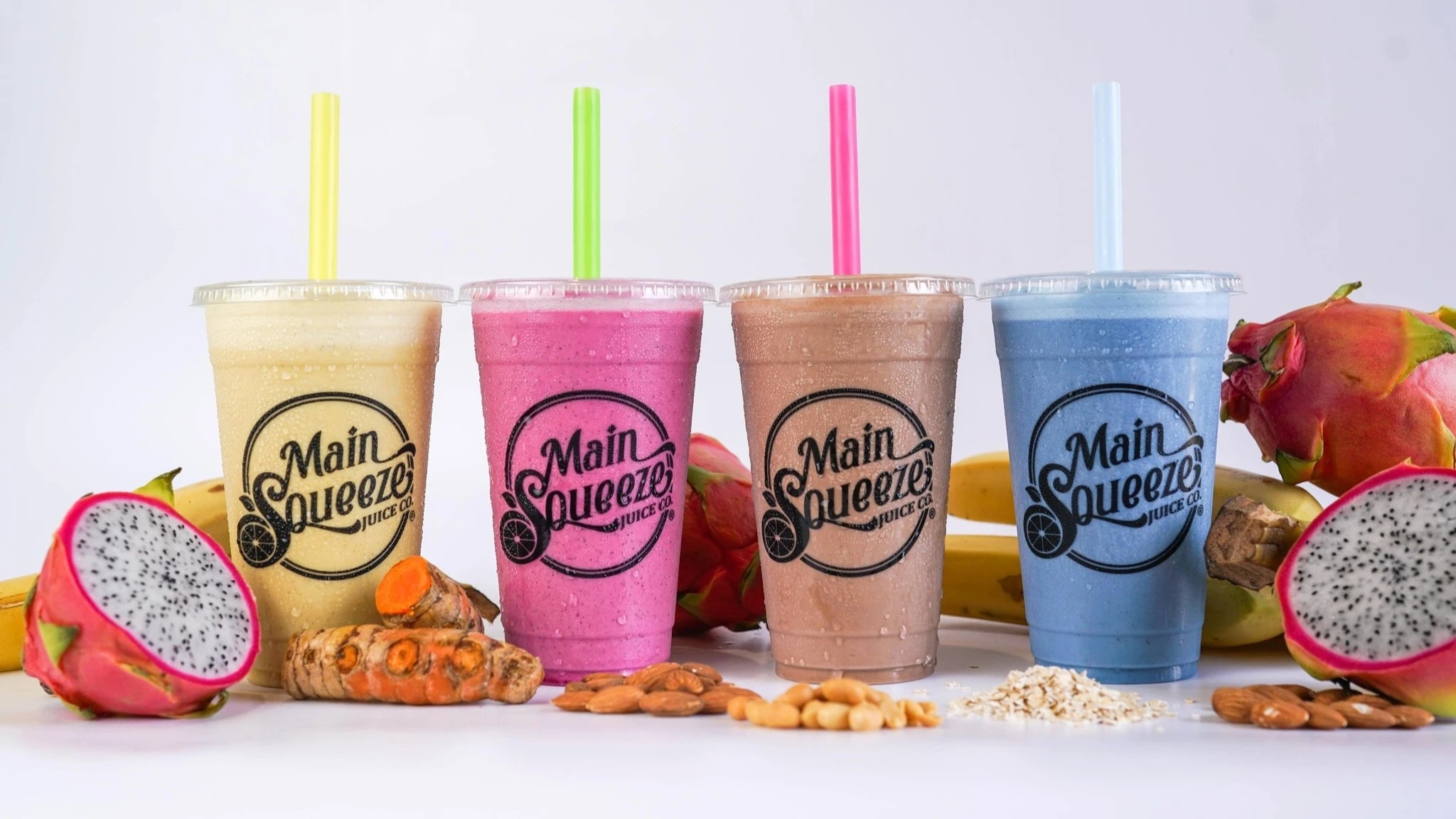
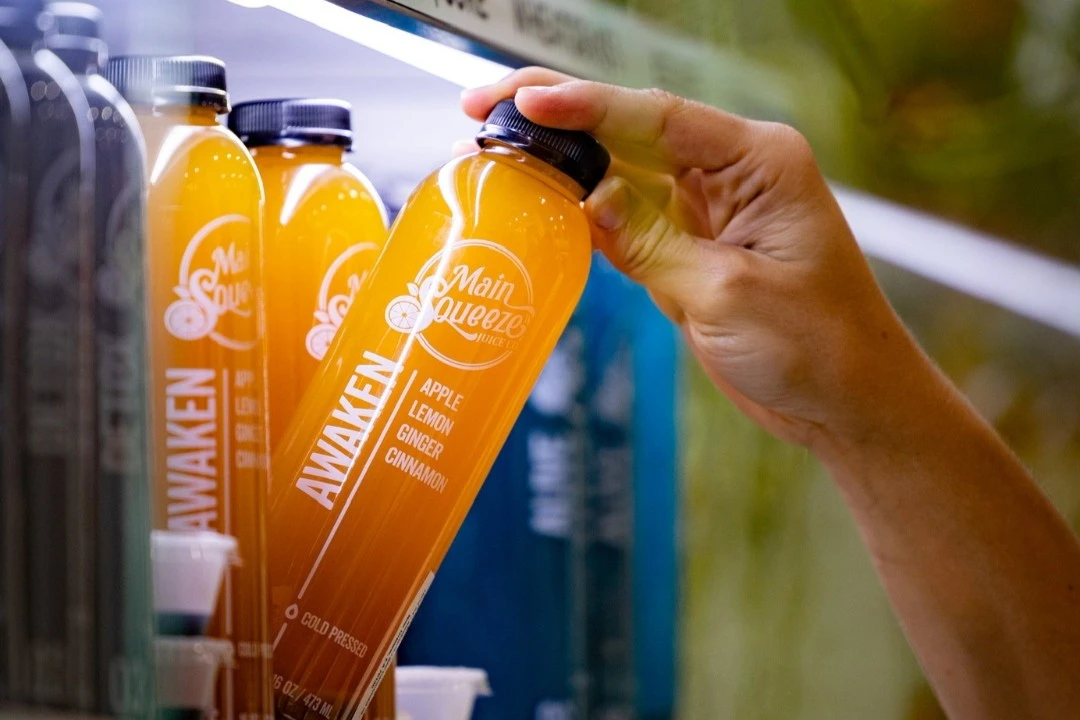
Main Squeeze sells cold-pressed juices, smoothies, açaí and pitaya bowls, wellness shots, and food. Awaken combines apple, lemon, ginger, and cinnamon. Glow brings together apple, cucumber, kale, lemon, and spinach. PB&J puts a familiar sandwich idea into a smoothie. These are accessible entry points for customers who might hesitate over a menu organized around vegetables.
The positioning is ingredient-conscious convenience. Main Squeeze says it presses juice in-house daily without high-pressure processing, or HPP, and blends smoothies without ice or fillers. That puts it in the same purchase conversation as smoothie chains and independent juice shops, with its own emphasis on preparation and ingredients. Its customers include people fitting a drink or bowl between work, errands, and exercise.
The current menu also complicates an old description of the business. In January 2026, Main Squeeze announced whey and collagen add-ins with 1st Phorm. The launch offered Performance Whey Smoothies at $10.99 and whey additions at $2 in participating stores. CEO Jennifer Dodd attributed the expansion to changing dining habits. The company now describes a flexitarian menu and says non-plant-based items use a designated blender.
There is software behind the straw
The franchise pitch includes proprietary management and point-of-sale software covering inventory, employee onboarding, customer feedback, and marketing. Main Squeeze’s expertise sits at the intersection of recipes and store operations. Owners need both, especially when fresh preparation has to coexist with fast service.
A Bluefin case study supplies a revealing example. Main Squeeze said the pandemic accelerated its online plans and that it built a curbside pickup system in fourteen days. Geofencing alerted staff when a customer arrived. Bluefin supplied payment security integrations. The customer sees a drink reaching the car sooner; the operator sees payments, orders, and arrival information working together.
Buying growth meant buying equipment
Conscious Capital Growth invested in 2022. The following March, Main Squeeze announced the acquisition of I Love Juice Bar: 23 locations alongside its own reported 28. Nieto had previously studied the other chain’s public financial information. Now it was a way into additional markets with little territorial overlap. He told Restaurant Business that inflation and a tougher economy made acquisition an attractive growth route.
The announcement’s arithmetic was simple; integration was physical. Nieto said Main Squeeze planned to spend just over $1 million on conversions. New Orleans CityBusiness described cold-press equipment, signage, interiors, and software, with Main Squeeze bearing most conversion costs. Those dollars were a planned integration budget. They should not be mistaken for the purchase price or evidence that every acquired store completed conversion.
Turning another chain’s stores into Main Squeeze locations required equipment and systems.
Leadership changed, too. Court records document Nieto’s March 2024 removal as CEO and his challenge to the company’s actions. A subsequent appellate decision concerned overlapping proceedings, rather than resolving the underlying ownership dispute. Main Squeeze publicly announced Dodd as CEO that July. Growth had introduced governance questions as well as operating ones.
A habit still needs a neighborhood
For prospective operators, the numbers deserve dates. The franchise page quotes an initial investment of $385,050-$682,750 from its 2023 disclosure document. It also describes hands-on ownership and training. This model depends on suitable locations, enough repeat demand, and disciplined execution. An absentee owner or a weak site would put pressure on the very convenience the brand promises.
For customers, repetition has a price tag of its own. The published Squeeze+ plans start at $10 monthly for one included item and 5% off visits; higher tiers add items and discounts. Whether that helps depends on how often someone actually returns. The transferable idea is modest and useful: make something people enjoy, specify how to reproduce it, and remove a few obstacles between wanting it and collecting it.
Take another sip
Visit Main Squeeze ↗ · Explore the menu ↗ · Find a store ↗ · Company blog ↗
Instagram · LinkedIn · X · Facebook · TikTok
The founder’s account in Biz New Orleans ↗
Inside the I Love Juice Bar acquisition ↗
The 2026 whey and collagen launch ↗