The room was 250 square feet. Peter Phillips and his friend Teddy Gailas had spent years talking about going into business together; now an available storefront in Astoria gave their conversation four walls. Whatever they sold would have to fit. A cookie, obligingly, takes up rather less room than a restaurant.
Phillips had come from construction and real estate. He knew what a lease could do to a business before the first customer arrived. Gailas came from food and hospitality. Between them stood a small question with unusually large consequences: what could they make here that people would cross the street to buy?
They opened Chip City in July 2017. By April 2025, the business was being described as a chain of more than 50 stores across nine states. In October 2026, months after Phillips stepped down as CEO, its remaining shops closed. His career now contains both an expansion story and a painful ending, alongside another bakery venture still carrying his name as founder and CEO.
A builder finds something smaller to build
Phillips went into real estate after high school, beginning as a broker. Work with his father’s development business introduced him to managing projects. He became a subcontractor and learned to operate heavy equipment. Driving an excavator is an unusual preparation for selling cookies, although both occupations reward knowing what belongs where.
He described building things from the ground up as a creative outlet. That background matters because the familiar bakery origin story usually begins with a recipe. Phillips’s version also begins with the space available to sell it. He and Gailas had kept in touch since high school, discussing a side business before the Astoria opportunity arrived.
When Phillips told his father about the cookie-shop plan, he later recalled, his father laughed. He was 28 at the time. The idea was modest enough to sound improbable beside real estate development: a little storefront, a friend and something sweet. In retrospect, the laughter gives the beginning a useful human scale. No investment announcement had yet arrived to make the decision look sensible.
The first audience arrived on foot
Their original business plan called for selling 100 cookies a day. Phillips described humble expectations: cookies and coffee from a small shop. Early attention brought queues and a chance to discover whether a pleasant side project could support a larger ambition.
The first day was especially peculiar. Phillips recalled that they lacked a selling license and intended to give the cookies away as a test. More than 200 people appeared. A free sample is hardly a revenue forecast, but it does give two prospective shopkeepers something more useful than polite encouragement from friends.
He wanted the cookies to connect people with nostalgia. The store also had an advertisement no screen could reproduce: the smell. Doors could stay open when conditions allowed, sending the aroma outside. A passerby did not need a detailed explanation of the concept. The invitation was already in the air.
The menu moved beyond chocolate chip into a rotation of flavors, giving customers a reason to check back. Social posts could announce what was coming; the neighborhood supplied the people who actually walked through the door. Phillips was learning to join a physical shop to a recurring conversation online.
A freezer becomes part of the recipe
The operational discovery was almost comically convenient. The cookies baked better from frozen dough. A quality preference and a distribution method had happened to agree with each other. Dough could be prepared centrally, sent out frozen and baked in each store.
For the builder in Phillips, that changed what a store needed to contain. Convection ovens and reach-in freezers could do the essential work. Shop sizes varied considerably, but the production system allowed a small selling space to participate in a much larger business. Customers still encountered a warm cookie at the counter.
By 2021, the company was using an 18,000-square-foot commissary. Phillips spoke about automation and putting money back into the operation. The product looked cheerfully uncomplicated; supplying it required a growing amount of machinery and coordination behind the scenes.
- 01Make the doughProduction at the Queens commissary
- 02Send it frozenA recipe suited to distribution
- 03Bake in the shopThe warm-cookie experience stays local
His previous trade also helped with less photogenic decisions. Negotiating leases, choosing markets and controlling construction costs were things he already understood. A cookie might attract the queue. Occupancy costs would continue arriving after the queue went home.
Give the team a piece
As Chip City grew, Phillips shared ownership with people inside the business. By October 2022, he described nine equity partners, including the chief operating officer and pastry chef. He wanted colleagues to have reasons to care about the company’s future beyond the next shift or pay period.
That approach makes the people behind the cookies worth naming. Andrea Prunella joined in 2017 as executive pastry chef and partner. When Chip City announced her appointment as chief operating officer in 2022, it credited her with developing more than 50 flavors. Familiar childhood sweets became starting points for Italian Rainbow, Baklava and Cinnamon Roll cookies.
Phillips supplied an operating framework; colleagues supplied expertise and ideas that made the framework useful. His emphasis on equity gave that division of work a financial expression. It also made a friendly venture more complicated. Working with people one knows brings trust into the room, along with the difficulty of making decisions those friends may dislike.
In later interviews, he returned to ownership as a practical management choice. He wanted people invested in the outcome. The policy ran through his account of the business as consistently as the freezer ran through its production system.
The check arrives, then another
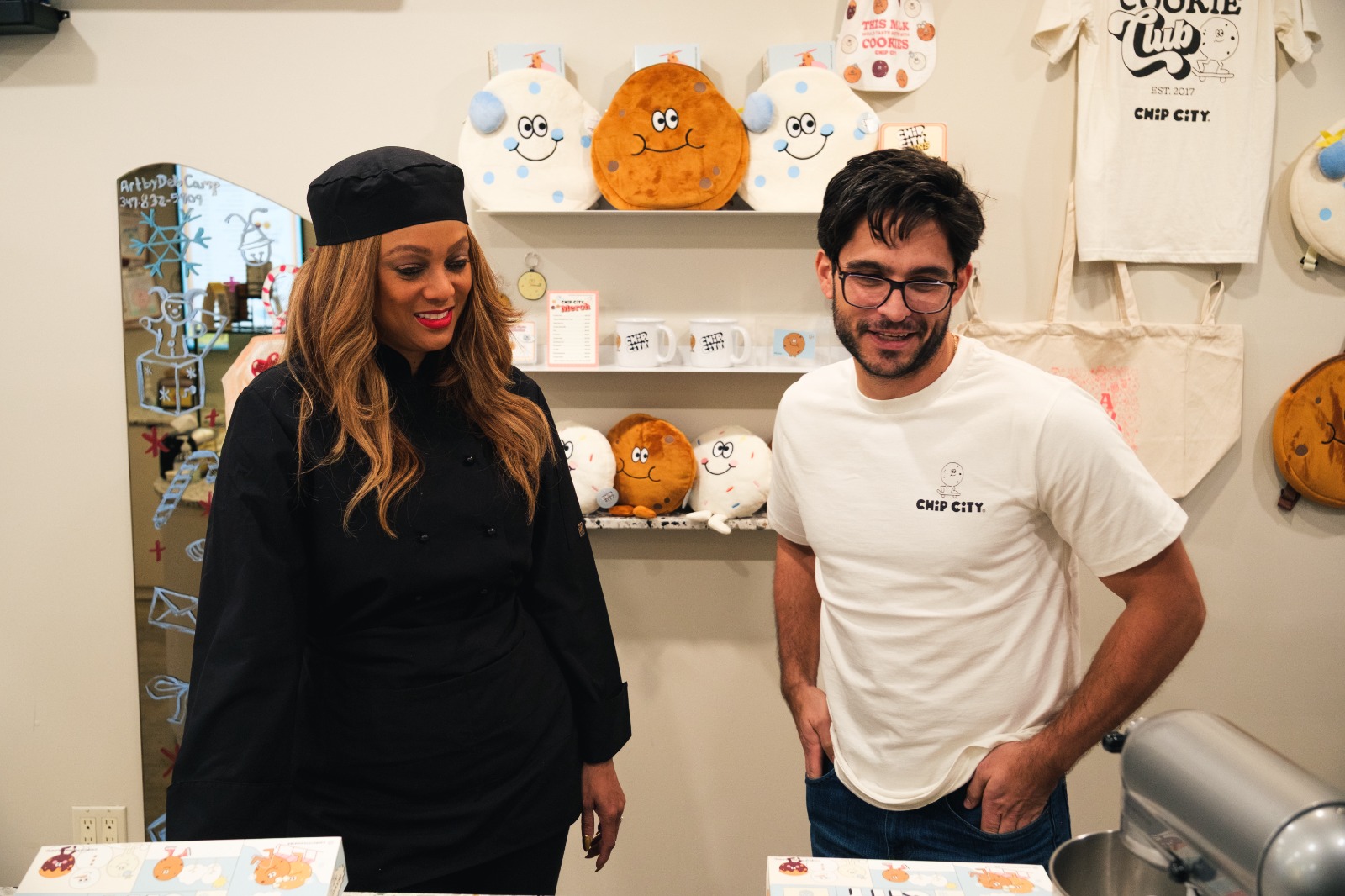
Enlightened Hospitality Investments put $10 million into Chip City in 2022. Danny Meyer’s association brought a recognizable restaurant name to a company born in a Queens storefront. Phillips saw an opportunity to learn from an organization with experience in hospitality and retail.
The introduction had come through EHI co-founder Mark Leavitt and a mutual acquaintance. Phillips said the company had not initially been ready to raise capital. Eventually it spoke with several investment firms before choosing EHI. By then, the decision concerned how far a working business could travel.
In May 2024, a further $7.5 million Series B brought announced EHI funding across those two rounds to $17.5 million. The company reported 38 locations in eight states at that point. It planned to spend on stores, people, services and collaborations. The numbers gave the original side project an altogether different set of obligations.
Phillips also understood the limits of novelty. Cookies are available almost everywhere. He argued that execution, product development and people would distinguish one operator from another. At the Queens commissary, a request for a new flavor could produce a sample on his desk within hours. Competition had become part of the daily work.
The customer can always scroll away
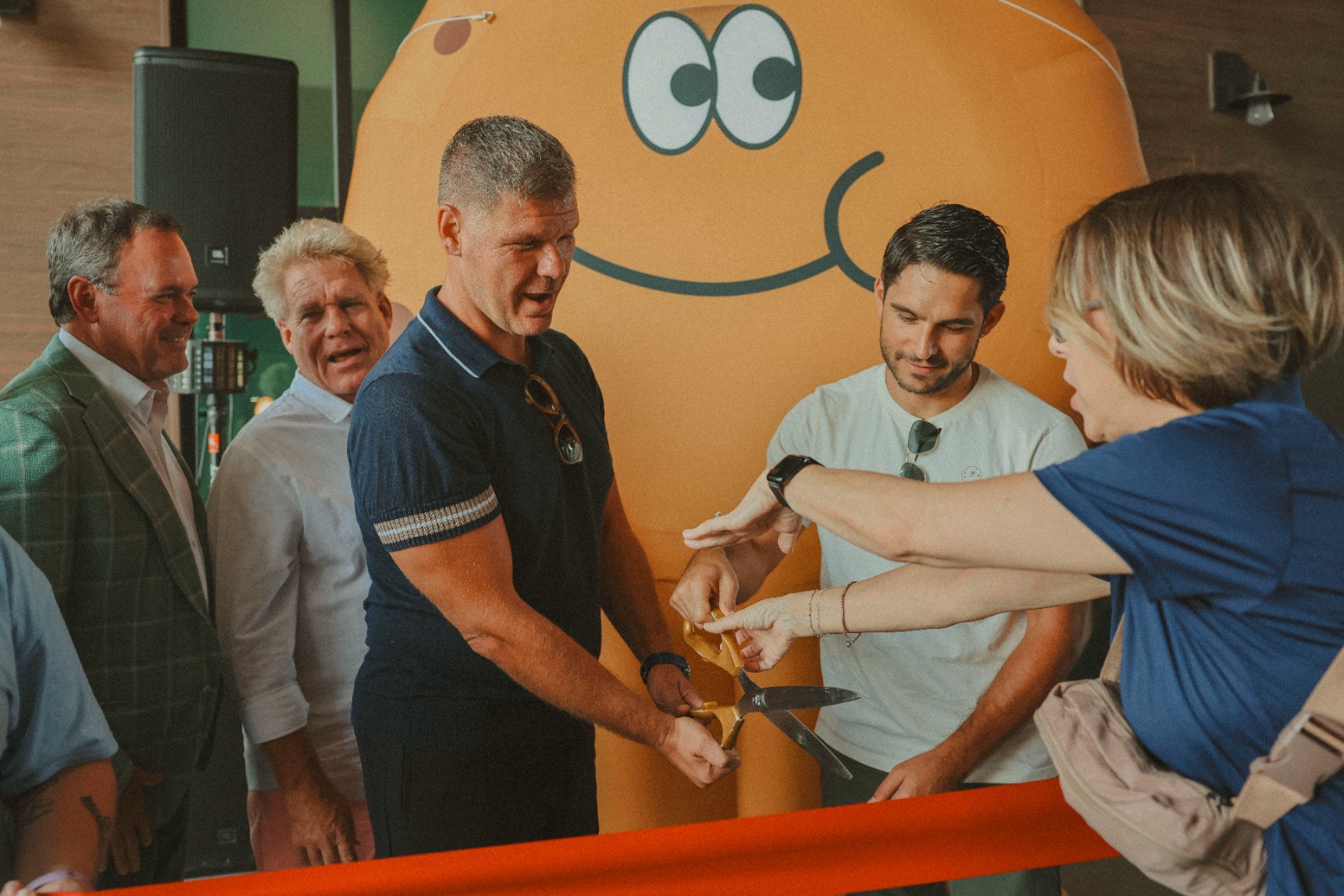
By 2025, Phillips was describing the difficulty of holding attention in a world of constantly changing social clips. Chip City had tried paid marketing and seen limited returns. A photogenic cookie could enter somebody’s feed; winning another visit required more.
The business turned its attention to the experience inside the shop. Kiosks let customers study the menu, while staff helped with questions. The aim was a visit that worked smoothly and felt worth repeating. Phillips’s construction background had given him a way to think about premises. Hospitality demanded equal attention to what happened inside them.
“It’s about how you operate versus the next guy.”
Peter Phillips, 2025
That observation sounds restrained beside the language that often surrounds expanding food brands. It also exposes the daily burden of his argument. A lease is negotiated occasionally. A customer experience must be delivered again tomorrow, in every location, by whoever is working.
Another corner, another dough
While Chip City expanded, Phillips developed Somedays Bakery, which opened in Astoria in spring 2024. His interest had shifted toward European neighborhood bakeries and viennoiserie. He partnered with pastry chef Arlander Brown on a menu that included black sesame tahini croissants and chocolate hazelnut and praline lattice pastries.
Somedays required a different production choice. Its laminated dough was made fresh at individual locations. Phillips also embraced franchising early, while Chip City’s stores were company owned. The new business put more responsibility near the counter, with an owner-operator taking an interest in the particular shop.
In July 2026, he discussed plans for Midtown East, Union Square and Philadelphia, as well as the possibility of a national footprint. These were expansion ambitions, with new locations intended to introduce the bakery to more customers and potential franchisees.
His Queens attachment remained explicit. Discussing Somedays’ early expansion, he described himself as born and raised in the borough. A second bakery could have become an excuse to abandon the first neighborhood. Instead, Astoria supplied the starting point again.
The ending belongs in the story
Phillips stepped down as Chip City CEO in March 2026. On September 28, he sued the company, EHI entities and executives over alleged unpaid compensation and related contractual disputes. The company had questioned expenditures from his tenure; Phillips disputed its demands. Those claims belong to a legal disagreement, rather than a settled account of responsibility.
On October 1, Chip City told employees its remaining 22 shops would close at the end of the day. The public announcement followed on October 2. Management cited weaker consumer spending, changing preferences and insufficient funding to continue operating. The lawsuit’s proximity to the shutdown does not establish that it caused the closure.
For Phillips, the result changes how the years of expansion must be read. The small shop found an audience. The production system supported a chain. Investment financed a larger footprint. Those achievements sit alongside the fact that the business ultimately stopped serving customers.
Somedays’ current team page identifies him as founder and CEO. He is still working with the same basic materials that interested him at the beginning: a location, a product, a team and the prospect of a returning customer. A room can tell an entrepreneur what will fit. The harder question arrives after the doors open.
Read, watch, keep in touch
- Somedays Bakery
- Peter Phillips on LinkedIn
- Somedays on Instagram
- Watch: the Jon Schultz interview
- Watch: inside the cookie factory
- The construction-to-cookies conversation
- The recipe and retail-space interview
- Chip City’s early production system
- The $10 million investment
- The May 2024 funding announcement
- The people developing the menu
- The bakery’s competitive strategy
- The first-day cookie giveaway
- A new bakery in Astoria
- Somedays and the franchise model
- Somedays’ July 2026 expansion plans
- Phillips on the customer experience
- The photographs and founder interview
- The October 2026 closure
- The founder’s compensation dispute