Thejo Kote had already helped build a company that put cars on the internet. For his next business, he spent six months showing finance people pictures of software that did not yet exist. A freelance designer helped make the mockups. Prospective customers supplied the objections. Kote kept revising. An engineer with the means to start building had found a reason to keep his hands off the keyboard.
The problem was close to home. At Automatic, his connected-car company, spending money had generated a second occupation: finding out who had spent it, who had approved it, and where the paperwork belonged. The car could send useful information to a phone. Inside the business, getting an equally useful account of a purchase involved rather more human intervention.
That inconvenience became Airbase. Years later, after Paylocity acquired it, Kote began building Journal, a company focused on agentic product development. Across those changes, the work keeps returning to a practical question: how much effort are people spending merely getting the information they need to do their jobs?
An education in leaving
Kote grew up in Mysuru, in southern India, in a family that took education seriously. Both his grandfathers were authors. The house contained thousands of books, including reference works and history. He has described appreciating that inheritance more as he grew older. A substantial home library is an education with its own moving bill.
He studied electrical and electronics engineering at RV College of Engineering in Bengaluru. Infosys offered a route into software through its training program. He stayed about a year and a half, finding another kind of instruction in the quarterly briefings given by Nandan Nilekani. Listening to someone explain the construction of a company interested him more than the work he expected to do there.
In 2006, he left for a startup. His mother thought the decision made little sense; his brother, who had studied business in the United States, was more sympathetic. Kote wanted to learn company building at closer range. He later worked as a senior engineer at Netcore Solutions. The respectable job had served its purpose, although perhaps not the purpose everyone had in mind.
By 2009, he was heading to Berkeley’s School of Information. He wanted both access to Silicon Valley and an education that widened his engineering perspective. Law, policy, design, and social sciences belonged in that picture. He later described the territory between disciplines as the place where interesting learning happened. His projects would give that idea a fairly demanding test.
“All the interesting stuff happens in the middle.”
Thejo Kote, on studying beyond engineering
Water first, then wheels
NextDrop, a social enterprise he co-founded as a Berkeley student, addressed the uncertainty of piped-water delivery in India. When supply is intermittent, knowing when it will arrive has immediate value. SMS and voice technology could carry that information to residents. The proposition depended on understanding the wait as well as understanding the phone.
In 2011, the NextDrop team won the Global Social Venture Competition and its $25,000 top prize. Kote finished his master’s degree that year. Graduate school had already become a place to try building something that people outside graduate school might need. His work also included a contribution to Transporter, a public-transit app developed with fellow student Ljuba Miljkovic.
Transportation supplied the next problem. Kote and his collaborators explored how driving information could change behavior. Automatic joined Y Combinator’s Summer 2011 batch; its eventual founding team included Kote, Jerry Jariyasunant, and Miljkovic. The consumer product arrived in 2013. The premise was economical: people should be able to improve their experience of a car they already owned.
The Automatic Link plugged into the diagnostic port beneath the steering wheel and worked with a smartphone app. It could help explain a warning light, track driving, and remember a parking location. The port that usually belonged to a mechanic’s working day became useful to the driver. An older car acquired a new way to communicate without requiring a trip to the showroom.
NextDrop
YC Summer batch
Company founded
Engineering research
In April 2017, SiriusXM acquired Automatic. Its annual filing put the purchase price at $107.736 million, net of acquired cash and restricted cash. The figure belongs to the company transaction. Kote’s more portable inheritance was operational experience, including an unwelcome education in the machinery of finance.
The company inside the company
Building hardware had required Kote to learn subjects that had little to do with the interface on a phone. He has recalled starting out without knowing basic accounting distinctions. Meanwhile, the people responsible for the accounts had to make sense of activity scattered across cards, invoices, reimbursements, and approval processes. A functioning product business could contain a surprisingly awkward administrative business.
Airbase’s early work began in 2016; its formal founding year is listed as 2017. Before building, Kote investigated the problem with finance buyers and mockups. Those six months mattered because having experienced an irritation did not establish what another company would pay to fix. He needed to understand the buyer’s working day, rather than simply export his own frustration.
He initially financed Airbase with $300,000 of his own money. Its public launch in April 2019 came with a $7 million Series A led by First Round Capital. This was a second venture with a different customer and a different route to adoption. A driver could try a gadget. A finance team had to trust a system with the company’s money and records.
Kote’s own money financed Airbase before its first external funding.
Historical funding reported in April 2019He saw an advantage in arriving from outside the profession. “Sometimes, a bit of ignorance really helps to tackle challenges in a fresh way,” he said. That observation came with a substantial listening requirement. He spoke with controllers, CFOs, and accounts-payable staff. His unfamiliarity gave him questions; their familiarity supplied the detail needed to make useful software.
A business has to work on Tuesday
The first opening was corporate-card management. The wider ambition was to join up spending processes. In his writing on virtual cards, Kote described a sequence that begins before payment: an employee requests a purchase, the appropriate people approve it, a card receives controls, and the eventual transaction flows into the accounts. The payment is one event in a longer chain.
That sequence explains why a faster card alone would leave work unfinished. Somebody still needs the receipt. Somebody needs to know which department made the purchase. Somebody must record it correctly. Software earns its keep when those ordinary obligations fit together. The most persuasive demonstration may be an accounting team getting through an ordinary Tuesday with fewer loose ends.
- 01 Request
- 02 Approve
- 03 Set controls
- 04 Pay
- 05 Record
Kote personally handled Airbase’s first sales. As the product developed, accounts-payable automation, reimbursements, and procurement broadened its scope. He described wanting the software to grow alongside customers, sparing them repeated searches for replacements as they became larger. That ambition ties the product to an organization’s changing needs, with all the less photogenic work of support and implementation that entails.
Airbase also made him a leader of a distributed company. Teams worked across countries and time zones, with substantial engineering work in India. One operating principle was “equitable inconvenience”: sharing awkward meeting times so that the same people were not always absorbing the cost of collaboration. A calendar invitation can reveal a company’s idea of fairness rather efficiently.
In September 2024, Paylocity announced an agreement to acquire Airbase for approximately $325 million, subject to adjustments. It completed the acquisition on October 1. At announcement, Airbase had more than 500 clients and roughly 300 employees. Paylocity’s payroll business and Airbase’s non-payroll spending tools offered a practical reason for joining the two companies: a more complete view of business spending.
Keeping the school open
Alongside company building, Kote has helped create opportunities for other founders. In 2019, he joined Holly Liu and Prayag Narula in establishing Berkeley’s I School Innovators Fund. The initiative supported students developing new ventures, including nonprofits and social enterprises. The institution that had given his projects room to begin became a place where he could help somebody else start.
His curiosity also took a conversational form at Airbase. He hosted the Path to Becoming a CFO series, interviewing finance leaders about their careers. Ned Segal, then Twitter’s CFO, was among the guests. A founder selling to finance professionals was making time to ask how those professionals had reached their positions. Learning the job included learning the people doing it.
The next bill is for tokens
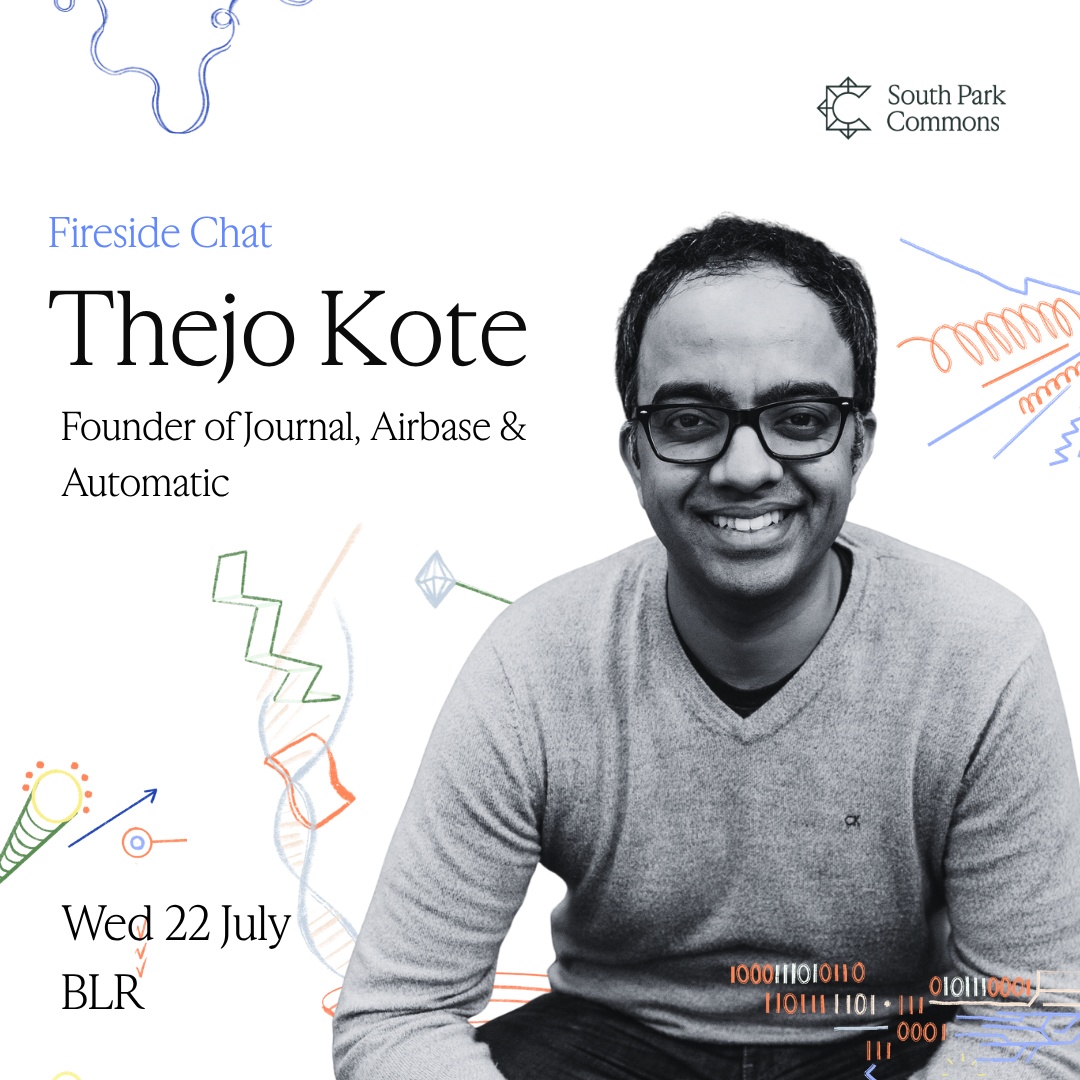
By 2026, Kote was publicly leading Journal, a platform for agentic product development. Its proposition concerns teams working with agents, with people directing the work. In June, he co-authored a research post with Anand Avati and Vikas Gorur on an immediate operational question: what happens to the cost of software development when coding agents do more of it?
The team spent about $12,000 testing model configurations on a set of coding tasks. It used hindsight to calculate what would have happened if each task had gone to the cheapest model that could solve it. The result outlined a cost-saving opportunity. Turning that hindsight into reliable decisions made in advance remained the engineering challenge. The distinction gives the experiment its interest.
The setting has changed considerably since a device beneath a steering wheel. The question still has Kote’s familiar shape. A technical capability exists. People are trying to put it to work. Between the two lies a process that deserves close attention. He is back there again, asking what it costs, where effort goes, and what might be worth building next.
Continue the conversation
Follow the work, hear the longer conversations, and explore the companies.