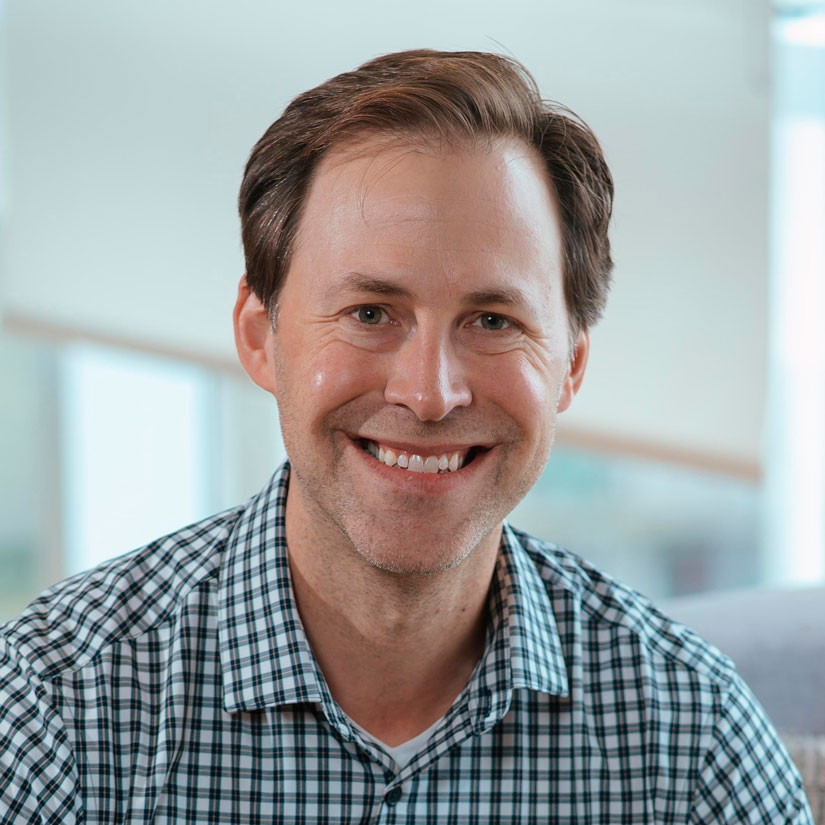
The Deal-Maker Who Hated the Deal Stack
Picture a San Francisco conference room, circa 2018. A Kirkland & Ellis associate is managing a mid-market technology acquisition for a Vista or Silver Lake portfolio company. The documents are emailed back and forth. The compliance checkboxes are tracked in spreadsheets. The deal room is a cobbled-together patchwork of tools that predate the iPhone. Federico Baradello was that associate - and he was paying very close attention.
What he noticed was not just inefficiency. It was architectural rot: an entire asset class - private capital markets, where trillions of dollars change hands every year - running on infrastructure that had not been meaningfully upgraded since the fax machine was considered a technological marvel. Every other part of finance had been disrupted. This one had been politely, persistently ignored.
So in May 2020 - as the world locked down and the conventional wisdom said "absolutely not right now" - he founded Finalis.
"I was using a 30-year-old technology stack to actually execute those transactions."
- Federico Baradello, Founder & CEO, FinalisFive years later, Finalis powers more than 900 bankers across 24 countries, has facilitated over $22.5 billion in closed deals, and ranks among the top 15 investment banks in the United States - not as a bank, but as a software company. It is, by several measures, the fastest-growing investment banking platform in history.
Three Languages, Four Degrees, One Big Idea
Federico Baradello is Argentine-American. His father's side is from Argentina; he was born in Connecticut, grew up moving between Europe and the U.S. East Coast, and eventually settled in Marin County, California. His family were among the only Argentinians in their community. He carries that peripheral vantage point with him.
English is his third language. Italian came first. Spanish second. He learned English when his family returned to the U.S. when he was seven. He now uses all three professionally and holds them as a point of pride rather than biography.
His academic record is the kind that reads like a checklist someone else dares you to complete. An A.B. from Princeton. An M.P.P. from Harvard. A Ph.D. from the London School of Economics. A J.D. from UC Berkeley. Four of the world's most demanding institutions. He did not collect degrees - he collected vantage points: policy, economics, law, and what connects them all is a forensic habit of asking why something is the way it is instead of accepting it.
From Deal Attorney to Dealmaking Architect
Before Finalis, Baradello spent years at Kirkland & Ellis LLP - one of the most demanding transactional law practices in the world - in the San Francisco office, running M&A processes for private equity heavyweights including Vista Equity Partners and Silver Lake. The deals were large (he managed transactions totaling over $10 billion), the clients were sophisticated, and the technology was, in his telling, ancient.
He also spent time at a London-based private equity firm supporting cross-border transactions across Europe and Australia - broadening the geographic lens through which he saw the private markets problem. And he taught corporate law and regulation at Hult International Business School, where the classroom became a useful forcing function: explaining complex regulatory systems to students clarifies your own thinking in ways client work sometimes does not.
He describes himself, without irony, as "a recovering M&A lawyer." The joke contains the insight: the legal training gave him something most fintech founders do not have - a visceral understanding of what compliance actually requires, and why cutting corners on it is a path to spectacular failure.
"I don't believe we would have achieved the scale and success we have without the sensibility afforded by my legal training. It's helped me approach problems with an integrated perspective, considering them from multiple angles."
- Federico BaradelloBuilding the Stack
Finalis: The Zillow-Meets-Compass of Investment Banking
Baradello once described Finalis as "Zillow-meets-Compass but for the investment banking space." The analogy lands because it captures what Finalis actually does: aggregate the long tail of independent investment bankers and placement agents - people who have expertise, networks, and deal flow but lack the regulatory infrastructure, technology, and institutional backing to compete - and give them the platform they need to punch above their weight.
In practical terms, Finalis provides broker-dealer affiliation under FINRA and the SEC, which means independent bankers can operate compliantly without building their own compliance apparatus from scratch. It layers on top of that a complete deal management platform: deal rooms, document collaboration, workflow automation, client onboarding, compliance monitoring, reporting, and now AI-powered deal matching. The compliance is not an add-on. It is the foundation.
The key insight behind Finalis - one that most of the industry missed because it is genuinely unsexy - is that compliance is not a friction; it is a growth strategy. Baradello saw that the reason independent investment bankers could not scale was not lack of deal flow or network - it was regulatory drag. Solve the compliance problem elegantly, and the deals follow.
"What you really need to do is find ways to thread the needle, to actually elevate the standard of compliance. We see ourselves as a more market-driven cure to raise the standard that this industry has seen."
- Federico BaradelloThe investors who backed this thesis include Tribe Capital, Accel, Ulu Ventures, Alaya Capital Partners, Chaac Ventures, Banyan, Everywhere, and Plural. Ulu Ventures notably received their pitch via an unsolicited email - Baradello's research quality in that cold outreach was compelling enough to earn the meeting. The attorney habit of building an airtight brief had found a new use case.
Compliance as Competitive Advantage
Most founders in fintech approach regulation as a problem to solve around. Baradello approaches it as a problem to solve through. His thesis: the private capital markets are enormous, growing, underserved, and - crucially - governed by rules that most players either ignore or barely satisfy. Build genuinely good compliance infrastructure, and you do not just survive inspection; you attract the kind of institutional clients and serious bankers who want to be associated with a platform that operates at a higher standard.
He has also been consistently contrarian about where to look for opportunity. In interviews, he advocates pursuing "unsexy but still really large opportunities" in underserved sectors - the unglamorous infrastructure plays that most venture-backed founders overlook because they do not generate good conference panels. Private market deal execution was exactly that kind of opportunity: enormous market, terrible tools, near-zero consumer-facing appeal.
His stated vision for where Finalis is headed: "With our data moat compounding and our network effects accelerating, no major deal will close without touching Finalis." That is not hyperbole for its own sake - it is a description of what happens when you are the compliance backbone, the deal room, the marketplace, and the AI layer for an entire asset class simultaneously.
Argentina, Marin County, and the Bigger Picture
Baradello's Argentine roots run deep in his professional commitments. As a Limited Partner at Alaya Capital Partners - one of Argentina's most prominent early-stage venture firms - he actively invests in and supports Latin American entrepreneurs seeking to scale and raise capital in the United States. The bridge between San Francisco capital and Buenos Aires founders is something he builds deliberately, not passively.
He is also involved in refugee initiatives, which speaks to a broader sense of obligation that sits alongside the dealmaking ambition. He has settled in Marin County, California with his wife Claire - coming full circle to the community where his family put down roots - and is a vocal advocate for building Marin's startup ecosystem.
The through-line is consistent: Federico Baradello looks for places where good infrastructure is missing, figures out what a rigorous solution looks like, and builds it. Whether that is private capital markets software, a venture fund for Argentine founders, or a startup community in a suburb of San Francisco, the method is the same.