There is a sentence buried inside nearly every Zimmerman Agency case study that would make a nervous tourism director reach for the delete key. South Padre Island was known as a college spring-break destination. Laredo suffered from fear about the Mexican border. Streamsong Resort sat in a part of Florida with little prior appeal to travelers. Daytona Beach carried an old party-town caricature. These are not taglines. They are the things a visitor might say before deciding to go somewhere else.
Most advertising prefers the flattering angle. Zimmerman, a Tallahassee firm founded by Carrie and Curtis Zimmerman in 1987, begins with the unflattering sentence. It calls the process Momentum Planning: identify the truths obstructing the business, decide what the brand must become, then create one idea capable of moving the audience from the first view to the booking engine. Around that idea it can assemble strategy, creative, public relations, social, digital and media buying under one roof.
The working sequence - simplified
The small-city paradox
The agency's own location is its oldest perception problem. The Zimmermans had spent a decade working in Atlanta, then moved to Tallahassee to raise their three sons near family. In an industry accustomed to New York, Chicago and Los Angeles, this was commercially inconvenient. Curtis once put it plainly: without a referral, nobody looking for an agency would naturally begin by asking what Tallahassee had to offer.
So the firm built around relationships large enough to justify the distance. Domino's put the founders on retainer after a meeting at its Michigan headquarters. Marriott called Carrie at noon and asked whether she could reach Jacksonville by two; her frank assessment of the incumbent agency's work won the assignment. Diners Club followed. The rule that emerged was to favor substantial, continuing relationships over stray projects. The location stayed. The agency traveled.
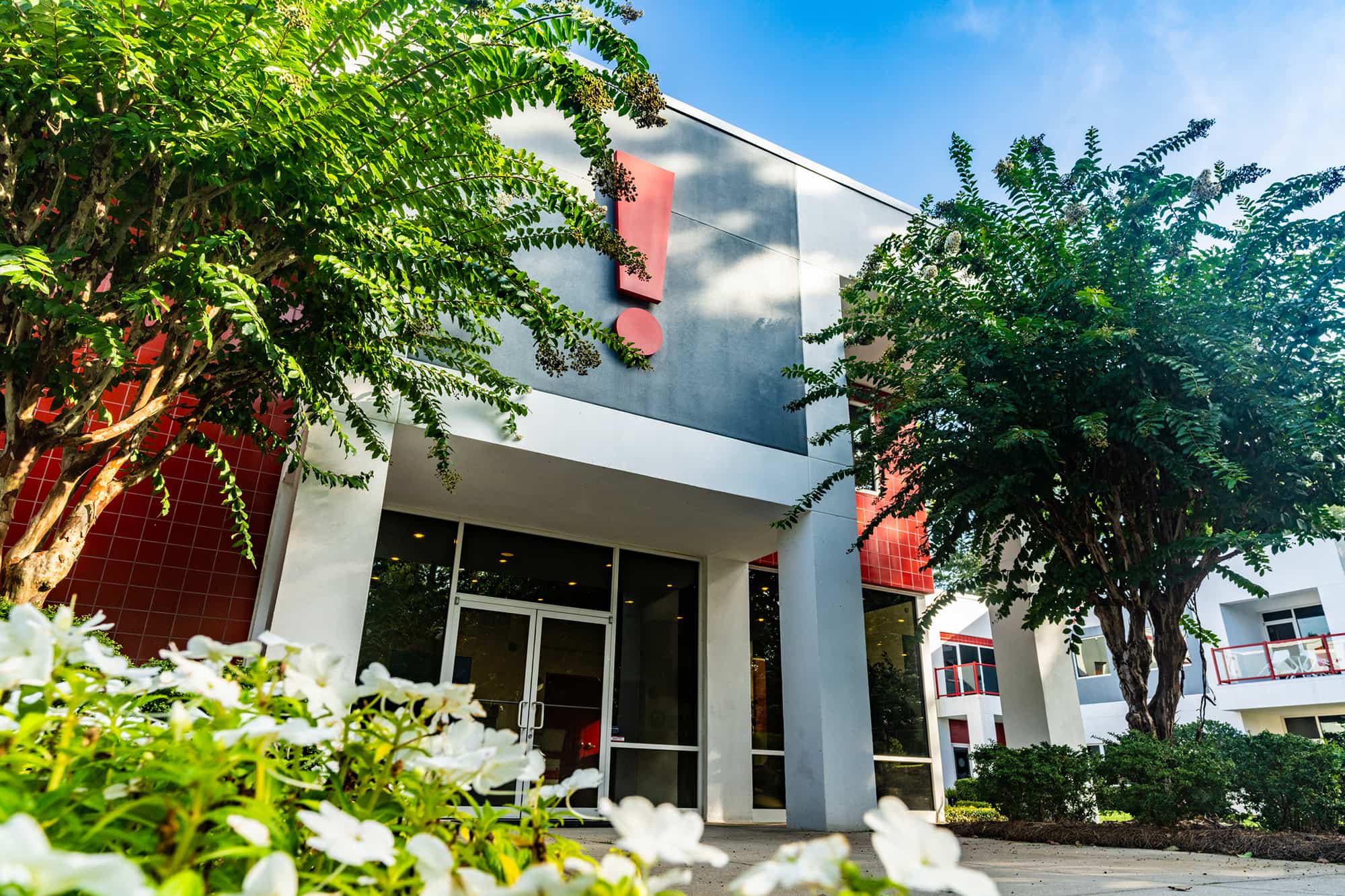
One old tally found $678,000 spent with Delta in a single year. That number is both funny and revealing. Tallahassee was not a remote-work lifestyle choice before remote work became a category. It was a constraint the company paid to overcome. In return, the founders got the family life they wanted and a pitch-room personality that did not feel manufactured on Madison Avenue.
The remarkable part is not that Zimmerman sells faraway places. It is that the agency first had to sell its own unlikely place in the market.A local disadvantage became a practiced skill
The first thing that failed was an assumption
In 1995, the agency had been advised by a remote-access software client that the internet was not much to worry about. It would remain the province of government and the military. Then a persistent Florida State University intern kept asking to present an idea. The founders relented. He arrived with PowerPoint, a tool so unfamiliar that they were initially more captivated by the projector than the substance of the pitch.
The gadget changed the temperature in the room. Zimmerman added interactive media that year, used the new presentation method for Renaissance Hotels in Costa Rica and later built an early website promoting Florida. The useful lesson is not “always trust the intern.” It is narrower: when somebody close to a new behavior will not stop explaining it, give them the room. A novelty can be a clue before it becomes a department.
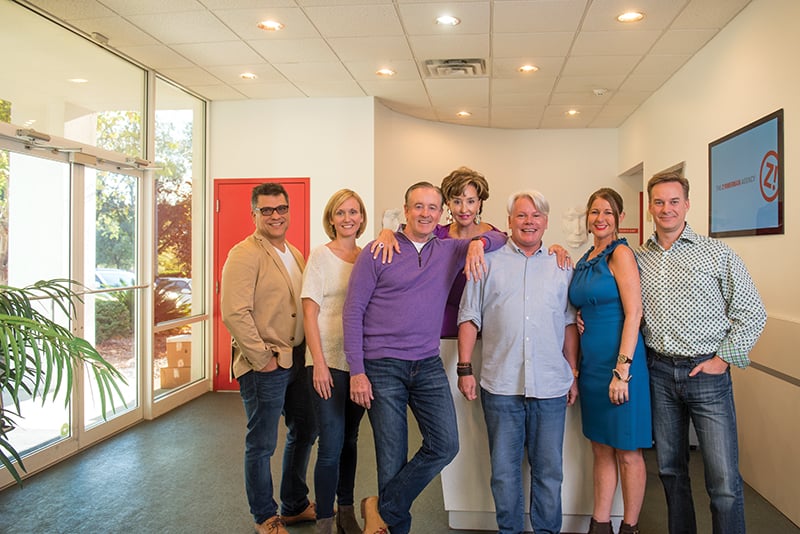
The integration pitch grew from there. PR did not merely issue releases after the ad was approved. Social did not wait downstairs for a resized graphic. Media planners, analysts and creatives could work against the same commercial problem. Since 2004, ownership by Omnicom has added global tools and buying leverage - Zimmerman cites access to more than $30 billion in media spending - while the Tallahassee operation retains its own name and working method. It is a boutique proposition with holding-company plumbing.
A pretty picture is not an outcome
Travel advertising invites soft language: awareness, inspiration, wanderlust. Zimmerman's better case histories keep going until something happened at a cash register. For South Padre Island, the “Life can be hard. South Padre Island is easy” platform helped replace the single-note spring-break story with a choice-rich family vacation. The agency reports 9,000 Expedia room bookings worth $2.2 million in gross bookings and a 26:1 return on ad spend, alongside a 73 percent reduction in average cost per click.
South Padre Island reported return on ad spend
Leading Hotels attributable revenue
Laredo hotel-room revenue increase
Belize received a bolder imperative - “Grab Life” - and a mix of television, print, programmatic display, paid social, email, PR and influencers. The agency reports that Expedia generated more than $2.3 million in gross bookings at 28:1 return on ad spend. For The Leading Hotels of the World, a campaign aimed at affluent, curious travelers produced more than $2 million in attributable revenue and over 12,000 booking-engine interactions. These are company-reported results, and destination economies have more variables than a dashboard can hold. But they reveal the standard by which the agency wants to be hired: not the beauty of the film alone, but the business motion attached to it.
Three different perception repairs
The Laredo case makes the method especially visible. The stale belief was that proximity to the border made the city forbidding. The counter-position was “the friendly, welcoming heart of two nations.” Video, outdoor, social, digital, email and PR repeated the idea in different forms. The agency reported a 38 percent year-over-year increase in total hotel-room revenue, 65 percent more new website visitors and more than 470 million earned-media impressions. An HSMAI Adrian Award followed.

What the work costs - and what buyers receive
Private retainers are private, but a public assignment offers a useful window. In November 2024, Leon County approved two annual tourism-marketing awards to Zimmerman totaling $386,000 per year for two years. Public relations accounted for $137,400; digital advertising for $249,000. The scope included strategic campaigns, media planning, content, performance tracking, influencer and press activity, and a visitor-engagement mobile app.
The split clarifies the business model. Zimmerman is not selling a piece of software or a menu of fixed packages. It sells retained judgment and execution across disciplines, then layers media spending and production around the assignment. The right customer has a meaningful audience problem, enough budget to use several channels and an outcome that can be observed. A tiny business seeking one logo, one landing page or one local ad would be paying for an orchestra when it needs a trio.
The part worth stealing
Another company can copy the sequence without copying the scale. Write down the least flattering true sentence customers say about you. Do not sand it into consultant language. Decide which new belief would materially change behavior. Create one counter-idea simple enough to survive in a search ad, a press pitch, a billboard and a sales conversation. Then attach the dashboard to the thing the business needs - bookings, qualified leads, repeat visits, room revenue - rather than whichever metric produces the prettiest monthly chart.
The conditions matter. This method is weakest when the negative belief is correct and the product has not changed, when the organization cannot coordinate its channels, when the budget is too small to reach the audience repeatedly, or when attribution is impossible. A slogan cannot make an unsafe place safe or poor service hospitable. The communications must arrive after an operational truth, not in place of one.
Zimmerman's own culture learned a related lesson. Carrie, a member of the 1976 U.S. Olympic gymnastics team, brought the athlete's appetite for criticism into agency post-mortems: a few minutes on what worked, far longer on what needed improvement. She later said she had to recalibrate. Employees were not trying to make an Olympic team; motivation required more balance and more “bravos.” Even relentless improvement needs a story people can bear to inhabit.
That may explain the odd result of an agency client survey. Curtis expected creativity to win. It came fourth, behind enthusiasm, determination and integrity. For a firm whose location meant referrals mattered more than foot traffic, those qualities were not soft extras. They were distribution. The cleverest thing The Zimmerman Agency learned to sell was confidence that the people on the other side of the table would keep showing up - even if getting there required another flight out of Tallahassee.