Pierre Gaubil already knew America. He had opened the American subsidiary of software company Cast and worked internationally. Yet when he brought Sensopia to Silicon Valley to raise money, his pitch missed the mark. In a 2016 interview, he admitted that he had failed to readjust. Experience had given him confidence. It had not supplied the local vocabulary for ambition.
- A seed fund and three-month immersion for founders arriving from abroad.
- Capital came with mentoring, introductions, equity dilution and program fees.
- The original model depended on founders being able to move across borders.
The pitch that did not travel
That awkward discovery sits near the center of The Refiners, the San Francisco firm Gaubil founded in 2016 with Carlos Diaz and Géraldine Le Meur. All three had built companies. All three had lived in the Bay Area for years. Their proposed specialty was helping foreign technology founders cross the distance between arriving in California and understanding how business happened there.
Diaz had his own version of the problem. He told French Morning that blueKiwi should have been in the United States earlier. With his next startup, Kwarter, he started there, then ran straight into the cultural gap. Le Meur brought another frustration: LeWeb connected Europe and Silicon Valley, but its annual conference lasted only three days. The Refiners offered a longer working relationship.
The category was familiar: seed fund plus accelerator. Y Combinator, 500 Startups and Techstars were already alternatives. The Refiners chose a narrower problem within that market. A founder could have technical skill, a working product and customers at home, yet lack the relationships and habits needed to explain that business to an American investor or buyer.
Three months to change the conversation
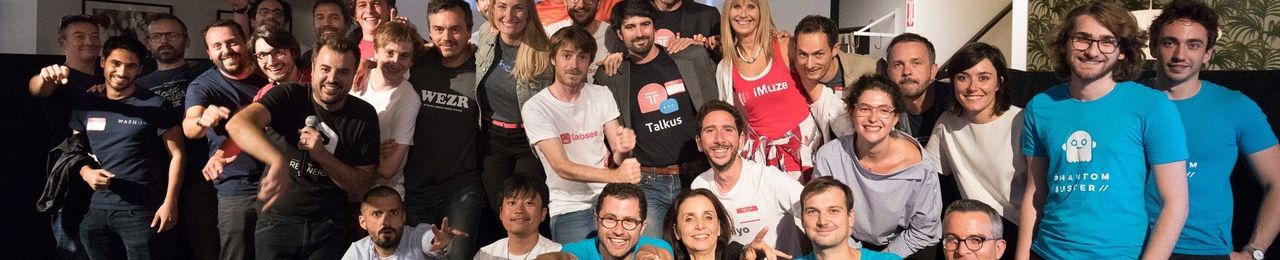
The product was an intensive three-month program combining investment, workshops, mentoring and introductions. Its users were international startup founders, particularly French and European teams seeking an American foothold. The first cohort, arriving in September 2016, contained 12 companies, ten French. The next March brought 13 companies, nine French, including cloud-services evaluator CloudScreener and customer-support startup Talkus.
CloudScreener’s Anthony Sollinger left a useful account of what the service actually involved. His company had spent four years developing its offer and winning customers before joining. He wanted to shorten the learning period for US expansion. Early work exposed a familiar habit: explaining the product before establishing why its market should change. Mentors and fellow founders repeatedly challenged the argument.
“il ne suffit pas d’y être, il faut EN être”
Carlos Diaz, as recalled by participant Anthony SollingerBeing there is not enough; you have to belong.
By his final diary entry, Sollinger counted 200 three-minute pitches, roughly 30 investors met and 400 people at pitch night. Those figures describe work, rather than a magical introduction. Repetition exposed weak explanations. Feedback could change the offering as well as the words. The useful unit of acceleration was a cycle: explain, hear the objection, reconsider, try again.
Practice → feedback → a clearer business case
The cohort mattered too. More experienced companies helped younger ones understand financing; founders critiqued one another’s presentations. Sollinger described some becoming suppliers to their peers. A group containing both business and consumer startups could share practical knowledge without selling the same product. The program’s expertise lived partly in the room, alongside its better-known mentors.
Another participant, WINGiT, helps explain the selection. Its event-discovery business already operated in 15 countries when it announced joining the 2017 cohort. In its own account, it wanted to combine European and American strengths and use the founders’ network. The service could appeal to an existing international business as well as a newly formed team. The shared need was local understanding.
Read the whole check
Funding made the invitation tangible, but the check was only part of the transaction. ITespresso’s April 2017 reporting described two tiers: up to $50,000 invested for 5–7% equity, with $15,000 in fees; or up to $100,000 for 3–5%, with $25,000 in fees. The same report described a $50,000 service fee for companies that had already raised more than $1 million, without an investment attached. These were historical terms, with different economics for different stages. They show why founders must examine fees and dilution together when comparing accelerator offers.
$15k fees
$25k fees
The firm announced a $6.8 million fundraise in 2017, backed by Bpifrance’s French Tech Accélération vehicle, Partech, Idinvest, Newfund and individual investors. That money financed the investing operation; it was not company revenue. By April, six first-cohort startups had opened US offices, and some had signed American customers. Useful evidence of activity, certainly. Office openings alone cannot establish whether an investment fund made money.
The border closed for real
Then the premise encountered a physical constraint. In March 2020, The Refiners paused plans for Fund II. Reporting described about $15 million in prospective investor commitments after a year of work. The pandemic brought economic uncertainty and restrictions on founder travel. A program organized around moving people into an ecosystem could no longer assume that movement was possible.
The interrupted second fund should not be counted as money successfully raised. Nor does its pause establish that every portfolio company failed. It marks a specific decision to reconsider a strategy when its operating conditions changed. Diaz subsequently co-founded the separate firm Diaspora Ventures with Ilan Abehassera in July 2020, continuing to invest around the French entrepreneurial diaspora.
Borrow the feedback loop
There is something practical to copy here: seek reactions from people who do not share your home market’s assumptions. Ask what problem they heard, who would pay and what they still doubt. Rewrite the business case before polishing the slides. That is an interpretation of the program’s method, and it requires neither a famous mentor nor a California lease.
It does require an organization able to absorb the changes. Sollinger also described fatigue, distance and a nine-hour time difference while managing his French team. New ideas needed explanation back home. For founders without time to relocate, a functioning team or a reason to enter the US market, immersion could consume resources the business needed elsewhere. The Refiners’ story makes the condition visible: access becomes useful when a company can act on what it learns.