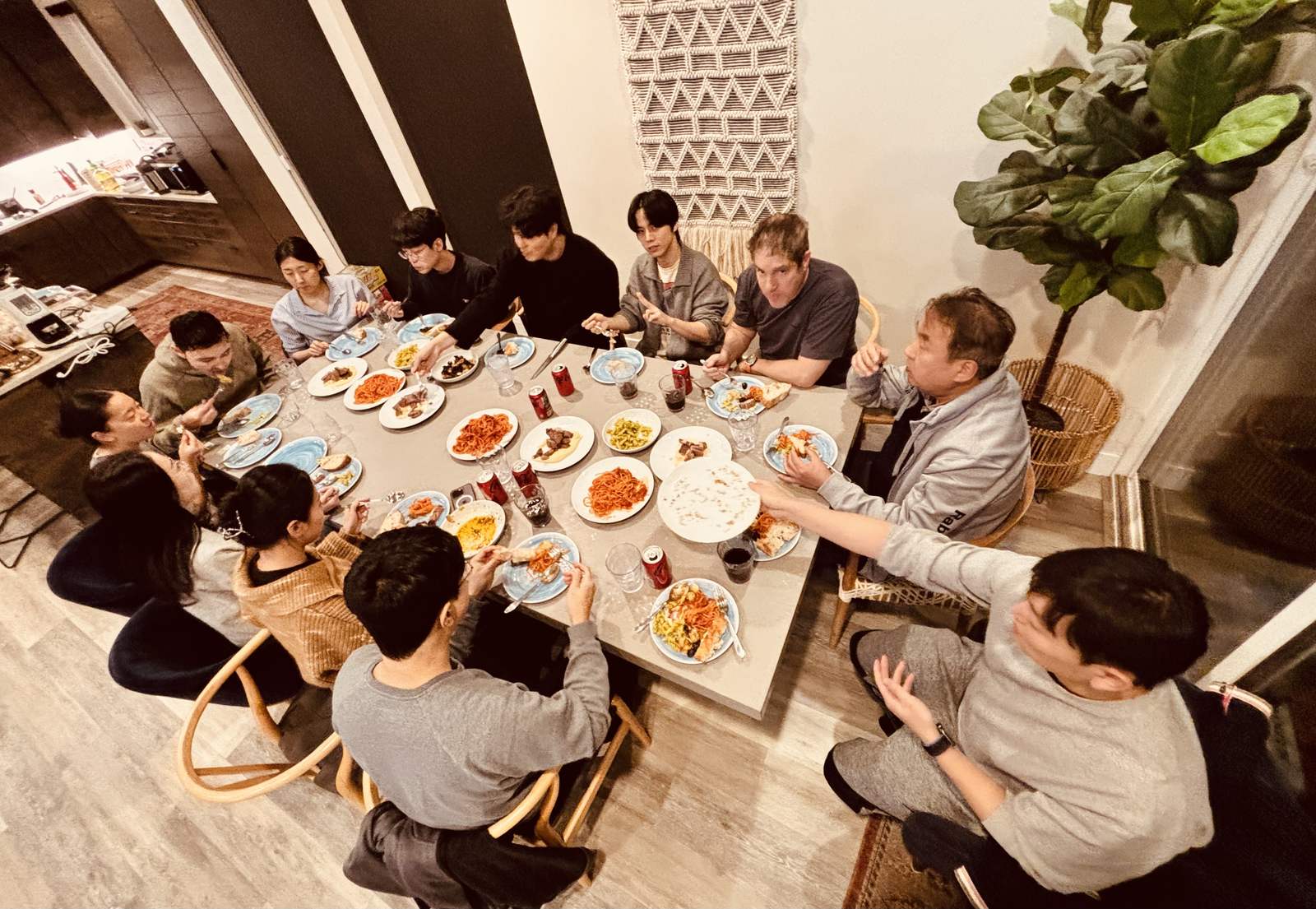
There is a photograph on Rabbit Ventures’ website of people eating around a crowded table. Plates of pasta, laptops elsewhere, no stage in sight. It belongs to Desert Rose, the venture firm’s two-week workation for founders, mentors, and investors. In an industry that likes to announce how busy it is, Rabbit has made a small institutional commitment to sitting still.
The quick read
- Early investment plus practical help reaching U.S. customers.
- Founded around Korean startups; now connecting Korea, Israel, and Silicon Valley.
- Desert Rose trades mandatory sessions for two weeks of shared working time.
The proposition is appealingly concrete. Put people with difficult business questions near people who have wrestled with similar questions. Give them time together. See whether the conversation gets past the introduction. Rabbit’s bet is that this kind of proximity belongs alongside the money.
A company built around a missing story
Rabbit began in 2023 with an observation from co-founders Chang Kim and Aviram Jenik. Korean entrepreneurs had built successful companies for Korea. Korean-American founders had built successful companies for America. Kim wondered why there were fewer visible examples of founders based in Korea using Korean talent to build global products from the beginning.
Jenik brought an Israeli reference point: build locally, sell into the United States. Kim, who said he was still on sabbatical when Rabbit started, found the idea persuasive. Their proposed contribution was experience accumulated while building companies, applied early enough to influence what a new company became.
The résumés explain the division of labor. Jenik co-founded and ran cybersecurity company Beyond Security before its 2021 acquisition. Kim built Tapas Media, the storytelling platform acquired by Kakao Entertainment, and had worked at Google. Security software and digital storytelling are different businesses. Both founders had experience carrying a product beyond its original surroundings.

The check buys a beginning
At launch, Rabbit was described as a micro-VC making pre-seed investments of $50,000 to $200,000, with B2B and cybersecurity as focal areas. Those are historical launch figures. They explain the original scale of the proposition: a relatively small investment paired with direct help from experienced operators.
Early capital, with operating experience alongside it.
Kim described the initial capital as their own and friends’ money. Today Rabbit talks about fund partners, follow-on investment, and Fund II. The business is venture investing: selecting young companies and backing their growth. For founders, the practical offer includes market access, business development, strategic guidance, and connections to executives and security buyers.
That puts Rabbit between several familiar alternatives. An angel can supply an early check; an accelerator can supply a program; a market-entry adviser can supply local knowledge. Rabbit combines investment with an operator network organized around overseas customers. For a founder choosing among them, the useful comparison is the people available and the specific buying problem they can help solve.
The buyer gets a vote
Jenik’s advice at the 2024 Gangnam Global Roadshow makes the operating philosophy easier to inspect. Measure how many U.S. customers you have met, how many have tried the product, and how many have bought it. Each step exposes a different problem. Conversations test relevance. Trials test usefulness. Purchases test whether somebody will surrender a budget.
“Korean startups should do less ‘preparing’ and more ‘doing’.”Aviram Jenik · 2024 Gangnam Global Roadshow
A founder can copy that sequence without joining Rabbit’s portfolio. Keep the counts separate. If meetings produce no trials, investigate the offer and the audience. If trials produce no purchases, investigate the product, the buying process, and the price. This is an interpretation of Jenik’s funnel, and its virtue is that it produces questions a team can act on.
A working sequence adapted from Jenik’s customer funnel. No conversion rates implied.
Fourteen days, fewer appointments
Desert Rose applies a related idea to founder support. Rabbit describes the first gathering as roughly twenty people, including portfolio founders, investors, and specialists. There was no formal schedule, no compulsory mentoring block, and no closing demo day. A founder could seek the person relevant to that day’s problem and keep working.
The 2026 edition sharpened the selection. A participant’s account described more developed products and teams already entering the U.S. market or committed to doing so. The previous year had emphasized exploration; the second emphasized execution. That is a useful change in emphasis: the same room becomes more productive when participants arrive with concrete decisions to make.
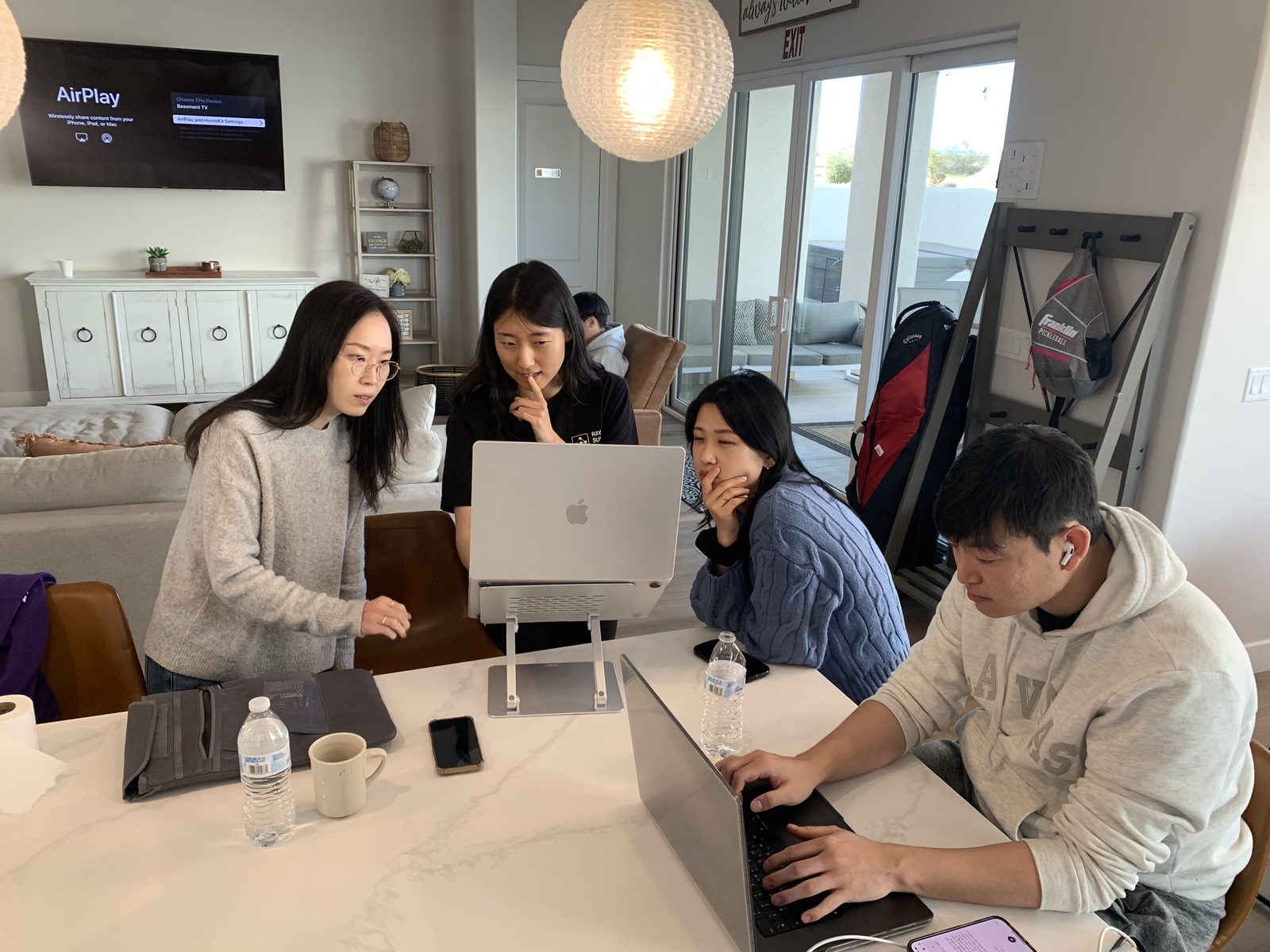
The transferable idea is protected time with relevant peers. The conditions matter. An informal gathering asks participants to bring real problems and seek help themselves. A team needing a prescribed curriculum may prefer an accelerator. A founder whose immediate obstacle is simply more capital may value a larger check more than another conversation.
A wider map, a more specific buyer
Rabbit’s current thesis reaches across Israel, Korea, and Silicon Valley, concentrating on cybersecurity, defense software, and AI-native deep tech. Its advertised partnerships with J-Ventures and Technion extend the Israeli connection. General Partner MJ Kang adds experience at Apple and Tesla; COO Soo Keun Lee brings cross-border operating experience, including Microsoft.
Recent investments put names to that thesis. In August 2026, Rabbit announced AlpacaX, whose Alpacon platform controls what people and AI agents can execute in production infrastructure, and Storika, which automates creator-marketing work. In October, its Seoul annual meeting included an update on Fund II. The map has widened since the original Korean-startup niche.
For someone curious about the thinking before seeking investment, Rabbit’s podcast offers a public starting point. Guests include Blind co-founder Kyum Kim on building its U.S. business and YesPlz AI’s Jiwon Hong on entrepreneurship and sales. The recurring question is usefully ordinary: who needs this product, and what will persuade them to use it? Even in the desert, the customer is still there.
Follow the conversation
Rabbit Ventures · LinkedIn · Desert Rose · Portfolio