The original pitch for The Loyal Subjects was not a spreadsheet. It was a $500 personal check and a founder who had already discovered that making a toy was an efficient way to meet every hard problem in business at once. Jonathan Cathey had played drums, studied theater and drawn a gang of rocker-hillbilly characters called Mullet Heads. The animation idea made it into development at MTV. The characters themselves led him to China, where he found a factory and learned manufacturing by doing it.
The early products achieved what Cathey later called mild success. That phrase matters. Plenty of founder stories sand the first attempt into a prophecy. This one looked more like a prototype: original characters, placement at Urban Outfitters and Tower Records, a few companies, some entrepreneurial bruises and a growing conviction that toys could carry a creative voice farther than an illustration alone.
The Loyal Subjects arrived in Los Angeles in 2009. It eventually became a designer, manufacturer and distributor of action figures, fashion dolls, plush, playsets and small collectibles. Its current catalog hops from Rainbow Brite and Strawberry Shortcake to Teenage Mutant Ninja Turtles, Jem and the Holograms, M.A.S.K. and Palworld. That sounds eclectic. Underneath, the same commercial idea repeats: find a fandom with an emotional vocabulary, preserve the details it notices and translate the result into something a retailer can sell.
The product is a memory with joints
Nostalgia is often discussed as if recognizing a logo makes a customer helpless. It does not. The interesting work begins one layer deeper, in the ritual around the old object. Strawberry Shortcake had a scent. Popples turned inside out. My Pet Monster wore orange breakaway chains. Jem came with music, hair and theatrical excess. The Loyal Subjects builds those cues back into the product, then adds the articulation, fabrics, accessories or electronics expected in a current toy aisle.
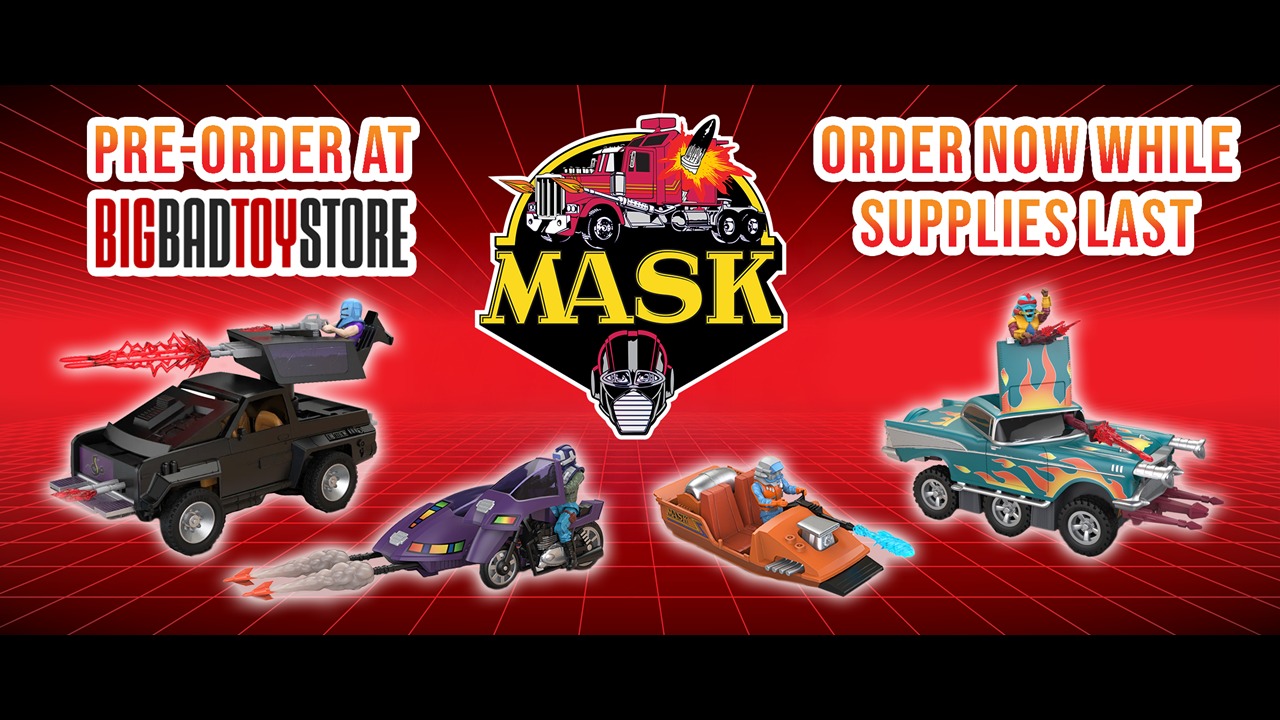
Its 5.5-inch Rainbow Brite and Strawberry Shortcake fashion dolls, for example, arrived with 29 points of articulation and surprise accessories. The Strawberry Shortcake doll kept scented hair. A newer Jem stand plays the original theme. The revived M.A.S.K. vehicles use transforming forms familiar to fans, while a second wave added shiny vac-metal accents after collectors asked for a closer echo of the originals.
“To emotionally connect and share creative heartbeats.”Jonathan Cathey, describing what he wants his work to do
This is how the company sells nostalgia twice. The adult sees recognition: the chain, the song, the silhouette. The child sees discovery: a doll with many poses, a plush creature with a trick, a vehicle that changes shape. A parent can buy the memory without forcing the child to reenact it. The object has to work in the present even when its marketing starts in the past.
Reading the graphic
This is a qualitative map of format emphasis, not company sales data. The useful signal is breadth: TLS now has more ways to express a license, reach an aisle and hit a price point than it did as an articulated-vinyl specialist.
The scarce material is twelve inches of shelf
Cathey is unusually direct about the less photogenic half of the business. He has described himself as a Swiss army knife who has worked across design, development, production, licensing, procurement, sales, finance, ecommerce and contract negotiation. Add taking out the trash. A small toy company does not get to isolate creative direction from landed cost or carton dimensions for very long.
The first constraint was money. The recurring constraint became access. In a 2020 interview, Cathey called the old Toys R Us a giant laboratory, a place where odd ideas could earn physical room. Its disappearance compressed the experiment. Walmart and Target command enormous traffic, but every peg has a job. A licensed figure can be handsome, faithful and beloved online, then fail commercially because a buyer cannot find the space, a shipment misses the window or the package cannot explain itself in three seconds.
That is why The Loyal Subjects' 2019 distribution partnership with Bandai America was more than a press-release flourish. It addressed the part an art-driven founder cannot sketch away: getting cases into mass and specialty retail. Company materials now describe a footprint of more than 12,000 doors across more than 20 countries. Cathey has also said direct ecommerce is not the core. Wholesale to retail is.
The loop also explains the move into distribution. In 2025, TLS agreed to distribute Chinese collectible company TOY CITY across North America, Latin America and other defined territories. Years spent persuading retailers, forecasting demand and moving licensed goods became a service that could be sold to another brand. A later trade clarification noted that certain European rights for two TOY CITY brands belonged elsewhere, a useful reminder that “global” in licensing is usually a quilt of property, product and territory clauses.
A licensing portfolio learns to balance
The current slate reveals a company trying not to live on one decade. A 2024 Hasbro agreement covered Popples, My Pet Monster, Jem, Playskool My Buddy, R.O.M. and M.A.S.K. Several arrived around 40th anniversaries, a calendar advantage with built-in press hooks. Yet the 2026 range also includes Palworld, Angry Birds and The Hunger Games. Palworld brings a newer gaming audience; Angry Birds connects toys to another film cycle; owned brands promise better economics if TLS can create demand without a famous name on the box.
The products range from low-cost mystery eggs to articulated figures, plush and more expensive vehicle sets. Convention exclusives and variants create urgency. Major retailers create volume. Specialty shops provide collector context. The company's Shopify store captures direct demand and preorders, but the business is designed to meet customers where toys are already bought.
That breadth solves a licensor's problem too. A rights owner does not merely need a sculptor. It needs someone able to turn a property into a shelf program: several formats, prices, release windows and retail accounts. The Loyal Subjects positions itself as the creative house and the pipe. Its competition ranges from focused collectible companies such as Super7, NECA, Kidrobot and Funko to Mattel and Hasbro themselves. The giants have capital and leverage. The smaller company has to win with taste, speed and specificity.
What another founder can actually steal
The copyable move is not “license Rainbow Brite.” Those rights are taken, and licenses alone do not manufacture demand. The useful method is to inventory what a customer remembers doing, not merely what a brand looked like. Search fan conversations for the sensory or mechanical detail people retell unprompted. Build that into the brief. Then add one modern improvement that makes the product useful to a buyer with no memory of the original.
There is also a more prosaic lesson in the $500 story. Cathey did not begin by raising enough money to imitate an established company. He reduced the distance between idea and factory, learned the ugly parts himself and treated early mild success as information. Over time, partnerships supplied capabilities the company could not efficiently build at once. Bandai helped distribution. Licensors supplied known worlds. Retailers supplied reach. The internal team supplied the interpretation.
Where the spell breaks
This approach does not work whenever recognition is mistaken for intent to buy. A beloved property can have loud fans and weak unit economics. Accuracy can also inflate tooling, materials and price beyond what the aisle tolerates. Limited editions concentrate attention, but too much scarcity leaves money on the table and irritates collectors; too little creates inventory. A release timed to an anniversary can still miss the emotional moment if freight arrives late.
Nor is fan service a substitute for a point of view. Literal reissues compete with healthy vintage markets. Radical redesigns risk removing the thing anyone cared about. The Loyal Subjects operates between those cliffs, and public collector conversations show that execution, availability and preorder expectations still get debated. That is normal evidence of a business making physical promises across licensors, factories and retailers, not a digital product that can patch itself after launch.
The company's next test is scale. Cathey has spoken about growing again at Walmart, Target and Barnes & Noble while expanding globally and introducing owned lines. More licenses increase reach, but they also multiply approval cycles, working-capital needs and release calendars. The culture that let a founder influence everything from sculpt to supplier will have to become a repeatable system without becoming generic.
The moat is not remembering the old toy. It is remembering exactly which part mattered.The Loyal Subjects' operating insight, in one sentence
For now, the shelves tell the story. A scented doll, a singing stand, a furry monster in breakaway chains and a transforming car are all answers to the same question: how much of childhood can fit inside a current retail box? The Loyal Subjects has spent 17 years finding out. The answer is neither the whole memory nor a plastic replica of it. It is one precise detail, made physical, with enough new play to travel forward.