The most revealing object in THE ICONIC's business is not a dress, a sneaker or a bottle of serum. It is the cardboard parcel that arrives at an Australian doorstep after a shopper has scrolled through a catalogue assembled from thousands of brands. That box contains the company's actual proposition: take the ambiguity of fashion shopping online and make it feel routine.
The task is harder than it looks. Clothing is tactile, sizes disagree with one another, trends move quickly and a product can be available in one warehouse but absent from another. A shopper wants breadth without chaos, speed without risk and returns without a negotiation. A brand wants access to a large local audience without rebuilding customer acquisition, payments, fulfilment and service from scratch.
THE ICONIC sits between those demands. Founded in Sydney in 2011, it operates across Australia and New Zealand as part of Global Fashion Group. The platform sells fashion, footwear, sport, beauty, wellness, kids' products, toys and homewares. It carries global labels, local favourites and own-brand products, then wraps the range in an app, editorial merchandising, personalisation, delivery tracking and returns.
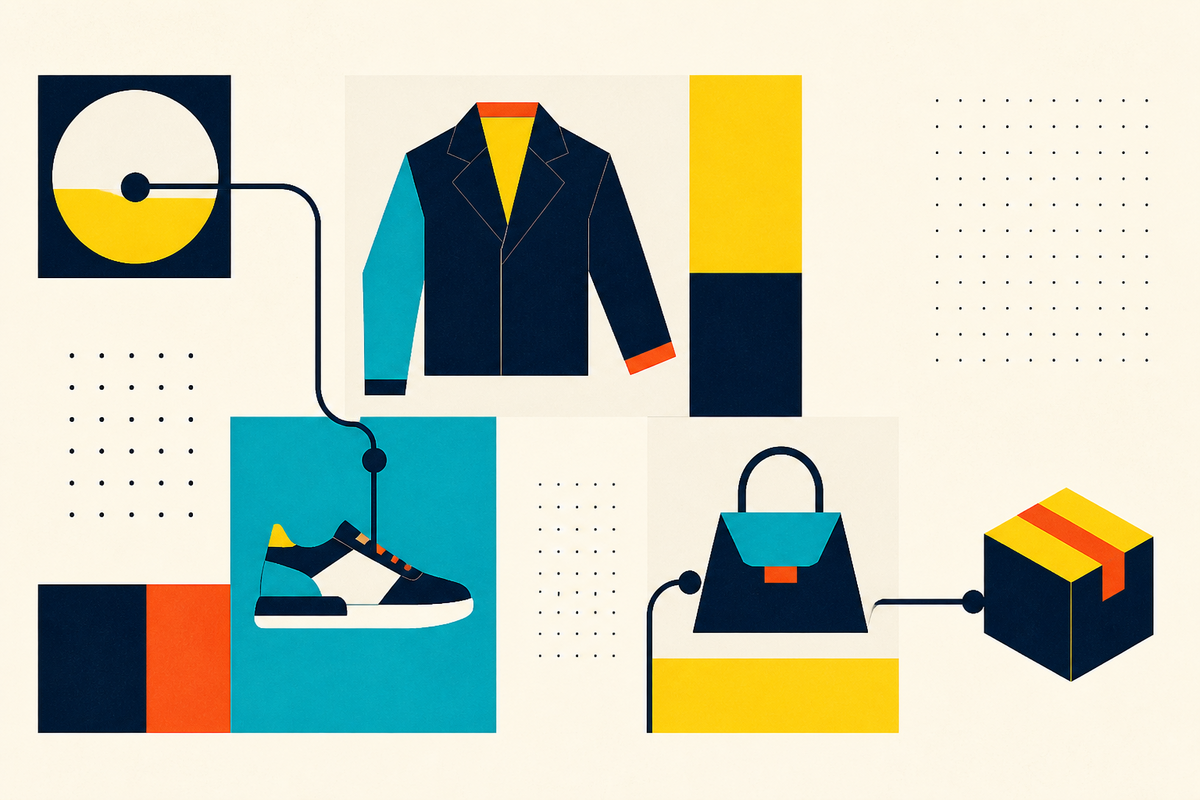
The store is only the visible layer
Calling THE ICONIC an online store is accurate in the way that calling an airport a building is accurate. The customer sees the polished surface. Underneath are assortment decisions, product photography, recommendations, inventory allocation, payment systems, warehouse software, couriers, returns and customer care.
Its model is hybrid. In the retail business, THE ICONIC buys and owns stock, taking inventory risk in exchange for product margin and control. In the marketplace, a brand partner keeps ownership of the inventory and lists it on the platform. A single label can use both routes. That mix lets THE ICONIC curate important stock while widening its digital shelf without funding every unit.
THE ICONIC buys the goods, owns the inventory and manages the sale end to end. More control, more stock risk.
The brand keeps the inventory and lists on the platform. More assortment, less capital tied up in stock.
The distinction matters because fashion inventory ages in public. Yesterday's colour becomes tomorrow's markdown. Parent company Global Fashion Group spent recent years refreshing stock, controlling costs and increasing its marketplace and platform-services mix. In 2025, Australia and New Zealand - effectively THE ICONIC - represented 49 percent of group net merchandise value. The region's net merchandise value grew 5.7 percent at constant currency and produced €26 million in adjusted EBITDA.
Those figures are regional, not a standalone THE ICONIC income statement, but they show the direction. The platform is not chasing assortment for its own sake. It is trying to sell fresher stock, attract profitable demand and use the infrastructure more efficiently.
“Convenience is not a feature here. It is the product architecture.”The operating idea behind THE ICONIC
What customers are really buying
The obvious customer is a fashion shopper in Australia or New Zealand. The wider GFG customer base is predominantly female, aged 15 to 45 and digitally native. Yet the sharper definition is behavioural: someone who values selection but does not want to visit six stores, who wants a local delivery promise and who sees an easy return as permission to take a sizing risk.
THE ICONIC reduces several small frictions at once. Personalised recommendations narrow a catalogue that would otherwise be exhausting. Product imagery and descriptions carry the work once done by a fitting-room rail. App alerts and real-time tracking reduce delivery uncertainty. Free returns within the stated window soften the fit problem. None is exotic alone. Their value comes from being joined.
This is also where THE ICONIC differs from a global catalogue with an Australian shipping option. Its advantage is regional context: local brands, local seasons, local fulfilment and customer expectations shaped by a large, urbanised geography. Department stores such as David Jones and Myer offer physical touchpoints. ASOS brings global online fashion. Amazon offers enormous horizontal selection. SHEIN and Temu compete aggressively on price and volume. THE ICONIC's position is fashion-first, local and service-heavy.
Loyalty, designed in the front row
For 14 years, the curious omission was a loyalty program. THE ICONIC finally launched Front Row in 2025, but only after turning customer research into a product-development channel. Its Inner Circle forum drew 35,000 participants within 24 hours; more than 50,000 people contributed through surveys and focus groups.
The resulting program is free and deliberately legible. Members earn ICONS as they spend, move through Insider, Stylist, Muse and VIP levels, and unlock $10 rewards after collecting 1,000 ICONS. A dashboard built in-house shows status and personalised offers across app and desktop. Existing customers received a level based on prior eligible shopping.
The useful lesson is not the points conversion. Front Row makes an existing customer relationship visible and gives THE ICONIC another surface for personalisation. It can reward purchases today, then potentially encourage lower-return behaviour or circular purchases tomorrow. Loyalty becomes a feedback system, not just a discount ledger.
A second life is becoming a product
Fashion's convenience has an uncomfortable shadow: excess stock, packaging, returns and short garment lives. THE ICONIC's answer is RE-ICONIC, a collection of circular services. The platform carries pre-loved sellers. Customers can purchase a RCYCL or REWEAR bag, fill it with clothing, then send wearable items toward donation and unwearable textiles toward recycling.
Rescued tackles a stranger category of waste: new warehouse items with minor imperfections. Those products are identified, professionally cleaned or repaired by Revibe and returned to sale at a discount. In 2026, a Hello Tailr pilot added online booking for basic alterations and repairs to trousers and jeans. The service accepts items bought elsewhere and works with social-enterprise tailoring partners.
THE ICONIC became a Certified B Corporation in March 2026. At certification, it said operations used 100 percent renewable energy, 79 percent of customer-delivery and warehouse packaging weight was recycled content, and 20 percent of the assortment met social or environmental certifications or standards. It also reported cutting Scope 1 and 2 emissions by more than half ahead of its 2030 targets.
Certification does not settle the contradictions of selling more fashion. It gives the company a third-party framework and turns some ambitions into measurable obligations. The more interesting test is adoption: whether repairs, resale and rescued stock can become as ordinary as tapping “buy”.
The other customer is the brand
Brands use THE ICONIC as a gateway. A label entering Australia or New Zealand can reach customers without assembling the entire local commerce stack. The platform offers merchandising, demand, payments and potentially fulfilment. It also knows what shoppers view, search and buy, subject to privacy rules.
That makes retail media a natural extension. In 2026, THE ICONIC introduced the ICONIC Media identity for its advertising offer, spanning sponsored products, native digital placements, creative production, outdoor and experiential work. The company said its self-service advertising revenue grew 160 percent year over year in the first half of 2026, with more than 290 brands active. It also reported working with more than 420 brands on broader campaigns over the preceding 12 months.
Source Partnerships adds advertising inside parcels, placing samples or inserts in front of a customer during the unboxing moment. It is a neat inversion: the logistics cost that once ended the transaction becomes media inventory. The risk is clutter. The opportunity is a suggestion that feels closer to merchandising than interruption.
Where THE ICONIC fits now
THE ICONIC occupies the space once held by the regional department store, but its departments are software tabs and its back room is a network of owned and partner stock. The company combines consumer ecommerce, marketplace economics and logistics, then layers loyalty, media and circular services over the same relationship.
Its expertise is not fashion alone. It is translating local taste into assortment, moving parcels across a difficult geography, managing inventory risk, and reducing the anxiety between a product page and a decision to keep the item. The business becomes stronger when those capabilities reinforce one another: more relevant products improve discovery; better discovery attracts customers; customer activity attracts brands; broader brand participation improves the range.
There is nothing glamorous about a warehouse-management upgrade, a lower return rate or a cleaner inventory balance. Yet those details decide whether the beautiful storefront works. THE ICONIC's next phase will be judged on whether it can keep the experience generous while making the underlying machine disciplined - and whether “a better way to shop” can include owning clothes for longer, too.
“The runway moment lasts minutes. The customer relationship has to survive the return label.”YesPress