The first surprise in Privalia’s business is not the discount. It is the impatience. Put a dress, sneaker or coffee machine in your digital cart and the platform gives you 30 minutes to finish the purchase. Then the item slips back onto the shelf for somebody else. This is e-commerce with a pulse: stock is finite, campaigns are brief and tomorrow’s storefront will look different from today’s.
That clock helped transform a prosaic retail problem - what to do with excess branded inventory - into a daily ritual for shoppers. Privalia now says more than 20 million people are registered in Brazil. Over 500,000 visit its site and app on a typical day, drawn not only by lower prices but by the possibility of finding something they did not know they wanted. The conventional online store behaves like a warehouse with a search bar. Privalia would rather feel like the friend who whispers that a very good sale has just started.
The clock is part of the product
Privalia began in Barcelona in 2006, founded by Lucas Carné and José Manuel Villanueva as a private online sales club. The premise had two customers. Shoppers received access to recognized labels at outlet prices. Brands received a quieter place to clear old collections without hanging a permanent discount sign beside their current ones. Campaigns lasted only a few days. Membership, limited stock and scheduled drops supplied the theatre.
The company expanded to Italy in 2008 and reached Brazil and Mexico in 2010. Brazil proved particularly important. Its geography made logistics hard, but a growing, mobile-minded consumer class made the opportunity hard to ignore. Privalia localized campaigns, communication and distribution, then launched an app in 2012. Today its partner materials say 93 percent of traffic is mobile and 86 percent comes through the app. The format fits the phone: a new drop is easier to revisit than a static catalog.
“We are a complete digital platform that goes beyond the traditional concept of e-commerce.”Fernando Boscolo, CEO of Privalia Brazil
The purchase journey is designed around discovery. Management has reported an average browsing session of about 13 minutes, compared with its estimate of three to four minutes for ordinary e-commerce. Personalization helps decide which campaign appears for which shopper; scarcity provides the reason to act. Premium members can enter campaigns early and receive shipping benefits under specified conditions. Emails and notifications keep the storefront changing in a customer’s pocket.
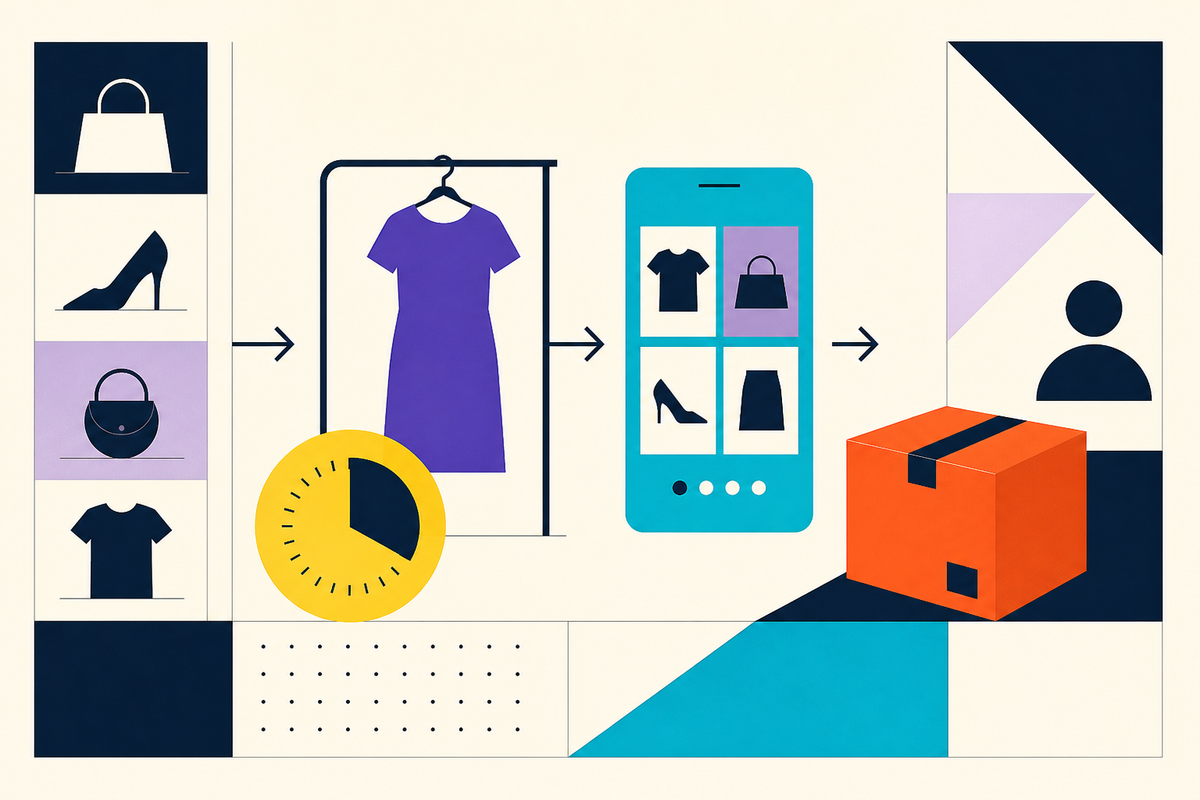
A release valve with good lighting
For brands, a flash sale is inventory management disguised as an event. In Privalia’s classic model, a negotiated lot may remain at the partner until shoppers have bought it. The sold goods then move into the fulfillment network for checking, picking, packing and delivery. That sequence reduces the need for Privalia to warehouse every item before demand is known. It also creates a brutal operational handoff: a cheerful campaign can be ruined by one late or wrong parcel.
The company processes more than 500,000 pieces a month and typically stages 12 to 15 promotional campaigns a day. In 2024 it hired DHL Supply Chain to handle e-fulfillment for bulky and fragile HomeDecor products from Barueri. The stated goal was an unusually plain one: more “perfect orders,” meaning deliveries without interruption, damage or delay. For a business built on spontaneity at the front end, the back end has to be almost boring.
This solves a second problem for brands: channel conflict. A label may want cash from last season’s stock without teaching customers that its main store is always negotiable. Privalia creates distance between the full-price rack and the markdown. Because it deals directly with brands and emphasizes official campaigns, it can also offer more control than the reseller thicket of a general marketplace.
The outlet grows extra rooms
The limitation of flash sales is visible in the name: they end. Excess inventory rises and falls with fashion cycles and the economy. Privalia’s answer has been to build new businesses around the audience and brand relationships created by the original one.
Brandsplace, launched in Brazil in 2023, lets brands operate official stores across the full product life cycle. The partner chooses assortment, price and delivery. Privalia supplies an audience, promotional calendar and integrations with commerce systems. Its pitch is deliberately unlike a street market: no competing resellers inside the brand’s store, no platform interference in price and no automatic export of the catalog to Google Shopping. By mid-2025, Brandsplace had connected more than 250 brands and represented about 10 percent of the Brazilian business.
Privalia Ads turns attention into a separate product. The retail-media unit lets brands buy segmented exposure to people whose browsing and purchase behavior reveals actual shopping intent. It grew 138 percent in 2024, according to the company. Travel and experiences stretch the discovery format beyond things that arrive in boxes. Premium adds recurring subscription revenue. A “Made for Privalia” vertical goes further still, working with brands on exclusive items that fill identifiable demand and use spare factory capacity. In early 2026, management said it accounted for roughly a quarter of the business, with variation according to demand.
These additions make the business model less dependent on one kind of stock. Direct commerce produces retail margin; Brandsplace produces marketplace economics and service revenue; Privalia Ads attracts brand marketing budgets; Premium produces a quarterly fee; travel creates transactions without another shirt entering the warehouse. The risk is dilution. If everything is always available, the daily treasure hunt can become an ordinary mall.
Different from the endless aisle
Privalia competes for the same Brazilian wallet as Mercado Livre, Shopee, Amazon, Magalu, Shein, Dafiti and the brands’ own websites. It cannot win by having the largest catalog. The generalists have trained consumers to search, compare and demand fast delivery. Shein has turned fashion novelty into an industrial system. Brand sites own the cleanest presentation of their current collections.
Privalia’s place is narrower and more theatrical. It organizes merchandise into events, protects the identity of participating brands and uses a membership habit to create repeat visits. The products range well beyond clothing - shoes, beauty, children’s goods, pets, homewares, appliances, food, travel and culture all appear - but the interface still says “look what arrived” rather than “tell us exactly what you need.” Price matters. Curation and timing explain why the shopper opens the app before deciding what to buy.
A Brazilian second act
Privalia’s ownership has followed the consolidation of online flash sales. The company raised large venture rounds from investors including General Atlantic, Index Ventures, Highland Capital Partners, Insight Venture Partners and Sofina. France’s vente-privee acquired it in 2016 in a transaction widely reported at about €500 million, though the price was not officially disclosed. vente-privee later became Veepee, bringing several European event-sale brands together.
The Brazilian operation eventually traveled in the other direction. In January 2026, Veepee agreed to sell control to Order VC and Privalia’s local executives as the French group concentrated on Europe. Brazilian antitrust approval followed in March, and the transaction closed at the end of that month. The price remains private. Fernando Boscolo stayed as chief executive and became a meaningful shareholder.
Order VC bought a profitable company rather than a rescue. Privalia reported R$1.3 billion in 2025 revenue, up 7.5 percent, with EBITDA of roughly R$50 million. Management said the operation had grown at an 11 percent compound annual rate over five years, carried no debt and paid dividends. The new owner brings a portfolio of Brazilian consumer businesses and the promise of greater local autonomy.
Inside the company, public descriptions are cheerfully idiosyncratic. Customers become “Prilovers”; employees are “Privali@s.” The stated values include ownership, entrepreneurship, constructive dissatisfaction and the habit of asking “how yes.” Recent promotions suggest an effort to grow leaders from within: in 2026 Karina Bernardo moved from Privalia Ads to chief marketing officer, while Tatiana Figueiredo took over the media unit. The wider challenge is less cute. A company of roughly 350 people in Brazil must coordinate software, merchandising, media, brand sales, customer care and physical fulfillment at national scale.
Privalia’s moat is not a coupon. It is the choreography between a brand that wants discretion, a shopper who wants discovery and a warehouse that cannot miss the cue.
The next phase will test whether the choreography can hold. Artificial intelligence already helps personalize campaigns, forecast demand and choose ads. Stone supports the financial rails beneath Brandsplace. Adobe tools feed the personalization program. DHL handles a difficult logistics category. Each partner makes the platform broader and, ideally, less visible: the machinery should disappear behind the sensation that a timely offer simply found the right person.
For shoppers, the practical value remains uncomplicated. Privalia can surface discounted recognized brands, reserve a find while checkout happens, track the order and accept eligible returns through the app or site. Premium can make sense for frequent buyers in covered regions; occasional shoppers can use the free account and wait for the right campaign. For brands, the menu is now much larger: clear stock, open an official store, commission exclusive goods, buy retail media or connect through marketplace infrastructure.
Twenty years after its Spanish founding, Privalia is no longer merely a private club and not quite a conventional marketplace. It sits between off-price retail, entertainment-led commerce and a service platform for brands. That in-between position is useful precisely because online retail keeps becoming more uniform. Search boxes look alike. Delivery promises converge. Infinite catalogs blur together. A clock, it turns out, can still make a store feel alive.
Keep exploring
Visit Privalia’s storefront, follow the company’s working life, or watch the app in motion.