- Peek sold premium children's clothing that looked considered but could survive actual children.
- Its wholesale breakthrough reached all 115 Nordstrom stores in 2011.
- By 2015, sales were about $28.8 million and losses were about $6.7 million.
- The brand passed through Charlotte Russe before Mamiye bought its intellectual property for $425,000 in 2019.
- The copyable move: protect the product idea, and borrow expensive infrastructure whenever you can.
The surprising thing about Peek Kids was not that grown-ups liked it. Grown-ups like many things that children are expected to wear. The surprising thing was that Peek seemed to remember the child inside the clothing. A lavender skirt could look right at a holiday meal and still tolerate the grass immediately afterward. A T-shirt might refer to Brown v. Board of Education. Presidential jerseys carried the president's number in office. The clothes had jokes, references and knees.
That distinction came from three retail veterans. Tina Canales and Amy Williams met at Gap; Scott Williams had worked at Lucky Brand. Between Canales and Amy Williams there were six children, which meant the founders had both merchandising experience and an unusually noisy focus group. In 2006 they put in $3 million, and in 2007 opened stores in Santa Monica, Corte Madera and Scottsdale, plus a website.
They called the company Peek... Aren't You Curious? The ellipsis did useful work. It made a retail brand sound like the beginning of a conversation. It also captured the company's central wager: that childrenswear could speak to the alert, changeable person wearing it, not merely to the adult holding the credit card.
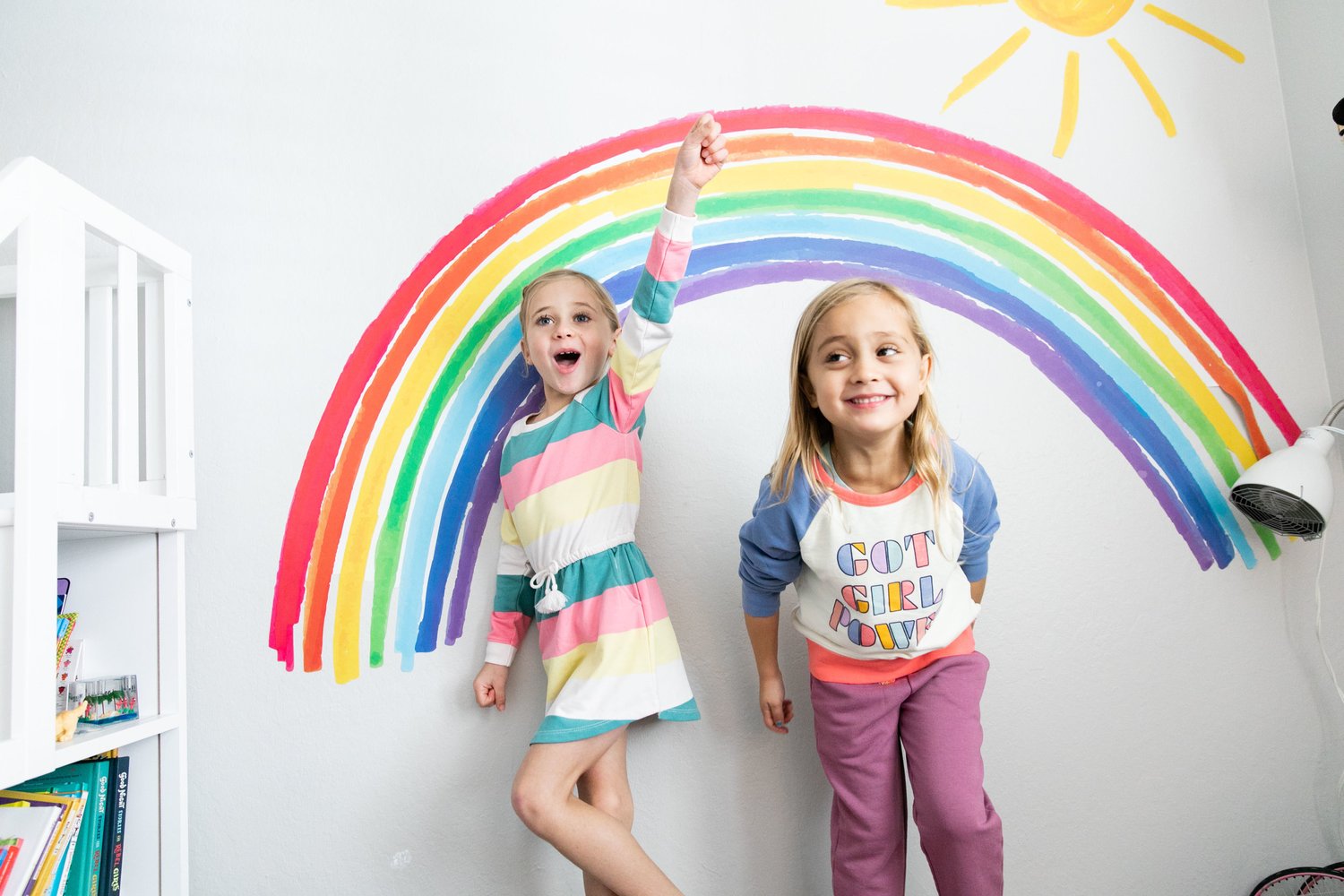
The product was a truce
Most children's clothing is forced to choose a side. At one end is the miniature adult: charming in the picture, faintly inconvenienced by being alive. At the other is the utilitarian play uniform, which treats visual pleasure as an optional extra. Peek's product was a truce. Liberty prints, embroidery, cashmere and vintage references pleased adults; comfortable shapes and sturdy fabrics gave children room to move.
“Kids have a different personality every day of the week, or sometimes all in one day.”Tina Canales, co-founder
That sentence is better than a demographic profile. It defines the problem: identity changes faster than a wardrobe. Peek answered with girls', boys' and baby collections, but the useful expertise was not the category list. It was translating personality into detail - a peculiar graphic, an unexpected neutral, an embroidered flourish - without making the garment too precious for Tuesday.
The number that tells on the other number
Retail stories love sales because sales rise in public. Costs conduct their business backstage. Peek's 2015 performance supplies both numbers. The original company generated approximately $28.8 million in gross revenue. It lost approximately $6.7 million, or an average of about $550,000 a month.
The loss was roughly 23 cents for every dollar of revenue.
This was not a company nobody wanted. It was a company whose popularity was expensive to maintain. New stores brought rent, fixtures, staff and inventory. New talent and systems were added in anticipation of further growth. Competitors discounted aggressively, so Peek marked down more product, which weakened margin just as the fixed-cost machine demanded feeding.
The first crack was wholesale
The warning arrived much earlier. In 2008, Peek had opened four stores, taken $10 million from Mousseluxe and begun selling wholesale to boutiques and Barneys New York. Then the financial crisis produced a particularly unpleasant retail trick: wholesale customers cancelled orders after Peek had already committed to the product. Some invoices went unpaid. Inventory remained very real even when the expected revenue became hypothetical.
Peek renegotiated rents, closed three locations and shut the unprofitable wholesale channel. More important, management changed its mind about self-sufficiency. A small vertical retailer, it concluded, could not efficiently support ecommerce, real estate, logistics, IT and marketing all at once.
Borrowing somebody else's scale
The answer was Nordstrom. In 2010, the department store became a minority investor and strategic partner. Peek supplied designed product; Nordstrom helped with marketing, technology, ecommerce and real estate. The wholesale program moved from 20 Nordstrom stores in March 2011 to 50 in May and all 115 by July. It generated $1.7 million that year.
This is the shrewdest chapter in the story. Peek did not need to own every capability to benefit from it. Nordstrom already had doors, systems and shoppers. The partnership let Peek rent scale with product and equity rather than recreate a department store behind a children's label.

Then the company resumed doing the expensive thing. Four stores opened in 2012, seven in 2013 and five in 2014. Peek hired an investment bank to find growth capital for more stores, ecommerce and marketing. After eight months, no viable new investor appeared. The company had expanded in anticipation of money that had not arrived.
In 2015, Nordstrom considered buying Peek. The proposal would have closed ten unprofitable stores, used Nordstrom's infrastructure and reduced headcount. Nordstrom declined. By February 2016, Peek entered Chapter 11 with 21 stores across ten states. Charlotte Russe bought the business and kept a smaller network alive.
The $425,000 afterlife
Three years later, Charlotte Russe filed its own bankruptcy. The remaining nine Peek stores were marked for closure. Mamiye Brothers, a family-owned apparel manufacturer founded in 1947, bought Peek's intellectual property for $425,000. The price sounds shockingly small beside $28.8 million in annual sales. But a distressed sale prices bargaining conditions, not childhood memories.
Mamiye kept the part that could travel lightly: the name, the point of view and the designs. It announced a restart through ecommerce and wholesale rather than rebuilding the store fleet. Peek moved from trying to own its entire retail machine to living inside a company that already knew how to design, manufacture and distribute children's clothing at scale.

What another founder can steal
Peek's usable lessons are not confined to children's clothes. They apply wherever a sharp product idea is tempted to dress itself in too much company.
Peek did not merely sell style. It reconciled the adult's eye with the child's need to move.
Graphics, embroidery, color and copy made recognition possible without a giant logo.
A partner with distribution and systems can make a small brand bigger without making its overhead equally large.
Do not open tomorrow's locations with money that a future investor has not yet wired.
This approach works when the brand has a product identity worth preserving and a partner whose scale truly lowers cost. It is a poor fit when wholesale erases differentiation, margins cannot support partner economics, inventory turns slowly, or the customer experience depends on a founder-controlled store. Shrinking the machine only helps if customers were coming for the brand rather than the machine.
The company that began in 2006 is not the same legal or operating creature today. That is the point. Corporate forms are mortal; customer ideas sometimes are not. Peek's durable idea can be stated in one sentence: children deserve clothes with personality that do not prevent them from behaving like children. Everything else - the store count, the ownership chart, the source of the shipping label - turned out to be negotiable.