A customer has a useful quality that a professor does not: no obligation to be encouraging. The customer can leave. At Tetr College of Business, this small fact becomes an organising principle. Students build businesses while moving between countries, putting pricing, teamwork and persuasion in front of people who can actually say no. A beautiful presentation has limited value when nobody buys the product.
- Four-year undergraduate programs combine international study with venture building.
- The first cohort reportedly built 44 ventures and generated more than $324,000 in first-year sales.
- The current management degree lists $215,700 in program fees, before indicative living costs.
Founded in 2024, Tetr sells an education organised around work that has consequences. Its customers include school leavers seeking an entrepreneurial degree and early-career professionals seeking practical management training. Families are buying access to teaching, peers, markets and a credential. The ambitious part is making those pieces reinforce one another.
A class project escapes the classroom
Founder Pratham Mittal traces the idea to his own University of Pennsylvania experience. In a February 2026 interview, he described working on a live problem for the Philadelphia Inquirer. A tool built for a class became a product and then a company. The distance between an assignment and a commercial opportunity suddenly looked much shorter.
That experience supplied Tetr's central question: why postpone the encounter with a real customer? Mittal and co-founder Tarun Gangwar built a school around bringing it forward. Tetr describes its educational foundations as skills, experiences, exposure and values. The language sounds abstract. The assignments are reassuringly specific.
The teaching roster includes Edward Rogers, NASA's former chief knowledge officer, as chief learning officer. Workshop topics range from financial statements to product research. The attraction is access to people who can connect a technique to a decision they have actually had to make.
“Do they change direction when the data tells them to?”
Pratham Mittal, on assessing students
Pickleball, sea moss and the first sale
Consider the first undergraduate cohort. In November 2025, Tetr reported 44 ventures and more than $324,000 in combined first-year revenue. These are school-reported commercial results, not graduate salaries or Tetr's own revenue. They measure an early encounter with demand, rather than the eventual durability of the businesses.
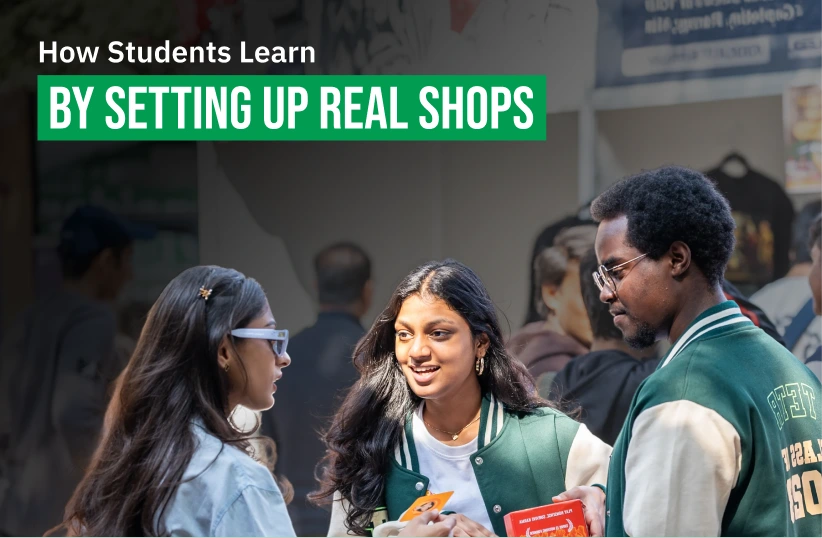
The products are pleasingly ordinary. ServeClub sells pickleball gear. CosMoss makes sea moss-based supplements. YourStory reported angel backing for both, naming investors including Rare Rabbit's Manish Poddar and The Moms Co.'s Malika Sadani. Selling sports equipment requires attention to supply, price and distribution. The glamour wears off quickly if the stock does not move.
This is where the model becomes useful. A team must organise around an actual delivery, rather than divide up slides the night before a presentation. Tetr's own video series describes team conflicts, scaling pressure and supply-chain problems. These are learning materials with awkward edges: another person has to live with the decision.
A different market changes the question
Tetr's undergraduate itinerary is designed around building in different markets. Its current management curriculum begins with a consumer brand in India, followed by e-commerce in Dubai and a Kickstarter project in China. Later assignments include social enterprise in Ghana, software in the United States, sustainability in Argentina and content creation in Europe.
The destinations give the work context. A customer acquisition tactic has to survive a change in language, purchasing power or distribution. Students cannot simply assume that an answer learned in one market travels intact to another. That repeated adjustment is the educational argument for all the movement.
- 01 / IndiaBuild a consumer brand
- 02 / DubaiSell across borders
- 03 / ChinaTest a crowdfunding pitch
- 04 / GhanaBuild for social impact
It also creates operational friction. Tetr currently says its India and Dubai terms have been swapped because of geopolitics, and reserves the right to change locations because of visa restrictions. International exposure depends on the less photogenic business of getting people safely into the right place.
The price of all that practice
Tetr's business model is fee-paying education: tuition, academic and business immersions, administration and career development. Its management bachelor's page currently lists four-year program fees of $215,700. Separately, it estimates $41,900 for accommodation, amenities, immigration, travel and local charges, excluding food and personal preferences.
- Program fees
- $215,700
- Indicative living costs
- $41,900
Scholarships can cover up to the full tuition component. That distinction matters: tuition is $138,800 of the listed program fees. Even full tuition support leaves immersion, administration and living expenses to consider. A family needs a personalised net budget, with the scholarship applied to the correct line.
Investors are financing expansion too. Tetr announced an $18 million round co-led by Owl Ventures and Bertelsmann India Investments in November 2025, intended for new campuses, its international network and additional programs. Funding buys room to grow. It does not settle the question of educational value.
The credential still counts
For the management bachelor's pathway, UBI Business School confirms a partnership covering academic delivery, projects and overseas learning. The published degree route leads to a Middlesex University award through UBI. A separate integrated bachelor's and master's pathway partners with Thunderbird at Arizona State University, whose overview specifies the final two terms in Tempe and a Thunderbird master's credential.
Those arrangements matter because a visiting professor, a campus immersion and a degree-awarding institution perform different jobs. Tetr's appeal combines them, but applicants should understand the precise pathway they are joining. Its gold award for Innovation in Business Education at the 2025 QS Reimagine Education Awards recognises a teaching approach; it is separate from a university league-table position.
Take the assignment home
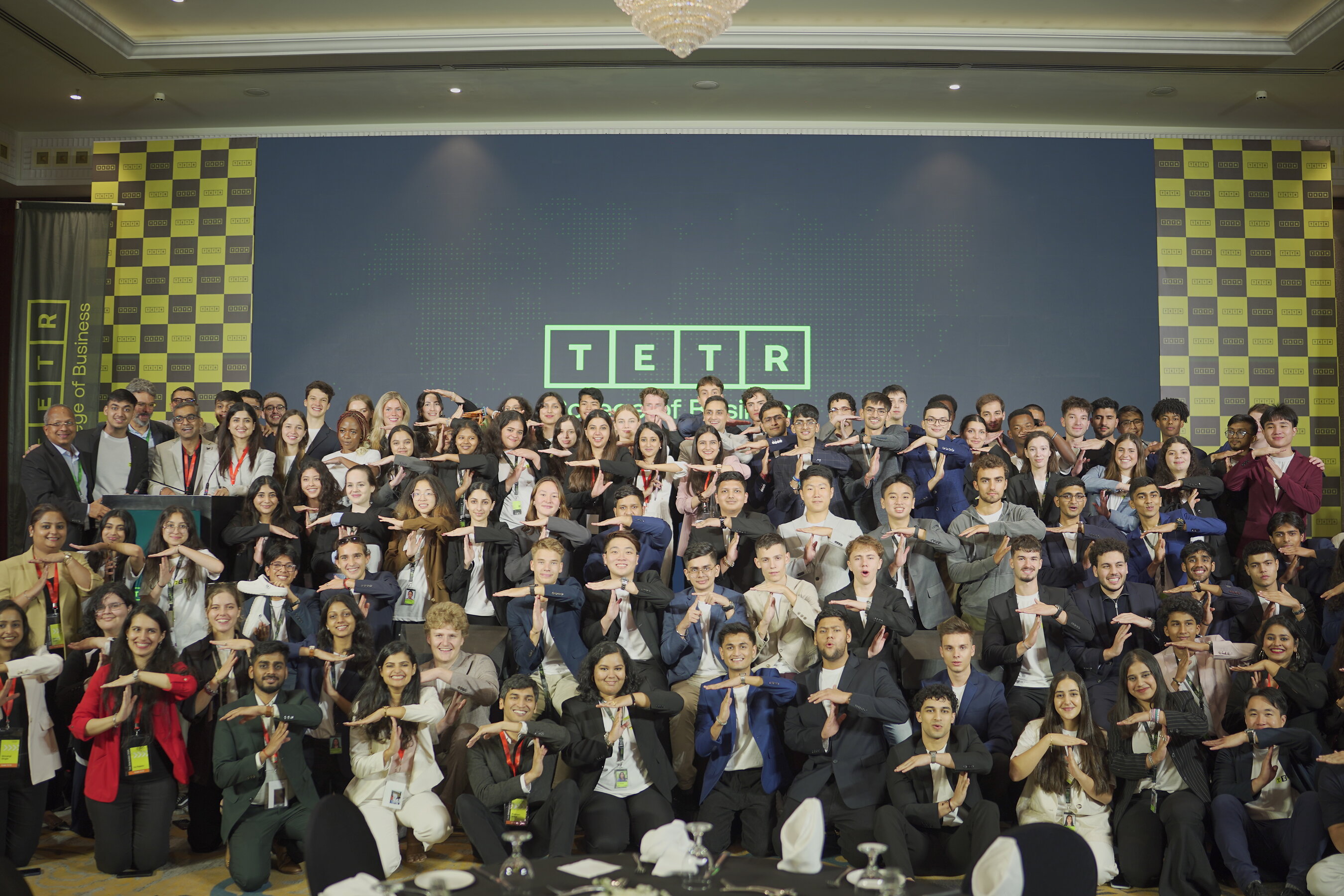
An October 2026 announcement put Tetr's incoming undergraduate cohort at 300 students across four pathways. Alongside management, it now markets AI, finance-and-AI, and integrated degree options. The portfolio also includes postgraduate, executive and gap-year programs. Tetr occupies the space between a business degree, an international study experience and an incubator.
The approach suits students who want repeated responsibility and can handle frequent moves. Someone seeking a settled campus, a narrowly specialised academic route or a predictable travel schedule may prefer a conventional university. Starting a business independently remains another alternative, with fewer fees and less organised support.
There is something to copy without enrolling: give a project a real customer, a budget and a deadline. Keep a record of what sold, what cost too much and which assumption changed. Then do it again. Tetr's most interesting proposition is that judgment develops through these repeated encounters. The customer, inconveniently, gets the last word.