A street address is a surprisingly good place to start a technology company. Before a business can compare internet connections, somebody has to establish which suppliers can actually serve the building. Then come the prices, the terms, the equipment, and the waiting. Telarus built one of its early tools around that unromantic problem. More than two decades later, it is still in the business of making a complicated purchase easier to carry through.
The company occupies a position many employees never see. Their workplace may use a familiar communications platform or a recognizable network provider; behind the purchase, an independent technology advisor may have worked with Telarus to find the supplier and assemble the deal. Telarus supplies the advisor with software, technical expertise, and operational help. Its usefulness depends on how much work those resources remove.
That makes it an instructive company for the AI moment. There is plenty of technology to buy. Choosing a workable combination, getting it deployed, and establishing who answers when something goes wrong remain harder assignments. Telarus is betting that those assignments will keep advisors busy.
First, make the quote less painful
Adam Edwards and Patrick Oborn founded Telarus in 2002. Their connection preceded the business: according to a company account, they grew up down the street from each other in Southern California. The early company brokered telecommunications services and generated leads online. Preparing carrier quotes involved manual work; the GeoQuote prototype followed in 2003.
Today, GeoQuote still starts with geography. An advisor enters an address to see supplier availability and estimated prices. The tool includes fiber maps, a data center locator, and automated contract generation. Telarus says it can return a comparison in less than a minute. Estimated is the operative word: the result starts a sales discussion, with service terms and customer requirements still to examine.
The broader software suite divides the job into useful pieces. CableFinder supports fast broadband quoting and ordering for selected carriers. GeoQuote widens the comparison for complex opportunities. Supplier Matrix Pro and SolutionVue help with supplier selection and recommendations. These are practical instruments for an advisor trying to turn a vague request into options that can survive a customer meeting.
- 01QualifyNeeds, addresses, constraints
- 02CompareSuppliers, terms, technical fit
- 03Carry throughOrders, delivery, commissions
The customer behind the customer
Telarus’s immediate audience is the technology advisor: independent consultants and solution providers helping businesses choose services. Its reach also includes managed service providers, resellers, and integrators. The end customer is the business buying the technology. Keeping those roles straight explains why Telarus spends so much effort on partner support and relatively little energy becoming a household name.
Its website describes a portfolio of more than 400 suppliers across networking, cloud, cybersecurity, AI, communications, mobility, and the Internet of Things. Supplier announcements make that range tangible. Zoom joined the portfolio in 2020. PolyAI arrived in August 2025 with enterprise voice assistants. The underlying products belong to suppliers; Telarus helps an advisor source and combine them.
The company’s 2026 supplier awards offer a snapshot of commercial activity. Comcast Business ranked first by revenue for 2025. Zoom received the UCaaS category award, NiCE the contact-center award, and Cato Networks the cybersecurity award. These are Telarus’s internal recognitions, but they show the business extending from connectivity into software and security.
Named advisor relationships are more revealing than an anonymous roster of end customers. At the 2025 Summit, Schwarzkopf Tech Partners president Marty Schwarzkopf described meeting two suppliers recommended by Telarus engineers for a retail opportunity. His account concerned a prospective deal, not a completed customer result. Even so, it illustrated the sequence: an advisor brings a problem, engineers narrow the field, and suppliers get a relevant conversation.
The engineer comes with the relationship
A small advisory firm cannot casually hire a specialist for every technology its customers might need. Telarus’s sales engineering team helps with discovery, qualification, solution design, and supplier evaluation. The company advertises that support at no additional cost to advisors and says its team holds more than 450 certifications across its practices. Certifications are evidence of training, not a guarantee that any particular project will succeed.
Engineers can join the end-customer conversation at an advisor’s request or work behind the scenes. Enterprise Services extends that support into planning, coordination, communication, and delivery under the advisor’s brand. The advisor retains the customer relationship. For a firm considering a larger or unfamiliar engagement, access to that shared capacity can matter as much as access to another supplier.
This is also where the business model becomes legible. Telarus operates in a commission-based distribution channel. Its Zoom announcement, for example, offered partners ongoing commissions for the customer relationship. Software and support help advisors produce and maintain those sales. A buyer should assess the service contract and the advisor’s commercial arrangement separately; the presence of an intermediary does not make the underlying technology free.
The software gap that helped make a deal
In December 2020, Telarus accepted growth equity led by Columbia Capital. Management retained a majority stake at the time of the announcement. The stated uses were concrete: more field sales coverage, larger support and engineering teams, and faster development of proprietary tools. The structure gave the founders additional capital while preserving management control under that transaction.
The acquisition of Florida-based Telecom Consulting Group, announced in June 2022, added another route to expansion. TCG described a network of more than 6,000 partners and 20 channel managers. Telarus could offer a broader support and software operation; TCG brought relationships and local coverage. The industrial logic was easier to understand than the alphabet soup of the sector.
“It’s no secret that our tools weren’t up to par with some of our competitors.”Dan Pirigyi, TCG · ITEXPO, 2022
Pirigyi’s remark at ITEXPO, reported by TechZone360, supplies a rare piece of candor in an acquisition story. He said joining Telarus would help address development difficulties. The documented weakness was in TCG’s tools; it would be wrong to turn that into a tale of Telarus recovering from a failed product. The lesson is narrower and more useful: maintaining competitive software had become part of running a relationship business.
Twenty years of back office, rewritten
Telarus had its own modernization work to do. In March 2025 it launched Telarus Hub, following roughly two decades of Agent Back Office. Hub connects supplier information, technical resources, education, quotes, orders, and commissions. The company framed the replacement around easier navigation and better access to business data. For an advisor moving between customer visits, that is a daily workflow question.
By August 2025, Telarus reported more than 5,000 advisors using Hub. That number measures reported platform use, not the number of businesses buying through Telarus. At its 2026 Summit, the company highlighted commission-sharing, referral, and renewal features, enhancements to Supplier Matrix Pro, and AI-assisted Order Capture. The product direction follows the administrative details that can lose a salesperson time or obscure money owed.
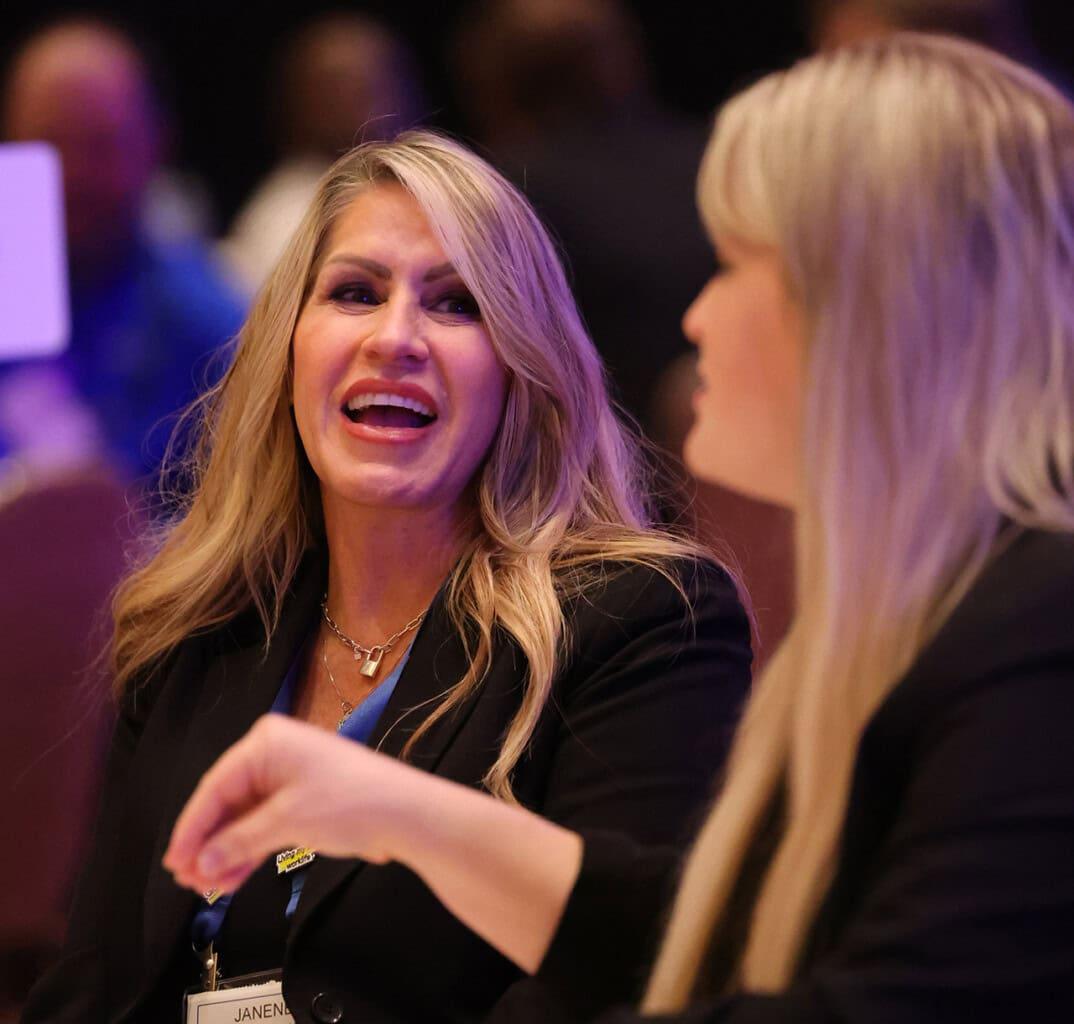
There is a social counterpart to the software. The 2025 Partner Summit drew more than 1,800 attendees, according to Telarus. The 2026 gathering included more than 40 education sessions and a rodeo at Cowtown Coliseum in Fort Worth. The juxtaposition is pleasingly literal: technical instruction by day, livestock later. Both sit inside a business that depends on people knowing whom to call.
Its published employee values emphasize supporting advisors, collaboration, and leadership. Telarus also describes an Inclusion Coalition and relationships with channel charities. Those are statements of organizational intent, rather than an independent verdict on workplace culture. The visible operating habit is education: events, technical sessions, and a podcast keep putting suppliers and specialists in front of advisors.
A cheaper quote is only part of the answer
Telarus’s September 2026 Tech Trends Report provides the strongest challenge to a purely price-led pitch. Developed with Redpoint Insights, it surveyed more than 500 mid-market and enterprise IT decision-makers and more than 450 advisors. Some 54% of advisors believed cost savings were their primary value; only 26% of buyers agreed. Buyers more often valued project management and implementation support, and vendor vetting, each cited by 48%.
Who thinks savings are the main value?
That survey was commissioned by a distributor with an interest in the advisory model, so it should be read in context. It nevertheless poses a sensible question for anyone making a sales pitch: are you describing the value the customer actually wants? The company’s accompanying research also found considerable openness to switching vendors at renewal. Existing contracts are therefore another occasion for advice, rather than simply a calendar entry.
AI gives the question new urgency. Telarus’s August 2026 podcast interview with Mobile Mentor founder Denis O’Shea examined adoption, security, training, and measuring results. The conversation’s premise was that buying AI software does not itself demonstrate value. For Telarus, the opportunity is to connect that purchase to cloud infrastructure, networking, security, and the work required to use it effectively.
How to judge the help
Telarus competes with other distribution businesses, including AVANT, Intelisys, Sandler Partners, and AppDirect. The meaningful comparison is how well each supports the advisor’s actual customers: supplier fit, technical access, ordering processes, and the handling of commissions and renewals. Telarus’s combination of quoting tools, shared engineers, and operational support gives it a specific proposition to test.
There is something a business buyer can copy without becoming an advisor. Start with the requirement and the constraints. Verify service availability. Compare contract terms alongside price. Bring the implementation specialist into the discussion before choosing the supplier. Assign responsibility for delivery and for checking whether the purchase produced the intended result. That sequence makes the attractive demo earn its place.
The model offers less value when a purchase is simple, the buyer already has the necessary expertise, or the appropriate supplier sits outside the available portfolio. Commission incentives also deserve a direct conversation. An advisor still has to justify the recommendation on the customer’s terms. Telarus’s proposition is ultimately practical: make that advisor better equipped to carry a purchase from possibility to working service.