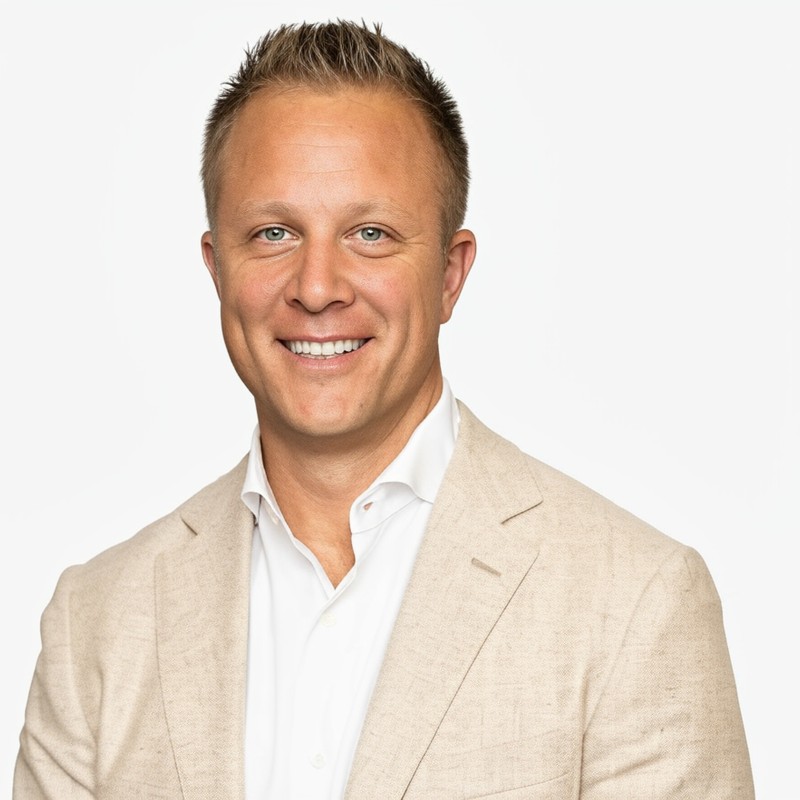
For about two decades, Kevin Thomsen built channel businesses inside unified communications. Account executive at iCore Networks. Regional sales lead. Vice President of mid-market sales at Vonage. Vice President of the Global Strategic Partner Group. Then a stint at Zoom as Head of Indirect Sales and Channels for North America, riding the pandemic wave that turned a video conferencing tool into a verb. It was a respectable, well-tracked career inside the world of dial tones and meeting rooms.
Then, in December 2023, he made a left turn. Maxxsure - a Texas company most people outside cyber risk circles had never heard of - announced Kevin Thomsen as its new Chief Revenue Officer. The press release used the words "fuel rapid growth in cyber risk and cyber insurance analytics," which is the kind of phrase that normally hides a more interesting story underneath.
The interesting story is this: cybersecurity has a translation problem. CISOs talk in attack vectors. Boards talk in quarters. Insurers talk in actuarial tables. Private equity talks in EBITDA. Nobody is wrong, and almost nobody understands the other rooms. Maxxsure's founder, Shawn Wiora, spent years as a CISO yelling into that gap. The company's answer is a product called the M-Score, which tries to convert your organisation's cyber risk into a single dollar number anyone in any of those rooms can hold in their hand.
That is where Thomsen comes in. He is not a security engineer. He has never claimed to be. What he is, by training and by temperament, is a translator: a person who has spent his entire career sitting between technical teams and the people who write the cheques. At Vonage, he restructured partner segmentation and drove a serious slice of UCaaS and CCaaS revenue. At Zoom, he scaled an indirect-sales engine while the world was learning what "you're on mute" meant. Both of those jobs required taking complicated technology and turning it into something a regional vice president of sales could close on a Thursday afternoon.
Cyber risk, it turns out, needs exactly that skill. The product is sophisticated. The pitch can be brutal. The buyer is anxious. The competition is a 100-page PDF nobody on the board has read.
"I am thrilled to be part of the Maxxsure team," Thomsen said when the appointment landed. "The opportunities for growth are immense, and I look forward to driving revenue strategies that will further solidify Maxxsure's position as a global leader." It is the language of a press release, but read it carefully. The growth he is talking about is not Maxxsure's. It is the growth of an entire category - cyber risk quantification - that boards are quietly starting to demand because their insurers and their auditors have stopped accepting hand-waving.
Maxxsure's office sits in Addison, just north of Dallas. The team is small - about 26 people on most counts. The product is technically dense: internal operations, external exposure, third-party vendor landscapes, all stitched into a financial picture rather than a colour-coded grid. The customers span gaming, banking, healthcare, energy. Within months of joining, Thomsen helped announce a strategic partnership with CRISIL, the global analytics firm. Six months after that he was on stage at the Indian Gaming Tradeshow talking about how tribal and commercial gaming operators sleep better at night when they know what their risk costs them.
This is the part nobody puts in a press release: Thomsen is selling a worldview, not a SKU. The worldview is that cybersecurity is finally a financial discipline. The investment thesis matches it. So does the regulatory drift. So do the insurance premiums.