Before Taylor Shanklin Wilson built a creative company, she made a rather unfashionable decision about coffee mugs. Thirty were too many. Six would do. The printers went from three to one. A separate scanner lost its job to a phone. Even the house got smaller: nearly 3,000 square feet became 1,100. In her account of the change, a family of four had bought space for a future they were not yet living. They decided to make room for the present.
There is a pleasing complication here. Wilson works in branding, an occupation frequently employed to persuade people that they need another thing. Yet her own recurring argument is about taking things away. Fewer distractions. Clearer choices. A business that can grow without requiring its founder to personally carry every piece of it. The mugs make an unusually domestic opening to an agency story. They also explain quite a lot.
Today, the Boone, North Carolina founder runs Creative Shizzle, serving businesses, nonprofits and small marketing teams with design and content support. The name has enough extra consonants to suggest a party. Underneath it sits an orderly concern with processes, priorities and work that actually gets finished.
The house came before the keynote
Wilson described her family's downsizing in a September 2019 essay, “The American Dream is Dysfunctional.” She had once subscribed to the equation between having more and succeeding. Then she began questioning the cost of keeping possessions and projects that consumed attention. The details were wonderfully unglamorous. Credit cards were consolidated. Equipment was retired. The family rented a home sized to its current needs.
By March 2021, the same idea had acquired a stage. Her TEDxLenoxVillage talk, “Minimize to Maximize: The Art of Focusing on Less to Maximize Results,” explored removing distractions and choosing work aligned with personal strengths and interests. Its central proposition had already been tested in her cupboards. That history gives the phrase a little more weight than the average keynote slogan.
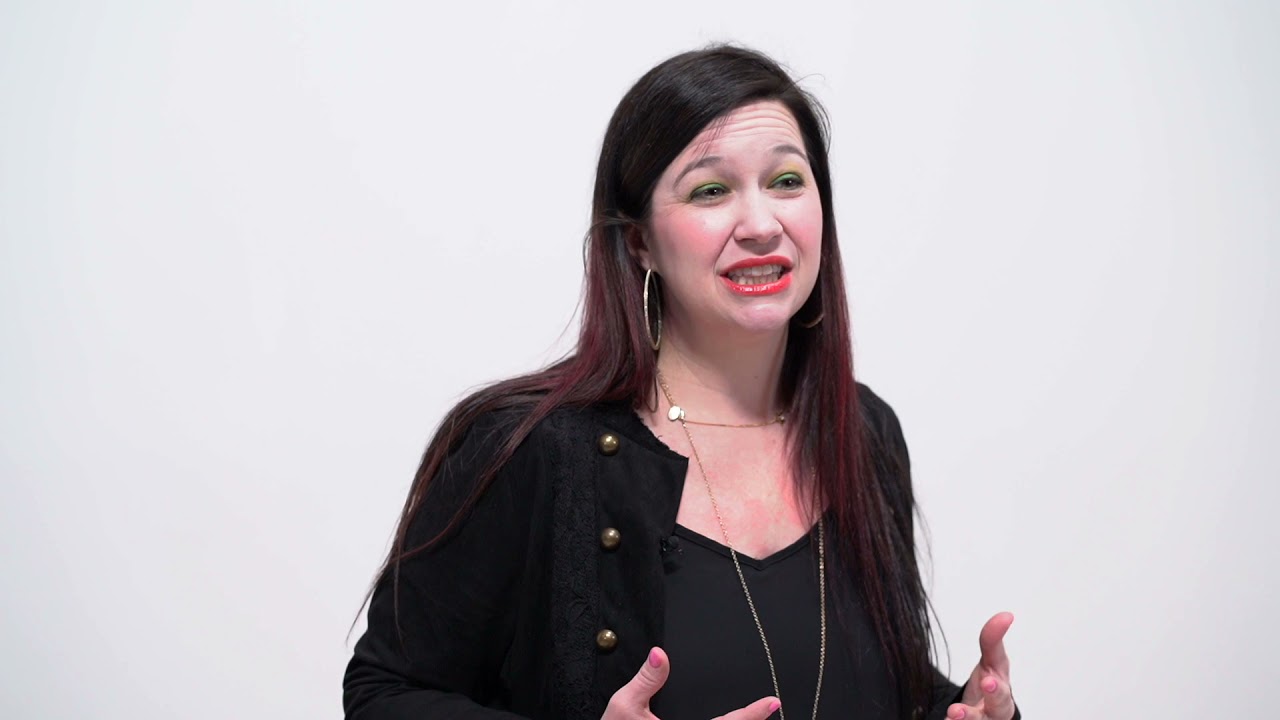
There is no vow of permanent smallness in this philosophy. Wilson subsequently built a team. The question is which additions deserve the effort they require. A larger company and a shorter list can coexist, provided someone is willing to decide what belongs on that list. Her career has increasingly revolved around helping other people make that decision.
What the fundraising world taught her
Years before Creative Shizzle, Wilson was working where ambition routinely exceeds available resources: nonprofit marketing. Her background includes Convio and Kimbia. In 2019, as vice president of marketing at Pursuant, she talked with Gabe Cooper about the similarities between startups and nonprofits. Both operate with limited time, small teams and considerable expectations. Both need to work out how to grow with what they have.
Her interest was in the machinery behind growth. She described bringing marketing, data and fundraising colleagues together around the experience of the supporter. A new campaign could involve several departments, each seeing a different piece of the same relationship. Getting them to solve a problem together mattered more than protecting the boundaries between their jobs.
One practical device was a lean canvas: put an idea's purpose, benefits and resource needs on a single page. Then compare it with the other ideas demanding attention. Anyone who has survived a meeting in which every suggestion became an urgent initiative can appreciate the appeal of one sheet of paper. It gives enthusiasm somewhere to sit while the arithmetic catches up.
A mission needs a voice
Wilson launched Barlele in 2020, building a business around brand strategy and growth. Her advice retained the donor's-eye view of her earlier work. Organizations needed to understand what mattered to the people they hoped to reach, then explain their value in terms those people could recognize.
In a 2022 essay for NonProfit PRO, she separated three ideas that often get bundled together: mission, brand and marketing. The mission explains purpose. The brand gives an organization a recognizable voice and identity. Marketing carries that identity to an audience. Giving each task proper attention helps explain why sending more messages can fail to fix an unclear story.
She brought that distinction into workshops, including a 2021 Raise conference session about building a nonprofit brand. Participants were asked to work on their story, differentiation and guidelines. These are decisions with consequences well beyond a logo: what an organization promises, how it describes its work, and whether its next appeal sounds as though it comes from the same place as the last one.
The founder cannot be every department
Creative Shizzle followed in 2022. Its subscription approach addressed a familiar problem for smaller organizations: they needed recurring creative work without building an entire department. The arrangement also offered Wilson a way to organize delivery beyond the capacity of a solo operator.
In her November 2024 conversation with Honest Podcasts, the operational questions were explicit. How do you move away from billing hours? How do you prioritize projects? How do you make a process repeatable? The discussion covered subscription queues, revisions, inconsistent freelance support and an expansion into content writing after research into client needs.
These are modest-sounding subjects for a founder interview, which is part of their appeal. A company can have a witty name and still need a sensible way to handle the third revision. Creativity arrives more reliably when someone knows what is being requested, who is doing it and what should happen next.
Wilson describes growing from one person to a team of 20. Her coaching now draws on that experience, addressing agency owners, early-stage founders and marketing leaders. Clear processes and sharper messaging appear alongside a particularly practical ambition: owners should be able to take time away from their businesses.
“to simplify the creative process for businesses without losing the magic”
Taylor Shanklin Wilson, on why she started Creative Shizzle
A college makes the theory visible
Southwest Texas College offers a concrete view of what that work entails. As the institution moved from Southwest Texas Junior College to its shorter name, it needed a coordinated identity across campuses. Its existing staff also had regular responsibilities to keep doing. There was no in-house graphic designer to absorb the rebrand.
Creative Shizzle's work combined messaging and positioning with a visual identity, brand guidelines, college and campus logos, a mascot, and print and digital materials. An initial branding engagement established the direction; an ongoing design subscription supported the rollout. Philip E. Hadley, the college's director of student and community outreach, described the team as an extension of the institution's own staff.
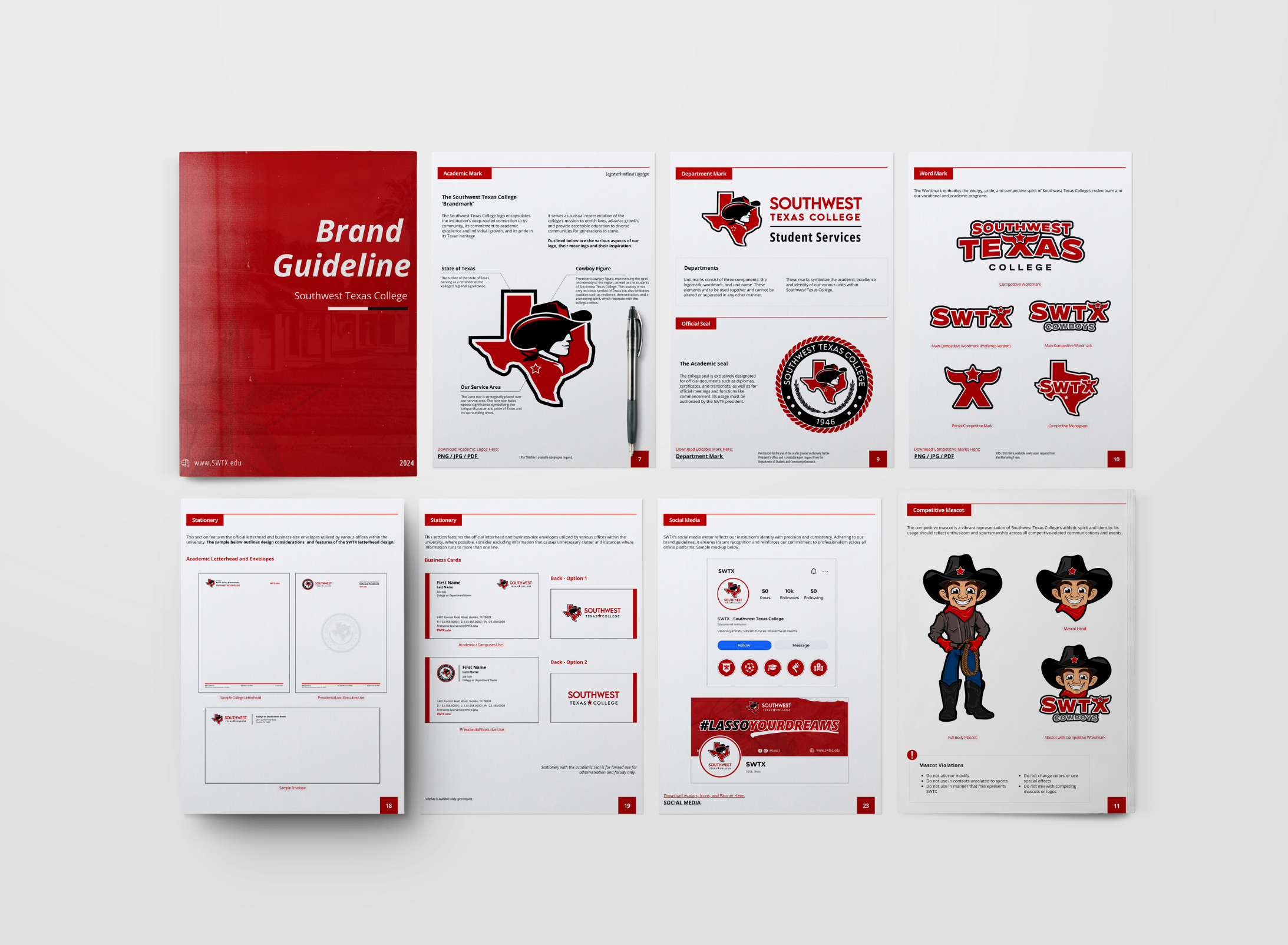
The project makes the connection between Wilson's strategy and her operating model visible. A clear story produces a set of design decisions. Those decisions then have to survive contact with letters, social posts and different campuses. The less glamorous work of consistency is where a brand becomes something people actually encounter.
There is room for a little nonsense
For someone so interested in reducing clutter, Wilson permits herself a cheerful amount of sparkle. Her personal website mixes business coaching with glitter graphics, hearts and a unicorn. “T-Shank,” the nickname she uses in talks, is considerably less solemn than the usual executive introduction. She has also spoken about the value of giving a brand a memorable personality without assuming it requires an extravagant budget.
Her biography includes swimming, karaoke and hiking with her dachshund. These details fit a public presence in which enthusiasm is allowed to look like enthusiasm. The joke and the operating system occupy the same desk.
Conversation has been another recurring part of her work. She hosted Soar, a show about finding personally meaningful ways to live and work, and later Talking Shizzle, featuring entrepreneurs, marketers and people working in social impact. Building the latter also involved accepting help. A partnership with Nexus Marketing brought introductions to prospective guests and opportunities to appear in other people's conversations. Even the person encouraging others to focus needed someone to handle the introductions.
The new tools face an old question
By 2026, Wilson was applying her interest in useful systems to AI. In a March conversation with Firefly Partners founder Jen Frazier, she discussed practical uses inside her business: researching search visibility, exploring features in existing software, and turning meeting notes into presentation material. The emphasis stayed close to the work people were already doing.
One recommendation was to inspect the tools an organization already pays for before adding new ones. Another involved using meeting transcripts to develop ideas and then assemble a presentation. Small prototypes could also help teams see their data differently. These are experiments with specific jobs attached, leaving people responsible for evaluating the result.
In an August 2026 Glovisor interview with Joe Abreu, Wilson returned to branding fundamentals: positioning, understanding customer needs and showing up consistently. The technology had changed; the questions about audience and purpose remained recognizable from her nonprofit work years earlier.
Her aspiration is easy to state and demanding to organize: build creative teams that help businesses and nonprofits grow, while giving their leaders room to enjoy the work and the life around it. That requires choices about clients, processes, tools and time. Somewhere behind the subscriptions and workshops sits a useful precedent. There used to be thirty coffee mugs. Six turned out to be enough.