Pete Catoe was 24, recently married, and carrying a $7,000 problem. His first business had failed. The bank wanted its principal back in a few days. In the fall of 1989, he met a cash-register entrepreneur named Curt Kennington and proposed another business. The timing was ambitious. So was the applicant.
Catoe offered Kennington half of the new company for guidance and introductions. He also asked for a loan to clear the debt. By the end of their meeting, he had a partner and a check. ECR Software Corporation, soon familiar as ECRS, would be built without money being invested directly into the company.
The loan came with a teacher
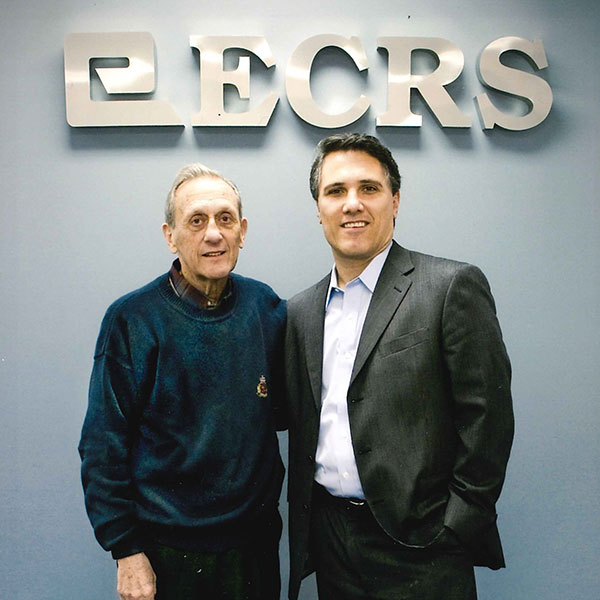
Kennington was 61. He already knew the retail equipment trade. Catoe had energy, a new venture, and recent experience of things going wrong. Their partnership paired those different qualifications. Catoe would later remember the force of Kennington’s handshake almost as vividly as the money.
The lessons that stayed concerned conduct: negotiate seriously, keep agreements, and take responsibility for customers and employees. Eventually, Kennington sold his shares back to Catoe, accepting his first offer. A hard negotiator had found a moment to be accommodating.
A college town, with work to do
The setting was Boone, North Carolina, home to Appalachian State University. Catoe attended from 1985 to 1989 and helped found its Entrepreneur Club. He left a few months before finishing his studies to start the company. The business offered a rather immediate examination schedule.
His original technical task was to connect cash registers to personal computers and the systems in a store’s back room. Information that began at the checkout could become useful elsewhere. A sale could tell the rest of the business something, provided somebody arranged the conversation.
Boone remained part of the answer. ECRS developed a working relationship with Appalachian State through recruitment, research, and student development. In 2015, the company and university announced $90,000 in computer science scholarships over four years. The institution Catoe had left became a place from which his business recruited.
In 2019, he described the advantage of giving local retailers good technology: their existing ties to their communities could help them compete with larger chains. That is a specific view of progress. A town does not have to surrender its businesses to benefit from better software, and a software company does not have to leave a college town to find people who can build it.
An expensive silence
Catoe’s interest in connected information eventually reached beyond the store. ECRS built Gateway, an electronic data interchange network linking retailers and suppliers. Shipping quantities, costs, orders, and catalogs could move between systems without an employee typing everything in again. The attraction is clearer if you have ever entered the same invoice twice.
On launch day, customer demand was zero. Catoe recalled the silence in 2016. The company had spent time and money on a service whose intended audience was still getting used to the problem it solved. An available solution and an urgent purchasing decision are separated by more than a demonstration.
As stores adopted perpetual inventory and automatic replenishment, the connection became more useful. By December 2016, Catoe reported 119 supplier partners and more than 1,200 connected retail locations. He said the service generated roughly two percent of ECRS revenue and had been designed around a low, fixed monthly charge.
A historical snapshot of Gateway, December 2016. These are not current totals.
Gateway gives some practical weight to his talk of obligations. A modest revenue line could still support a valuable customer relationship. He described keeping it affordable as a way to support retailers’ operations, even when its own contribution to revenue remained small.
The awkward exit question
In October 2016, Catoe addressed a question founders regularly receive: what was his exit strategy? His response began with a question of his own.
“An exit from what, I wonder?”
Pete Catoe, 2016
The rest of his argument was less mischievous. He wanted decisions about investment and people to serve an enduring business. He believed planning around a sale could pull those decisions toward a shorter horizon. His ambition was a company that would continue independently after his own useful contribution had ended.
That position gained an organizational form in November 2019, when ECRS became Certified Evergreen through the Tugboat Institute. The designation centers on private ownership, independence, purpose, people, profit, perseverance, paced growth, and pragmatic innovation. It makes longevity an operating intention, with expectations attached.
The distinction matters for a retailer installing systems that must work for years. Choosing software also means choosing a relationship: somebody must maintain it, answer questions, and prepare for changes in the business. Catoe’s preferred sales argument extends beyond what the system can do this afternoon. He wants the buyer to consider who will still be responsible for it later.
A mixer walks into a deli
One of Catoe’s more revealing product inspirations sits comfortably on a kitchen counter. In September 2024, he wrote about the KitchenAid mixer he had owned for about 35 years. He admired the design, durable construction, and materials. Its continued usefulness gave him a standard to carry into a different room.
That room was a grocery deli. ECRS’s AutoScale Max grew partly from dissatisfaction with existing equipment and the desire to build something more durable. A device that weighs food and prints labels has little opportunity to be glamorous. It has considerable opportunity to irritate the person using it all day.
At Ignite 2023, Catoe demonstrated hardware made largely from aluminum and stainless steel, with parts designed for straightforward replacement. He discussed an unusually large label roll and the practical appeal of changing it less often. His enthusiasm settles on details an operator can use.
An early installation produced a pleasingly awkward adjustment. Catoe reported that the machine processed an item so quickly that its information disappeared from the customer display too soon. The team planned a setting to keep it visible longer. For once, the task was to let the human being catch up with the equipment.
A different chair at the same table
Building a company intended to outlast its founder eventually requires changing the founder’s work. In February 2022, ECRS appointed Caroline Catoe president. She succeeded her father after his 32 years in the position. Pete remained CEO, with a brief to concentrate on innovation.
Caroline brought 15 years of experience inside the business, including technical support, project management, marketing, customer care, and training. That is a tour of the places where a product’s promises meet a customer’s actual Tuesday. The board said she had been involved in important corporate decisions and policy changes for nine years.
Pete explained that he wanted to spend more time creating useful innovations for retailers. He also acknowledged the company needed someone committed to daily leadership. The announcement gave each responsibility a named owner.
For the founder, this arrangement leaves room for the kind of work visible in the deli scale: noticing a familiar irritation, questioning the available equipment, and pursuing a different design. For the business, it puts the everyday work of leading people and departments in the president’s hands. A long view becomes more credible when the weekly calendar reflects it.
The store keeps opening doors
Catoe’s preference for a unified platform also has to accommodate a world full of other systems. In March 2026, ECRS issued updated third-party integration and API guidance. He described five years of work on generic, open endpoints through which customers and outside providers could connect to CATAPULT.
The guidance paired access with reusable interfaces, a defined process for new integrations, and rules for maintaining them. To a store operator, this is the less photogenic side of flexibility. New tools need somewhere to connect, and the connections need to survive the next software release.
By August, Catoe was talking about another kind of connection at Ignite 2026 in Nashville. The gathering ran August 2-5, with retail professionals from 41 U.S. states, Puerto Rico, Canada, Jamaica, and the Bahamas. More than 50 educational sessions sat alongside hands-on product demonstrations.
“We started Ignite to form a community.”
Pete Catoe, 2026
He described bringing people together to share ideas. It is an extension of the same commercial instinct: independent stores can retain their identities while learning from one another. The conversations now take place around analytics, loyalty, and new hardware, as well as the familiar business of getting a customer through the checkout.
Interest, paid forward
Kennington’s influence now has a more formal destination. In November 2025, the Retail Solutions Providers Association announced a scholarship Catoe established in his mentor’s memory. Funded by ECRS, it provides $5,000 annually beginning in 2026, with a commitment to continue through at least 2030.
The award serves families in the association’s membership community. Kennington had spent decades contributing to that trade organization, including serving as president. Catoe chose a setting where his mentor’s own professional relationships could keep producing opportunities.
There is an appealing symmetry in the amounts without their needing to match. A $7,000 loan once bought a young founder room to try again. An annual scholarship now helps somebody else take a next step. One transaction settled an immediate obligation; the other keeps opening possibilities.
The company between them has changed presidents, built supplier connections, and made room for a kitchen appliance in its design thinking. Catoe still works on what comes next. The original debt had a due date. The example that came with it has proved harder to finish paying.
More from Catoe’s world
- ECRS: company and retail technology
- Pete Catoe on LinkedIn
- Pete Catoe’s personal web address
- His essay on Curt Kennington and the start of ECRS
- The KitchenAid connection: Catoe on product design
- Watch: Nathan Latka interviews Catoe (2018)
- Listen: Building a Company That Lasts
- The Curt Kennington Memorial Scholarship
- Inside the 2026 Ignite gathering