A library card catalog is a peculiar thing to want in your living room. It was designed to organize a building full of books, one little drawer at a time. At Sweet Clover, that sort of object belongs in the conversation. Photographs from the Maryland shop’s barn years show old storage pieces, painted furniture and decorative oddities sharing space. The attraction is partly the object itself, partly the suggestion that it could have a useful second career in your house.
Sweet Clover sells vintage furnishings, home accessories, clothing and gifts, combining old pieces with contemporary and handmade merchandise. Its more interesting product is the arrangement. A shopper can buy a table elsewhere. Here, the table comes with clues: what might sit on it, what could hang above it and which apparently incompatible things might get along.
The company’s route from a Frederick County barn to a downtown shop makes a compact case study in independent retail. The locations have changed. So have the people at the helm. The recurring proposition is a place worth browsing again, because a room full of familiar objects can become a different room.
The room is part of the sale
A 2014 tour by home writer Kelly Elko records the barn’s cheerful range: a suitcase table, a bull-head sculpture, rattan furniture and a checkout counter made from pallets. The setting included an upstairs selling area and a smaller cottage behind the main barn. It rewarded looking around corners. The display was part of the entertainment.
That assortment resists the idea that vintage shopping requires allegiance to one decade. Cottage furniture and industrial pieces could share an address. Dealers brought different eyes to the selection. In a 2015 Houzz interview, co-founder Cassie Bustamante described the shop’s tagline as “No rules, just passion.” The phrase makes sense as decorating advice: liking a piece can come before knowing its category.
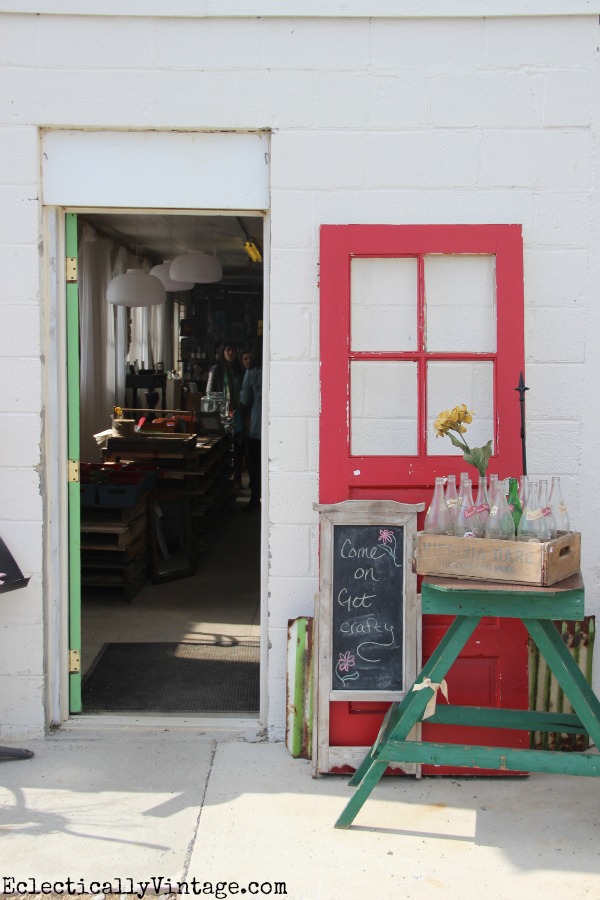
For customers, the work being sold includes selection. A crowded secondhand listing leaves the buyer to imagine everything. A composed display does some of that thinking for them. It can show how a battered surface sits beside something polished, or how an everyday container becomes useful storage. That is an interpretation of Sweet Clover’s appeal, and it is visible in the shop’s long photographic record.
There is a difference between admiring a display and buying everything in it. The useful idea might be a contrast of materials or a way of grouping small objects. A shopper can take that observation home without reproducing the room. For a store selling a changing assortment, this is a sensible form of inspiration: the customer can respond to what is available instead of chasing a photograph item by item.
Two vendors take the keys
Bustamante and Sarah Zullo founded Sweet Clover in 2013 after selling at an existing barn sale. In a 2015 interview with Finding Silver Pennies, Bustamante recalled weak promotion and dwindling energy under the previous operator. When the location became available, the two vendors decided to start their own business there.
By that interview, the selling space occupied two floors and contained almost 20 vendors. The finances were less photogenic. Bustamante said profits were marginal and most money went back into the business. She also described revisiting the mission statement and adjusting direction. The early lesson was practical: a taste for furniture did not make the operation self-sustaining.
The founders already knew the selling floor. That matters more than the romance of being handed a barn. Experience as a vendor offers a close view of what customers touch, what they ignore and which pieces are difficult to move. For someone considering a similar shop, learning those habits before taking responsibility for the whole space is a sensible starting point.
“No rules, just passion.”
Sweet Clover’s historical tagline, quoted by Cassie Bustamante in Houzz, 2015
The network also supplied merchandise. After the 2014 Lucketts market, furniture painter Marian Parsons, known as Miss Mustard Seed, wrote that Cassie and Sarah took pieces in their truck to sell on consignment. The transaction is a useful glimpse behind the displays: stock could arrive through relationships with other sellers, alongside the team’s own finds.
The barn goes to Bethesda
In March 2021, Sweet Clover took a temporary storefront at Bethesda Row. The MoCo Show reported that the business worked with more than 30 dealers, artisans and consignors, and identified the original setting as a converted dairy barn on Springdale horse farm. The pop-up, called Sweet Clover In the City, was scheduled to run from March 25 through May 9 at 7126 Bethesda Lane.
That was a defined engagement, not an announcement of a permanent second branch. By July, another boutique was preparing to occupy the address. The sequence illustrates one way to try a different retail setting: give the venture an endpoint. It does not establish what the experiment earned or prove that it caused the later downtown move.
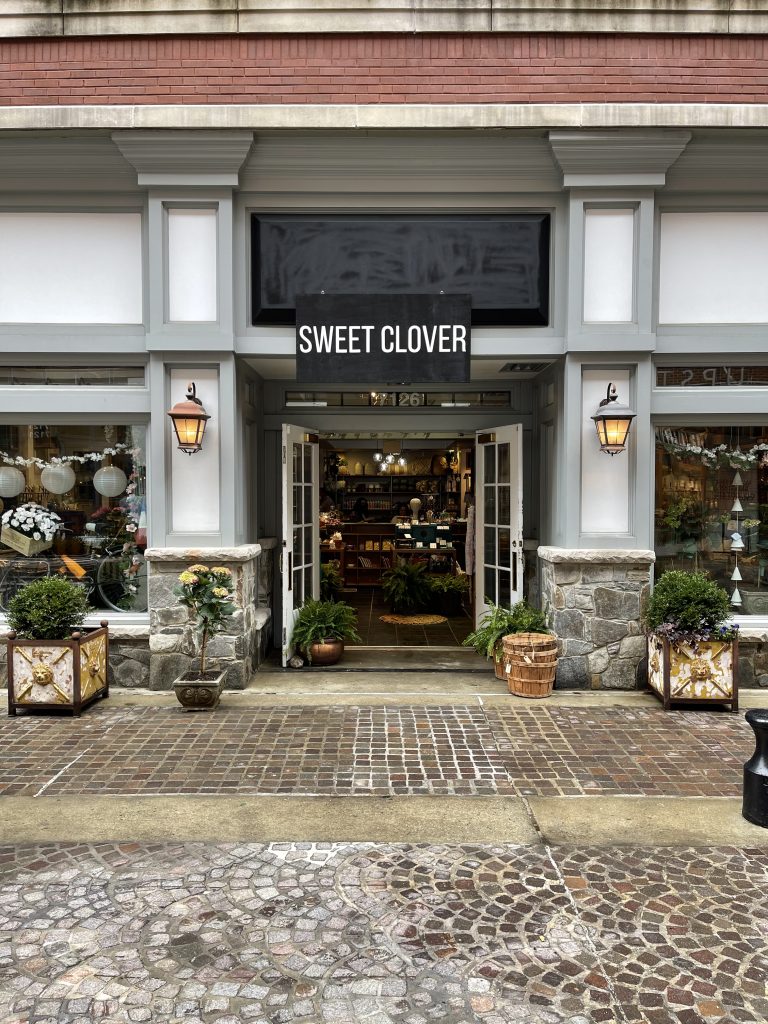
One surviving product listing puts the experiment on a human scale. Antique concrete planters with hydrangeas were advertised for $199, with four available. The listing specified pickup at the Bethesda shop and no shipping. A website could introduce the object and state the price. Getting it home remained a local affair.
More opening days, same monthly reset
By the June 2023 downtown Frederick opening announcement, sisters Rebekah Johnson and Kim Bowers were the named owners, working with their mother, Nancy Trout, and a design team. The shop at East Patrick Street opened weekly from Thursday through Sunday. The barn had operated on a monthly sale schedule. The owners said the new shop would still be transformed each month.
They described downtown ownership as a longstanding ambition and cited mandatory renovations and the pandemic among the challenges they had weathered. “Frederick is our heart,” they said. The move changed access to the shop while preserving a familiar rhythm of new displays.
Monthly barn sales
Weekly opening
Monthly display resets retained
Seasonal events gave that rhythm specific dates. For its November 2, 2024 holiday reveal, Sweet Clover advertised guest vendors, live music, cocktail samples and hot cocoa, plus deals reserved for visitors. The draw was an occasion with several reasons to attend. A customer could browse the holiday merchandise and make an outing of it.
Not every return visit has to be a reveal. The smaller pleasure is discovering that something has shifted. In a business built around individual finds, change is part of the offer. The operational challenge is making those changes look intentional rather than merely filling the gap left by yesterday’s sale.
What the price tag leaves out
Sweet Clover’s linked online catalog has displayed a $36 vintage oval tureen, a $399 midcentury coffee table and nightstands at $1,299. Those are examples from indexed listings, not a current stock promise or a storewide price range. They show a business with room for small decorative purchases and more considered furniture spending.
The catalog has also advertised custom painting for a piece the customer owns or one from store inventory, alongside classes and workshops. Older contact material names General Finishes products and Miss Mustard Seed’s Milk Paint. This places the business near both ends of a familiar decision: buy a finished piece, or do some of the transformation yourself.
The clearest evidence of inventory discipline comes from a February 2024 winter closeout. The promotion offered 15-25 percent off winter decor and 30 percent off coats and outerwear, along with deeper markdowns on selected furniture, lighting and artwork. The furniture clearance included pieces from 2023. Even a shop devoted to old things needs to make room.
Advertised discount on winter decor
Historical promotion. Not a current offer.For another retailer, the copyable practice is the calendar: decide when to refresh, when to reveal and when to clear space. Each decision requires labor and restraint. Buying another attractive object is easier than admitting the last one has occupied a corner for too long. Sweet Clover’s documented markdowns make that less glamorous side of the business visible.
A room you can borrow ideas from
Sweet Clover sits in a regional shopping landscape that includes antique dealers, home boutiques and occasional markets. Alternatives include Chartreuse & Co and downtown Frederick’s vintage shops. Competition can coexist with cooperation: in February 2015, Chartreuse announced a joint Barn Storm Sale with Sweet Clover after snow disrupted its own shopping weekend.
The useful distinction is the mixture of merchandise and display. A buyer seeking a particular production model, an exact matching set or predictable replenishment may find the changing selection frustrating. Someone who enjoys discovering a piece and building around it has a better fit. The same flexibility that makes the shop interesting limits how precisely a customer can plan a purchase.
There is a simple way to use a visit well: arrive with measurements and a real problem to solve. A narrow hallway needs storage; a bare corner needs a seat; a friend needs a gift that feels chosen. Let the displays suggest combinations, then judge the object against the space where it will actually live.
For a seller, the same exercise runs in reverse. What can this object do for someone? Can its use be made obvious without a long explanation? A handsome display can answer those questions, but it cannot fix the wrong dimensions or arrange a customer’s transport. The practical details belong in the sale just as much as the styling.
Bustamante’s own home supplies a final, amusing caution. A 2017 tour described a blue velvet sofa she had bought to sell at Sweet Clover and then kept. Knowing what looks good is useful in this business. Being able to let it leave is useful, too.
Keep browsing
Check the shop’s channels for visiting details and the latest displays.
Sweet Clover website ↗Instagram ↗Facebook ↗Watch the 2021 Bethesda preview ↗Take a photographic tour of the old barn ↗