A carved wooden giraffe has a bad résumé. It is fragile, oddly shaped, expensive to ship and made by a person who may live several hours from a dependable courier. The maker might have no product photographer, export license or appetite for deciphering American return policies. A conventional marketplace solves this by handing the mess to the seller. NOVICA decided the mess was the company.
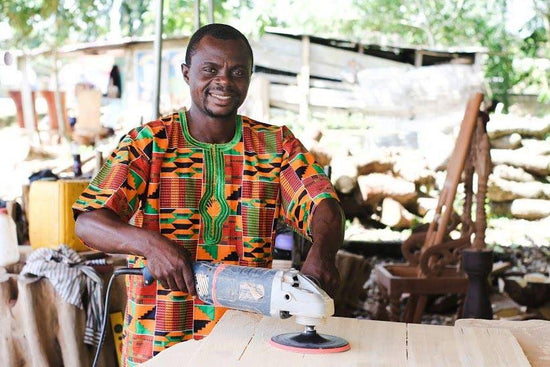
Since 1999, the Santa Monica business has sold handmade jewelry, clothing, paintings, baskets, furniture, tableware and decor from artisans in Africa, Asia, Latin America and beyond. A shopper sees an object, its region and the person who made it. Behind the screen, local teams discover makers, photograph and describe their work, check quality, advise on pricing, package orders and coordinate international delivery. When an artisan needs materials before the holiday rush, NOVICA may also help arrange a zero-interest loan.
This is ecommerce with dirt under its nails. It is also the reason NOVICA remains interesting after two crashes, several marketplace eras and one particularly vigorous outbreak of beige direct-to-consumer brands. The company says customers have helped send more than $130 million to artisans. Its latest public financial filing shows the less romantic side: annual sales of about $22.5 million, cost of goods sold of $10.7 million and a $2.2 million net loss. The mission is durable. The economics still demand attention.
The flash in Portuguese class
The founding story begins in 1995, when Stanford student Roberto Milk heard a Portuguese professor describe buying Brazilian art. International buyers would pay more, she observed, but the system did not work for the artists. The comment stayed with Milk, partly because his Peruvian grandmother was an artisan and another grandmother had been a missionary. His parents had trained him to look at poverty as a design problem: what would let people earn more?
Milk gathered a family-and-friends ensemble. His wife, Mina Nercessian, became an advocate and public face. Her mother, Armenia Nercessian de Oliveira, left a United Nations human-rights career to join. Brother Andy Milk, childhood friend Charles Hachtmann, Stanford roommate Jose Cervantes and early investor Michael Burns rounded out the founding group. The legal company was incorporated in 1998; NOVICA launched in May 1999.
The first headquarters was a laundry room in Milk's Santa Monica home. Overseas offices began in garages. By mid-1999, regional teams in the Andes, Mexico, Brazil and West Africa had brought more than 200 artisan groups online; Thailand and Indonesia followed. This was not minimalism as performance. It was the cheap beginning of a decidedly physical network.
The website was the shop window. The real product was a route to market.
Cut the middleman, keep the middle work
“Cut out the middleman” is one of those business phrases that gets applauded before anyone asks who consolidates the boxes. NOVICA's sharper insight was to split the middleman's function from the middleman's power. Artisans set their own prices. NOVICA performs the services that make a global sale possible and adds margin to cover them. Historical accounts put its portion between roughly 15 and 50 percent depending on the product and associated costs; the current take rate is not public.
The customer is typically looking for a gift, a culturally specific piece of decor, jewelry that did not emerge from an anonymous factory, or evidence that a purchase benefits its maker. Corporate gift buyers and retail partners form another lane. The catalog ranges from accessible ornaments to original art costing thousands. The differentiator is not merely “handmade.” Etsy and Amazon Handmade can supply that word at enormous scale. NOVICA supplies a named person, a place, a biography and a chain of custody.
What failed first?
The era did. NOVICA launched just before the dot-com crash, when ecommerce optimism had produced many companies with more brand than business. NOVICA's own history credits a lean startup approach with carrying it through the crash and the 2008 recession. The first fragile assumption was that an online idea could be scaled like pure software. Fragile objects, inconsistent connectivity, customs forms and working-capital gaps refused to become pixels.
That changed the operating answer, not the mission. The company invested in local hubs and long-term relationships. In 2003 the International Finance Corporation, part of the World Bank Group, backed NOVICA with equity and a capacity-building grant. National Geographic provided capital, reach and institutional credibility. UNICEF catalogs opened another channel in 2006. Kiva joined the microcredit effort in 2012; by 2018 the partnership had facilitated more than $1.5 million in loans.
Working capital sounds bloodless until a jeweler cannot buy silver for orders she knows will arrive. NOVICA and Kiva's flexible zero-interest loans could finance materials, inventory, employees or a workshop. Repayment could flex with sales. The marketplace was acknowledging an important fact: access to demand is useless when the supplier cannot afford to produce ahead of it.
The bill for being useful
NOVICA's March 2026 crowdfunding filing gives outsiders a rare view into a private impact company's arithmetic. Its most recently reported fiscal year produced $22.52 million in revenue, down 12 percent from $25.49 million. Cost of goods sold moved down at roughly the same rate, but the net loss widened to $2.22 million. The company held $2.90 million in cash, against $6.18 million of short-term debt and about $975,000 of long-term debt.
Those numbers are not a verdict, but they are a condition. NOVICA replaces services that broad marketplaces externalize to sellers, which makes each transaction heavier. Paid customer acquisition can punish a specialist retailer. Cross-border shipping is volatile. Handmade inventory is limited by human hands. Returns do not become less expensive because everyone meant well.
What the reader can copy
Find the trust bottleneck your customers cannot solve alone. Staff it, standardize it, and make the evidence visible in the product experience.
When it will not work
If margins cannot carry verification and service, if buyers mainly want the lowest price, or if supply must scale instantly, high-touch curation becomes an anchor.
The next marketplace problem
NOVICA's original model sits between a retailer and a marketplace. That ambiguity is expensive, but productive: the company controls enough of the experience to promise fair trade and quality while preserving the maker's identity. It competes with Etsy on breadth of handmade discovery, Ten Thousand Villages on ethical intent, and World Market or Anthropologie on the customer's shelf. Its local infrastructure is the distinction none can copy quickly.
Now the company is stretching. In 2018, NOVICA acquired key catalog and artisan ecommerce assets from longtime partner National Geographic. Partnerships with the International Trade Centre and Nest expanded training, standards and geography. A Central Asian hub in Tashkent opened access to makers in Kazakhstan, Kyrgyzstan, Tajikistan, Turkmenistan and Uzbekistan. In 2025, Real Leaders named NOVICA a Top Impact Company.
The bolder sequel is Handmade.com, described as a sister marketplace with NOVICA roots. Its 2026 update discussed maker applications, self-onboarding storefronts, and AI-assisted listing and translation tools. That could let the group serve makers well beyond the original hub footprint. It also creates a precise strategic tension: can NOVICA broaden participation while preserving the authentication and human service that made its promise believable?
The stealable operating manual
Founders should resist copying the moral vocabulary without the machinery. “Empowerment” is a hazy claim. A photographer in Ghana, a quality check in Bali and a flexible inventory loan in Peru are operations. NOVICA's better ideas are concrete enough to borrow:
- Own the ugly step. The unscalable task everyone avoids may be the reason customers trust you.
- Make provenance part of the interface. A maker's name, portrait and history are product data, not a charity sidebar.
- Finance the constraint. If suppliers have demand but lack materials, small working-capital tools can unlock the marketplace.
- Use partners for reach, not identity. National Geographic, UNICEF, Kiva and ITC amplified different parts of the system without replacing NOVICA's role.
- Measure the mission and the margin. Cumulative artisan payments matter; revenue direction, debt and losses decide whether the counter keeps moving.
There are boundaries. This approach fails when customers will not pay for difference, when products are interchangeable, or when the platform cannot maintain standards across regions. It also struggles if local hubs become bureaucracies rather than translators between cultures and markets. High-touch infrastructure is only a moat when it improves trust, sell-through or retention by more than it costs.
NOVICA began with a professor's complaint that the system did not work. Twenty-seven years later, the company has not solved global craft with an app. It built a more useful system one awkward shipment, maker biography and restocking loan at a time. The lesson is less romantic than the catalog and more valuable: removing an extractive intermediary does not remove the work. Somebody still has to do it well.
Keep exploring