In most jewelry shops, the workbench has been tidied out of sight. You meet the polished object, the price card and perhaps a story about inspiration. At Zozi Jewelry, on Shabazi Street in Tel Aviv, the workbench stays in the room. The shop and studio share a space. Visitors can see pieces being made, and sometimes join the process. It is a small detail with large consequences: the customer can ask a question while the person who knows the answer is nearby.
- Zoar Asher started Zozi Jewelry in 2009 and opened the combined shop and studio in 2013.
- Its pieces use organic shapes, cultural references and recurring symbols, from wings to snakes.
- The studio sells in person, through its website and on Etsy, and accepts selected custom requests.
Asher, known as Zozi, did not arrive at that bench by a straight line. Her childhood included years in Zaire, now the Democratic Republic of the Congo, and Ivory Coast. She later studied silversmithing in Tel Aviv and worked beside a silversmith teacher in India. Those journeys appear in the work: bright color, rough textures, natural shapes, birds, leaves and forms that seem to have been found as much as designed. But the company is anchored in a specific neighborhood. The first studio opened in Neve Tsedek in 2009. Four years later, Asher moved into a shop and studio on Shabazi Street.
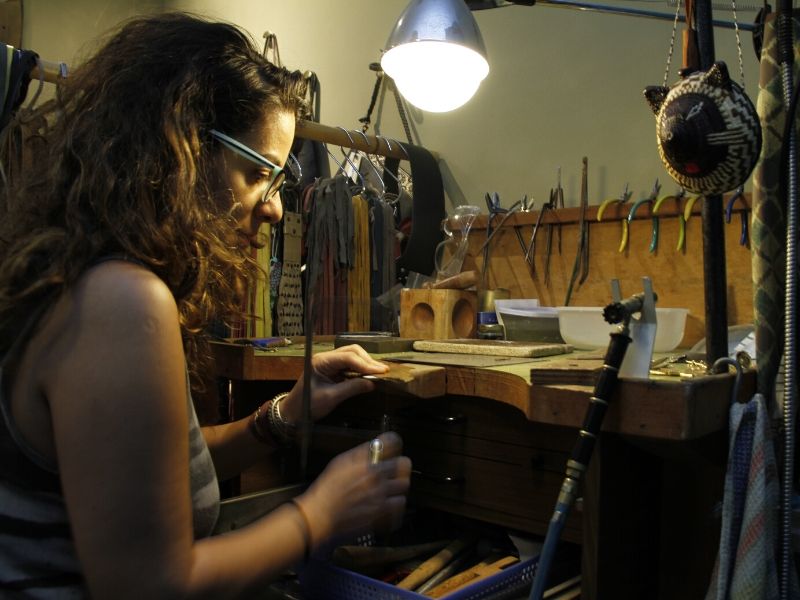
The workshop is the sales pitch
The shop gives a physical answer to a question handmade brands often ask customers to take on trust: who actually made this? Zozi says all its jewelry is designed and made in the Neve Tsedek studio. Outside suppliers are close, some within walking distance. That local arrangement helps the studio check quality and handle special orders, according to its account of the space. A customer asking about a different size or a personal engraving is talking to a business that can pass the request directly to the workbench.
This is a practical advantage, not a mystical one. Close production can shorten the distance between a problem and a fix. It also keeps the maker exposed to the unvarnished opinions of the people who wear the work. A clasp that feels awkward, a ring that needs another size, a pendant someone wants altered: the feedback does not have to travel through a department store buyer before it reaches the designer.
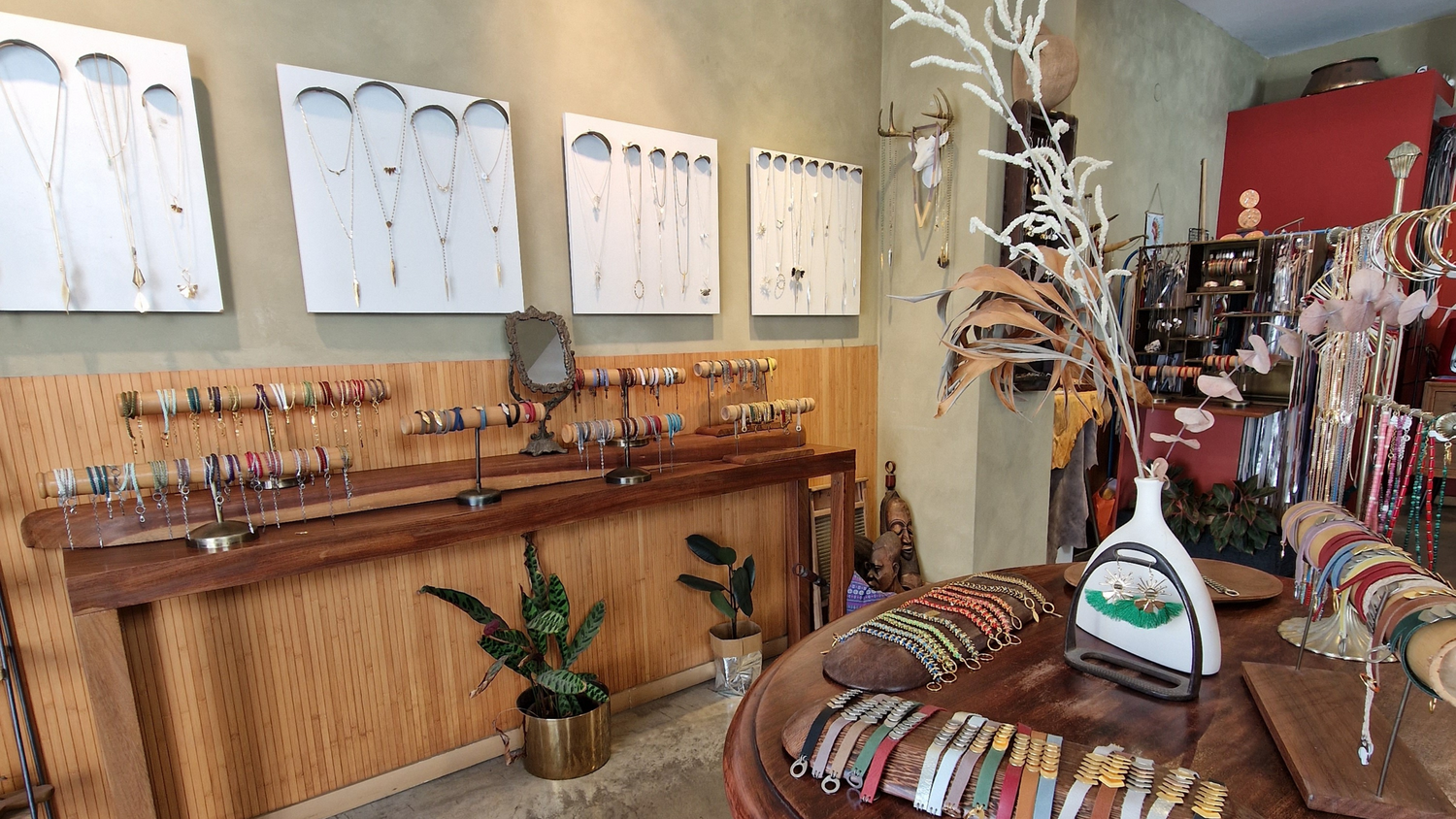
The arrangement has limits. A small workshop cannot promise infinite variations at industrial speed. Zozi offers engraving on some items and invites requests to modify existing designs, but the site asks customers to write first. Gold rings and custom orders can take longer to prepare than stocked pieces. The lesson is specific: personalization works best when the maker can define what is feasible, and when a buyer values that conversation enough to wait.
A symbol with an empty space in it
The brand organizes its jewelry around a small visual alphabet. On its site, the sun and moon stand for balance and cycles. The spear suggests protection and courage; wings point toward freedom and exploration. Foliage evokes growth. Snakes, horns and other recurring forms come with similarly open explanations. Zozi offers the first half of the sentence, then asks the wearer to finish it.
That invitation is more clever than another claim that a necklace will change your life. Jewelry is unusually close to the body. People buy it to mark a birthday, remember someone, celebrate a private victory or simply make an ordinary Tuesday more interesting. Zozi’s suggested “jewelry ceremony” asks a customer to name what a piece symbolizes to them. No one must believe in a stone’s powers to understand the appeal of choosing an object with intention.
“Zozi's elements present a world, but leave room for your own private interpretation.”Zozi Jewelry, on its symbolic collections
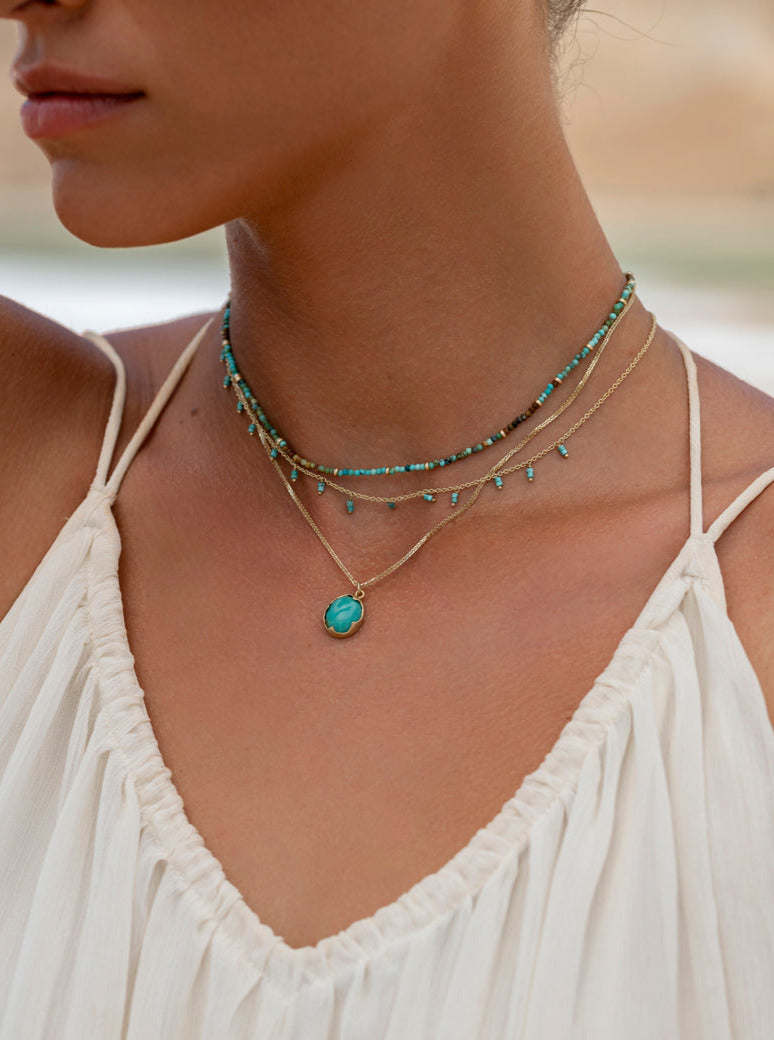
The collection names make that method visible. ZOA is built around sun and moon. Oasis borrows the airy structure of palm leaves and the movement of water. Zozi Fine takes the same taste for irregular, organic forms into solid 14k gold and gemstones. The range spans sterling silver and plated brass as well as higher priced fine jewelry. That gives customers several points of entry while keeping a recognizable design hand across the shelves.
From memory to metal
Asher has described her design process with refreshing uncertainty. A collection might begin with the color and embroidery she noticed in Costa Rica and Panama, the outline of an old tool, or a landscape remembered from travel. She sketches, makes sample models and tries them out. She has written that she does not know in advance exactly where a collection will end. This is how the pieces avoid looking like a neat catalogue of borrowed motifs: the references are worked through by a particular person with particular memories.
Her account of growing up in Africa offers a revealing example. Years spent adapting to different places and languages shaped her eye; later, she made lines inspired by aesthetic details she associated with communities and landscapes there. The strongest way to read those collections is through her own memory and design choices, rather than treating a vast continent as a single source of decoration. The work is personal, and the claims should stay personal too.
A neighborhood shop with a longer reach
Zozi’s commercial model is direct. Customers can visit the Tel Aviv shop, order through the company’s website or buy through its Etsy storefront. The online store shows ready-made collections, material and size choices, and a separate path for custom inquiries. International shipping gives the one-room studio customers far beyond its street. It also introduces the familiar frictions of a physical product business: transit times, import taxes, returns and the extra preparation required for made-to-order work.
The price spread is plain on the site. A silver or plated design may sit in the low hundreds of US dollars; 14k gold pieces can run into four figures. What buyers pay for is not only the metal. They are paying for an identifiable designer’s choices, small-scale production and, for some, a chance to adjust the piece. That puts Zozi among independent jewelry studios rather than mass fashion accessories on one side or anonymous fine jewelry counters on the other.
There is a useful idea here for anyone selling a personal object: let customers see the making, explain the constraints and leave them room to bring their own meaning. It will not suit a buyer who wants the lowest price or next-day certainty. For the person who wants to ask why a wing curves that way, the visible bench is worth more than a velvet tray.