Tony Davis had a superb qualification for disrupting the jewelry business: he knew nothing about jewelry. The Toronto software entrepreneur has said as much himself. Jewlr began in 2009 as a test of e-commerce marketing, not as the digital offspring of a family jeweler. Davis and his small crew believed personalized pieces should work online. A birthstone ring has emotion, margin and a shipping footprint smaller than a sandwich. The trouble was everything between the advertisement and the finished ring.
Jewelry retail traditionally asks a customer to peer through glass, accept the selection in the case and trust a salesperson to translate sentiment into metal. Jewlr reversed the conversation. Start with one of more than 6,000 styles, choose silver or gold, pick genuine or simulated stones, add a name or engraving, and watch the object change on screen. Only after checkout does production begin. The customer becomes a co-designer, though one operating safely inside choices the workshop knows how to make.
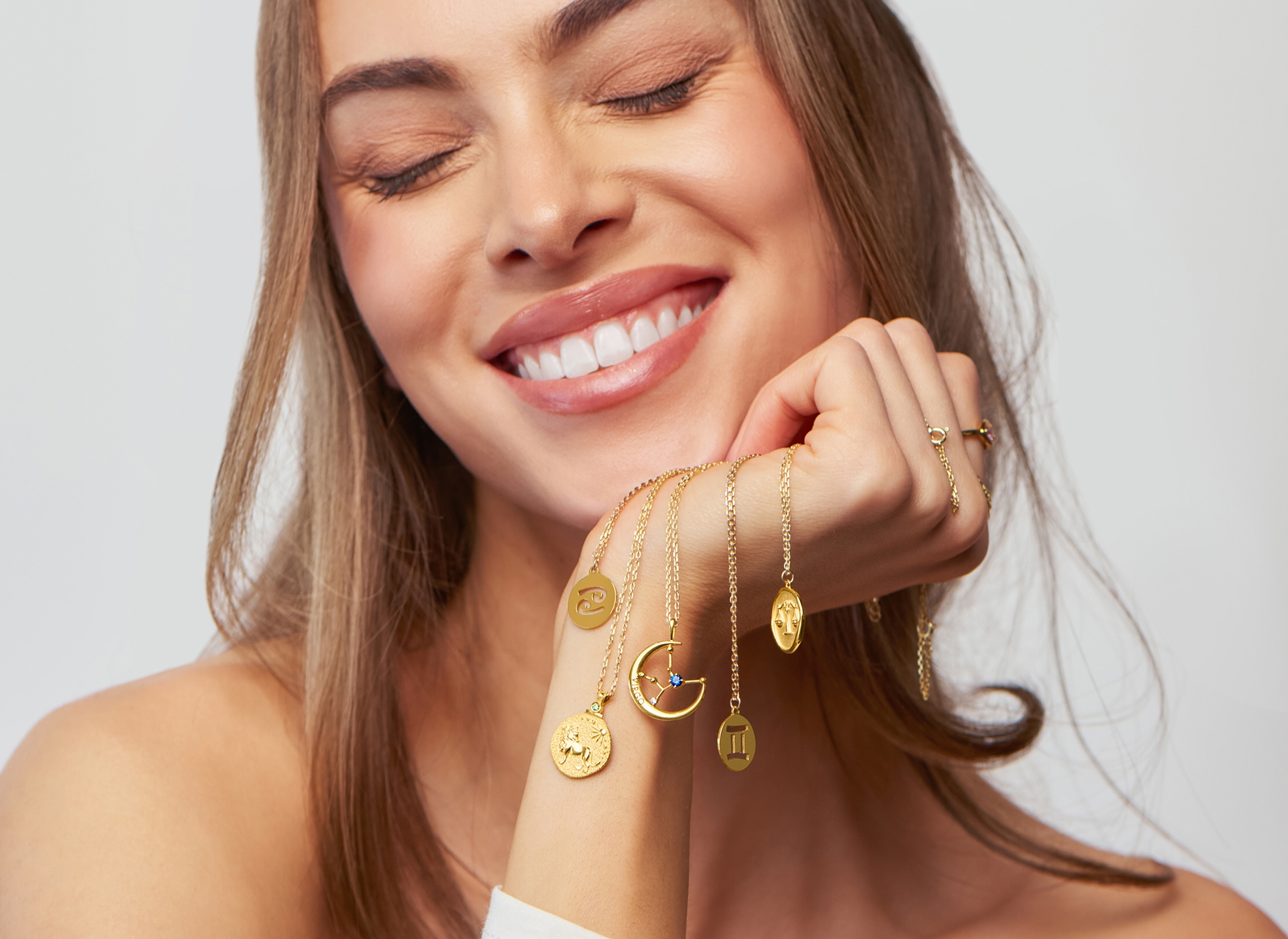
That distinction matters. Jewlr is not a bespoke atelier taking sketches on a napkin. It is mass customization: enough options to feel personal, enough constraints to remain repeatable. The company now sells personalized rings, necklaces, pendants, earrings and bracelets, including mothers' rings, promise rings, name necklaces, initials, photo lockets and family birthstone pieces. Materials range from sterling silver and plated options to 10-karat and 14-karat gold, with stainless steel and tungsten on selected designs.
The factory is the feature
The first collision was cultural. Davis came from software, where a team can ship, measure and revise. Traditional jewelry suppliers were accustomed to decades-old methods and slower product cycles. When his team asked for different designs for different markets, the answer was often some version of: this is how we have always done it. A fast storefront attached to a reluctant supply chain is still a slow business.
Jewlr's answer was vertical integration. It built an end-to-end platform connecting ecommerce, customer service, manufacturing and logistics. A typical order moves from configuration to a 3D-printed model, casting in the selected metal, stone setting, laser engraving, inspection and packaging. Jewlr says the work happens in its North American facilities and generally takes one to four business days before shipping. It also says it seeks ethically sourced metals and stones.
This is the company's actual expertise. Plenty of websites can add a text box labeled “engraving.” Fewer can turn thousands of styles and many combinations of metals, stones and words into clean manufacturing instructions, calculate delivery expectations and show a plausible result before money changes hands. Jewlr's proprietary system, developed through its Safyre Labs subsidiary, is the bridge. The polished ring is the output; coordination is the product.
“It's very difficult to sell jewelry online - it's taken six of us software designers a long time to figure it out.”Tony Davis, founder
The economics of meaning
Brightspark Ventures, Jewlr's early seed investor and incubator, described the original filter with refreshing bluntness: look for an e-commerce category with high margins, easy logistics and room to differentiate. Personalized jewelry checked all three. The company began with a few employees in Brightspark's office, experimented with manufacturing and online advertising, and kept a tight focus on profitability. Brightspark says Jewlr grew for roughly a decade without more outside capital beyond that initial investment.
By 2022, Brightspark reported 1.3 million products sold across Jewlr and a second brand. That year, Kensington Private Equity Fund made a significant investment of an undisclosed size. Brightspark sold a substantial portion of its holding and reported a 35-fold return. The supplied company dataset lists total funding of $1.46 million and estimated annual revenue of $10.5 million, but neither figure is confirmed in the public investment announcements. The sturdier point is the shape of the journey: limited early capital, profitable organic growth, then private equity after the operating machine had been proved.
Made-to-order production removes the need to stock every finished combination. It does not remove inventory entirely - metal, stones, findings and packaging still exist - and it replaces shelf risk with scheduling risk. A Christmas order cannot be almost right. Names must be spelled correctly, stones must match the preview and the parcel must leave on time. Personalization increases emotional value while shrinking the market for a returned item to approximately one person.
Trust is part of the cart
Buying jewelry online asks the shopper to believe an image, a delivery date and a company they may never have met. Jewlr works on that anxiety with free shipping, a one-year warranty and a 99-day return policy. It reports more than 50,000 five-star reviews and says 94 percent of reviews collected through Shopper Approved are four or five stars. Other public review forums contain complaints about sizing, finish, lost stones and service, the familiar warning that a slick configurator cannot make physical quality control optional.
The company eventually wanted longer protection plans. Building them internally would have required claims expertise, capital and operational attention. Jewlr evaluated two outside providers. According to a case study from the selected vendor, Clyde could not meet requirements for real-time pricing across Jewlr's large catalog and complex backend. Extend could, and completed the integration in about three weeks. In a 12-day A/B test, opening the in-cart protection offer rather than leaving it toggled shut increased plan purchases by 300 percent, with no reported drop in conversion.
That result is not proof that every checkout needs another checkbox. It shows that presentation matters and that reassurance can become revenue when the purchase is emotional, damage is plausible and local repair relationships are disappearing. Jewlr kept its one-year promise and used a specialist for two-, three- and five-year coverage. What changed its mind was not a grand theory. It was the cost and risk of doing the job itself, plus one vendor's inability to fit the backend.
A ring you could rotate inside an ad
Jewlr also experimented at the top of the funnel. In 2016 it worked with Google and Sketchfab on an interactive 3D display advertisement that let viewers inspect a ring. Google had not done that exact implementation before, so the first build was neither fast nor easy. From October 2016 through March 2017, Jewlr reported that the campaign produced a 6.34-times return on ad spend and a lower bounce rate than its other display advertising.
The copyable insight is not “put 3D everywhere.” It is to make the advertisement perform the hardest part of the sale. For a configurable physical good, shoppers need to understand shape, scale and variation. A rotating ring demonstrates; a lifestyle banner merely announces. The experiment worked under conditions favorable to visual interaction: a small object, a considered purchase, remarketing traffic and a product whose technological side reinforced the brand story.
Personalization lets the customer supply the meaning. Jewlr's difficult job is making sure the factory can supply the object.
What founders can steal
Five moves hiding inside the jewelry box
- Choose a category where customization creates emotional value, not decorative clutter.
- Constrain choices to combinations that can be priced, previewed and manufactured reliably.
- Show the result before checkout. Uncertainty is a conversion tax.
- Own the bottleneck that controls customer experience, even when it lives in operations.
- Partner for specialist risk when building it would distract from the core machine.
Jewlr also demonstrates a less glamorous habit: measure everything. The company tested ad formats, cart presentation and new services rather than relying on jewelry-world intuition. Its technology allowed rapid changes because it was built in-house. Its affiliate partnership with Hamster Garage, announced in September 2025, extends the same performance-marketing instinct, with a stated goal of reaching more people buying jewelry for themselves rather than only gift shoppers.
Brand still matters. Design firm Aruliden recently reframed Jewlr as a destination for creative expression, building a flexible identity from jewel-box shapes, a brighter palette and more coherent packaging. That work signals a mature problem: after proving that the machine works, explain why it should matter in a crowded field containing local jewelers, Pandora, Oak & Luna, MYKA, marketplace sellers and countless Instagram brands.
Where the playbook breaks
The model is weakest when configuration produces chaos. Furniture is bulky. Food spoils. Low-priced accessories may not carry enough margin to pay for individual handling. Even in jewelry, endless choice can overwhelm shoppers, promotional pricing can train them to wait, and a gap between rendering and reality damages trust. The vertically integrated answer also demands capital, craftspeople, forecasting and management attention that a software-only founder may underestimate.
Jewlr's achievement is not that it made jewelry “digital.” It made a physical trade legible to software without pretending the physical work had disappeared. Behind each cheerful birthstone selector sits casting, setting, engraving, inspection and a deadline. The company won by treating those steps as part of the interface. That is the lesson worth keeping after the velvet box is closed.