Who they are now
A factory that disagrees with the word "average"
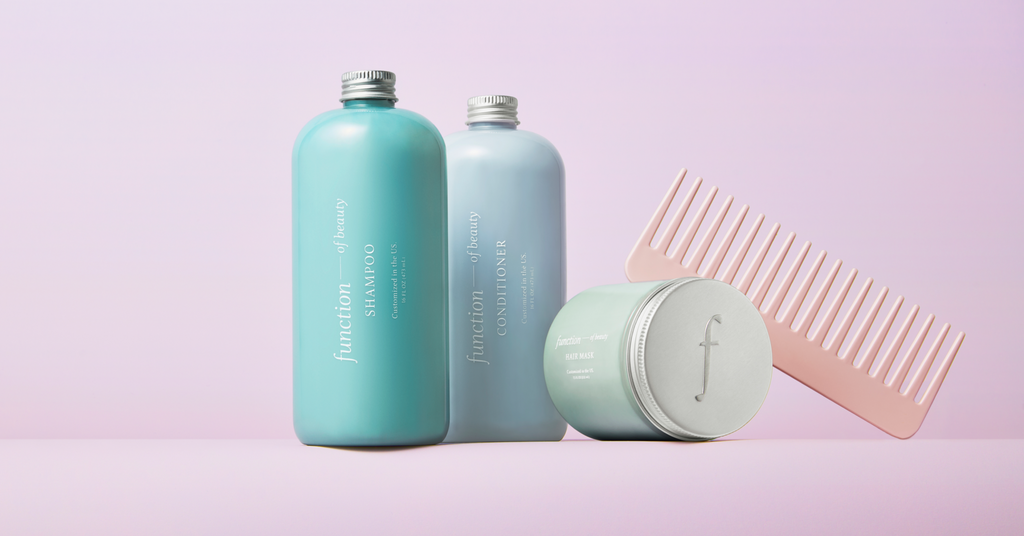
Walk down any drugstore beauty aisle and you will meet a quiet lie. Shelf after shelf of products promise to work for "all hair types," which is another way of saying they were designed for nobody in particular. Function of Beauty exists because somebody refused to accept that. Today the company runs a US facility where, instead of pulling an off-the-shelf bottle, a machine reads a customer's quiz answers and mixes a formula made for exactly one head of hair - then prints that person's name on the label.
It is a strange thing to industrialize. Mass production is built on sameness; Function of Beauty built it on difference. The result is a brand that has shipped more than 15 million unique products and, by its own accounting, produces a new custom formula roughly every 13 seconds. The promise is small and personal. The machinery behind it is not.
"We saw a gap in the beauty industry's acknowledgment of this uniqueness - and stepped in."
- Function of Beauty, company About page
Translation: everyone else sold the average. They decided the average never bought anything.
The problem they saw
Beauty was personal in the ad and generic on the shelf
The beauty industry has always been fluent in the language of individuality. The marketing speaks to "your" hair, "your" glow, "your" routine. The products, historically, did no such thing. A handful of formulas were poured into millions of identical bottles and sorted into vague buckets - dry, oily, color-treated - that flattened the actual variety of human hair into a few marketing categories.
That gap between the promise and the product is the tension the whole company is built around. Fine, straight hair in a humid city and thick, coily hair in a dry one were being sold versions of the same idea. The personalization existed in the copywriting and nowhere near the formula. Closing that distance sounds obvious. Doing it at scale, profitably, without a chemist standing over every bottle, is the part that had stopped everyone else.
Personalization in beauty was a brilliant marketing idea long before anyone made it a real manufacturing one.
- The central tension, in one sentence
The founders' bet
Two MIT grads, one chemist, and a laugh
In 2015, Zahir Dossa - who would go on to finish a PhD at MIT - pitched the idea of personalized shampoo to his friend and fellow MIT alum Joshua Maciejewski. The reception was not exactly a standing ovation. By the founders' own retelling, Maciejewski laughed. Then he stopped laughing, because he is an engineer and realized the genuinely hard problem hiding inside the soft idea: how do you automatically mix and fill a different formula for every single order without grinding the economics to dust?
They brought in cosmetic chemist Hien Nguyen to make the formulas real, and turned the question into a system - a quiz on the front end, a customization engine and automated fill on the back end. The bet was not that people wanted nicer shampoo. It was that people wanted their shampoo, and that the engineering to deliver it could be built rather than wished for. Y Combinator backed them the same year.
"At first, his co-founder laughed at his business idea. Now it's a business worth nine figures."
- Inc. Magazine, profiling Zahir Dossa
For the record: the laugh was free. The fill machine that justified it was not.
The made-to-order milestones
2015
Founded & into YC. Zahir Dossa, Joshua Maciejewski, and chemist Hien Nguyen launch personalized haircare and join Y Combinator.
2017
Series A (~$12M). The customization engine scales; the brand becomes a DTC reference point for personalization.
2019
Beyond hair. The lineup grows toward skin and body care, applying the same quiz-to-formula model.
2020
$150M Series B led by L Catterton - and the first major retail move into Target.
2021
New CEO. Alexandra Papazian (ex-L'Oreal) takes the helm; co-founder Dossa becomes Executive Chairman.
2025
Monica Belsito named CEO to push both DTC and wholesale growth into the next chapter.
The product
A quiz is the factory's only blueprint
Nothing gets made until you answer questions. For hair, the quiz asks about type, structure, scalp, and goals; then you choose a color and a fragrance. Skin and body work the same way - a short questionnaire, a set of goals, a formula assembled to match. The quiz is not a marketing funnel dressed up as a survey. It is the actual manufacturing instruction. Two bottles of "shampoo" from Function of Beauty rarely look or smell alike, because they were never meant to.
Custom Haircare
Shampoo, conditioner, and treatments built from your hair quiz - down to the color and scent on the label.
Custom Skincare
Formulas matched to skin type and targeted goals like anti-aging and anti-pollution.
Custom Bodycare
Body wash and lotion tuned to your skin's needs via a quick body quiz.
Retail Lines
Semi-personalized collections built for partners like Target and CVS, at drugstore prices.
What's in every bottle, by default
- Vegan and cruelty-free formulas
- Sulfate-free, paraben-free, and gluten-free
- Naturally-derived, targeted ingredients
- Made to order in a US-based facility
- Your name printed on the label
Most brands ask you to find the product that fits you. Function of Beauty builds the product around the answer.
- How the model actually works
The proof
Money, machines, and shelf space
Skeptics are right to ask whether "personalized at scale" is a slogan or a fact. The evidence sits in three places. First, the volume: more than 15 million unique products, which is a lot of formulas to fake. Second, the capital: a $150 million Series B in December 2020 led by L Catterton, the consumer-focused investor associated with LVMH, with participation from Notable Capital and CircleUp. Third, distribution: the brand walked its quiz out of the browser and onto shelves at Target and later CVS, building semi-personalized lines so the model could survive at drugstore price points, not just premium DTC ones.
Funding by round
Reported / estimated raise per round (USD). Series A approximate.
Sources: Crunchbase, Beauty Independent, press reports. Bars scaled to the $150M round.
The retail pivot matters more than it looks. A pure DTC personalization brand is a clever business; a personalization brand that can sit next to mass-market bottles and still mean something is a more durable one. By building specific product lines for retailers rather than just shipping its website into a store, Function of Beauty kept the personalization story intact while reaching shoppers who were never going to take a quiz online.
15 million custom products is not a marketing number. It is an operations one.
- The case for taking it seriously
Note: valuations made headlines around the Series B; later third-party estimates run lower. Treat private-company numbers as weather, not gospel.
The mission
Uniqueness, scaled on purpose
Strip away the chemistry and the machine, and the company's stated reason for existing is almost old-fashioned: people are not interchangeable, so their products should not be either. Function of Beauty frames this as celebrating individuality, with a side of conscience - recycled packaging, energy-conscious production, and a partnership with GirlStart to support girls and women in STEM. Whether you find that earnest or marketing-shaped, the manufacturing choice is consistent with the words. You cannot accidentally build a per-customer fill system. You have to mean it.
"Ever realized that your reflection is uniquely yours? Each detail speaks to your individuality."
- Function of Beauty brand philosophy
Why it matters tomorrow
Back to that aisle
Return to the drugstore shelf and the quiet lie of "for all hair types." It is still there. But it now shares the building with bottles that carry strangers' names, mixed for people Function of Beauty has never met and will never see. The competition has noticed - Prose, Pattern, and a wave of personalization-minded brands are all working the same idea - which is the clearest sign the bet was real.
The next chapter, under new CEO Monica Belsito, is the unglamorous one: keeping personalization profitable across both a website and a retail shelf, where margins are thinner and patience shorter. That is harder than the laugh in the MIT dorm, and less fun to put in a headline. But the company already proved the difficult part - that "made just for you" can be an assembly line, not just a tagline. What it changed in that aisle was never going to be visible from across the room. It is printed, in small type, on the label.
They did not invent a new ingredient. They changed the question the store asks you.
- The closing argument