A telephone call is an unlikely place to look for the future of artificial intelligence. Yet consider the benefits verification call: somebody needs a medicine, somebody else holds the coverage information, and a person must connect the two. It is repetitive work with consequential delays. Infinitus, a Tau Ventures portfolio company, uses voice AI for precisely such exchanges. The attraction becomes clear when you ask whose afternoon the software might give back.
- Tau backs applied AI in healthcare, enterprise software and automation.
- Its Fund III targets initial checks of $500,000-$1 million.
- Customer access and the next financing are central to its pitch.
The Palo Alto investor’s thesis starts inside existing work. A hospital has a communication problem. A bank has an underwriting process. A security team has more findings than it can sensibly investigate. Each offers a place where a technical improvement might become something a buyer can justify purchasing. The revealing question is often wonderfully mundane: what happens on Monday morning?
Two engineers, one bottleneck
Amit Garg and Sanjay Rao announced Tau in 2019 after working together at Norwest. Garg brought experience at Google and Samsung NEXT, plus training in computer science and biomedical informatics. Rao had worked at Microsoft and McKinsey and co-founded an automation startup. Their careers gave them different entry points into the same difficulty: getting technology into an organization that already has habits, budgets and customers.
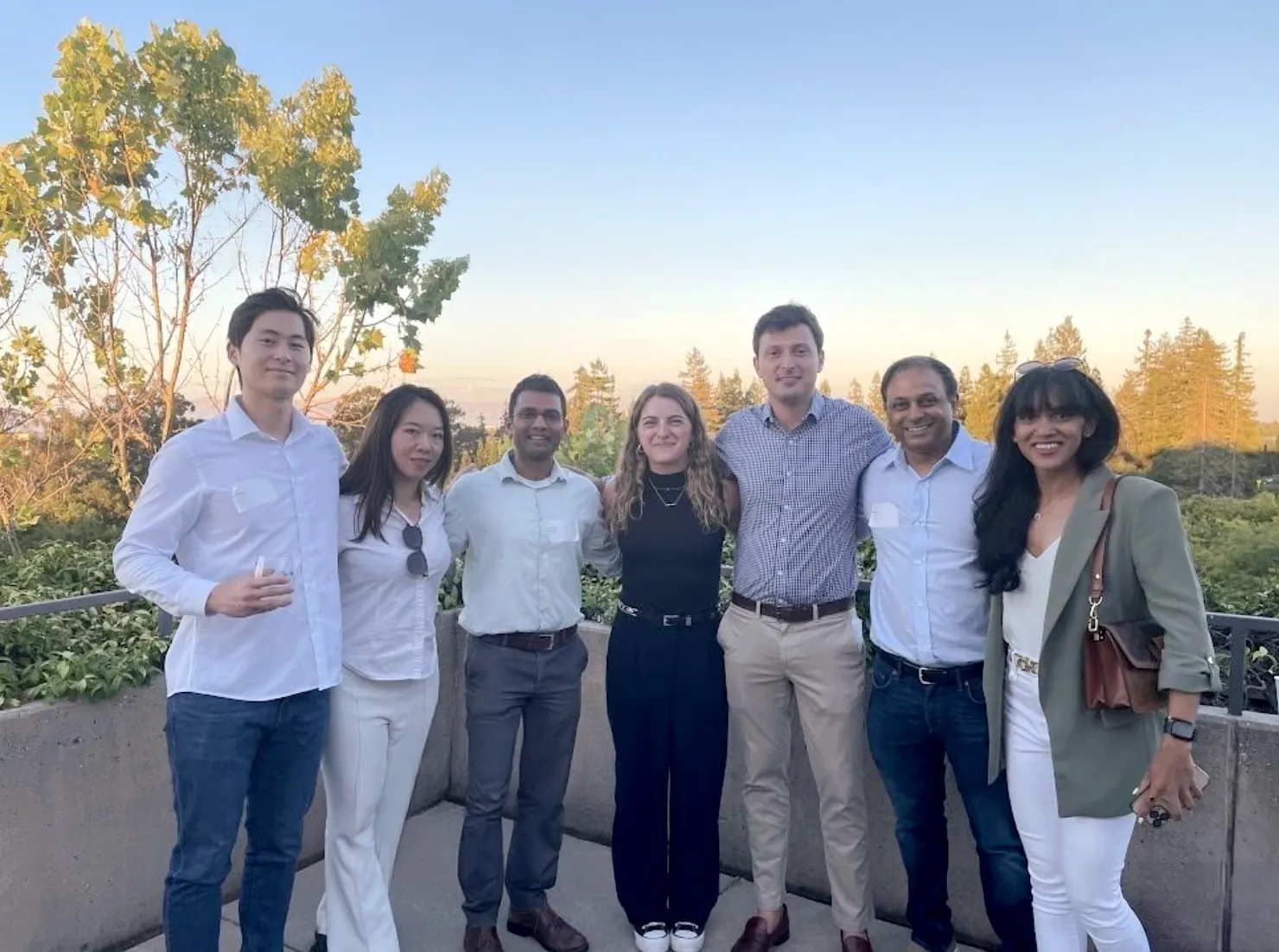
Garg tends toward digital health; Rao concentrates on enterprise and automation. The division matters because selling software to a healthcare organization raises different questions from selling it to a development team. An investor who recognizes those differences can ask more useful questions before a founder spends six months answering the wrong ones.
In its original announcement, Tau promised customer and venture investor introductions. That is a specific claim about the job of a seed investor. The company needs evidence that people will buy; it also needs enough money to survive gathering that evidence. Tau put both tasks in its founding proposition.
A check buys a deadline
The amounts have changed. Fund II’s April 2022 announcement described an average $500,000 check. The July 2026 Fund III announcement targeted $500,000-$1 million initially, up from the $250,000 starting point it cited for Fund I. The stated roadmap is companies roughly nine to eighteen months from their next round. These are investment targets, rather than an advertised price list.
Initial amounts cited in Tau’s July 2026 announcement. Fund III is a target range; the striped half shows the range above $500K.
A seed check therefore purchases a period in which something must become demonstrably true. Can a team deliver its product? Will a customer use it? Will another investor finance the next stage? Tau’s separate Opportunity Fund gives it a way to support existing investments and selectively enter later rounds, particularly Series A and B. The first check and the later check serve different moments.
There are two constituencies here. Founders receive capital and help; limited partners supply the funds and seek investment returns. The September 2022 newsletter reported $36 million raised for Fund II at that point and distributions to Fund I investors following three exits. An interim fundraising total measures commitments. A distribution measures money going back. Keeping those ideas separate makes venture capital much easier to understand.
The demo meets the purchasing department
Look at ArmorCode, an early Tau investment. Its founder describes security teams coping with overlapping scanners and manual processes. The product organizes application security work across those scattered signals. Customers, he said in the spotlight, range from midsize businesses to Fortune 500 companies. The commercial problem is coordination, with software security as the setting.
In healthcare, Infinitus automates communication among patients, providers and payors. Founder Ankit Jain credits Tau’s practitioner network with helping the company learn unfamiliar healthcare areas and find talent. That is a useful account of investor support because it names what the network actually did.
“The currency in AI is trust, not capabilities.”
Snehal Fulzele / Uptiq founder
Banking adds another constraint. Uptiq’s Snehal Fulzele describes agents grounded in a financial institution’s products, policies and rules. An underwriting assistant must work within a system somebody can examine. He also credits Tau with relevant introductions and further backing in Uptiq’s Series B. Here the investment thesis meets an actual purchasing requirement: confidence that the tool can operate inside the institution.
When building gets easier, selling gets harder
Garg described a change in emphasis in a January 2026 B&P Forum interview. As tools make software easier to create, distribution becomes more important. Tau still considers team, technology and traction, but traction has gained weight. A persuasive demonstration leaves the question of customer access unanswered. For a founder, that changes which evidence deserves the next slide.
Competition comes from other seed funds, specialist healthcare investors, angels and larger venture firms. Tau’s case rests on sector familiarity and practical assistance. Its advisor roster includes Microsoft chief medical officer David Rhew and Tesla co-founder Marc Tarpenning. Those are individual advisory relationships; the useful test for a founder is whether any introduction leads to relevant feedback, a pilot or a customer.
The firm has continued deploying while raising. Its August 2026 newsletter reported Fund III’s first close. October’s issue disclosed participation in Kairon Health’s $5 million seed led by Flare Capital. The recurring interest remains operational: work that needs to get done inside healthcare and business.
What a founder can borrow
The practical lesson is to start with a workflow and identify its buyer. Show the delay, cost or repeated effort your product removes. Build customer relationships while you still have time to change the product. Treat fundraising as a parallel operating task.
There are limits. Tau’s current strategy emphasizes US-based CEOs and a near-term financing roadmap. By inference, a founder elsewhere, or a project needing years before commercial evidence, may find the fit awkward. Venture backing also assumes the possibility of substantial growth. For the right company, however, the invitation is straightforward: bring a problem whose owner already wishes somebody would fix it.