The customer had fetched a ladder. That was the detail Lak Ananth remembered. A law firm partner had unplugged an old security camera, plugged in a Verkada camera, and discovered that the replacement simply worked. In Ananth’s telling, the installation helped deepen his conviction about the company. Venture capital can involve elaborate forecasts. Here was evidence you could carry up a stepladder.
- N47 backs enterprise technology through a “Product First” investment lens.
- Its work extends into customer discovery, sales, and recruiting.
- The useful question: can enthusiasm become repeatable buying?
Ananth is N47’s global managing partner. The firm, formerly Next47, reads an early product for signs of the person building it: judgment, attention to detail, responsiveness to users. The camera story makes that idea tangible. A customer’s relief reveals something a market-size slide cannot: a particular frustration has actually gone away.
“I grabbed a ladder, unplugged the old camera, plugged in Verkada, and it just worked.”An early Verkada customer, recalled by Lak Ananth
A billion euros, with industrial roots
N47 began inside a much older business. Siemens announced next47 in June 2016, committed €1 billion for its first five years, and launched the unit that October. Ananth’s appointment followed in November. The original name nodded to 1847, Siemens’ founding year. Even a venture firm’s branding can contain an industrial-history lesson.
The capital commitment explains the launch’s scale. It was investment capacity over five years, rather than a valuation or a bill for building the firm. Today, N47 operates across the US, Europe, and Israel, with enterprise applications, infrastructure, and systems organizing its portfolio. Its business is venture investing: capital goes into companies in pursuit of investment returns.

The August 2025 change from Next47 to N47 sharpened the presentation of that approach. The firm said its investment thesis remained the same. Its accompanying essay began with Ratatouille and the distinction between access to tools and the ability to make something people value. A surprisingly reasonable place for a venture-capital argument to start.
The part after the product
There is an awkward question hiding inside “Product First.” What happens when users like something, but the company cannot reliably find the next buyer? N47’s public operating material spends considerable time here. Founders may be doing all the selling, drawing on former colleagues and friendly design partners. Those relationships provide a beginning. They do not automatically produce a sales organization.
N47 says it sometimes starts customer introductions before signing an investment. With Nominal and Patlytics, it describes sourcing meetings that tested whether selling could extend beyond the founders; one prospect became a customer. That arrangement gives both sides something concrete to examine. Does the buyer understand the problem? Does the product survive questions from a stranger?
After investment, the firm describes 90- and 180-day pipeline goals, shared CRM workflows, and help building commercial teams. Its stated initial involvement typically lasts 12 to 18 months. This is the substance behind the promise of support: customer selection, introductions, follow-through, and recruiting. A founder evaluating investors can ask who will do those jobs and how progress will be recorded.
Forty-seven doors, five customers
Encord provides a useful example. N47 led the AI data platform’s $30 million Series B in 2024. Encord’s tools help teams prepare and improve the data used by vision and multimodal models. The commercial question was where that capability would matter most. N47 identified aerospace and geospatial intelligence as promising places to look.
Its February 2026 partnership account reports 47 targeted introductions, seven events, and five new customers, adding $1.5 million in annual contract value. One geospatial buyer took six months to complete its evaluation. The sequence matters: a sector hypothesis became conversations, technical credibility, and eventually a purchase. Enthusiasm had to endure an enterprise buying process.
Reported February 2026. Contract value measures a different thing from pipeline or cash collected.
Other cases expose different bottlenecks. N47 says Skydio needed a larger pipeline after successful proofs of concept. Tractian needed a US inside-sales function, including its first hires and onboarding materials. These were distribution and organization problems around working products. For a builder, that diagnosis determines whether the next useful move is another feature, a buyer conversation, or a commercial hire.
AI with a job to do
The portfolio makes N47’s enterprise focus easy to see. BuildOps addresses commercial contracting workflows. VAST Data builds data infrastructure. Verkada works in physical security. Skydio makes autonomous drones, while Tractian tackles equipment maintenance. The shared interest is technology with an identifiable place in somebody’s working day.
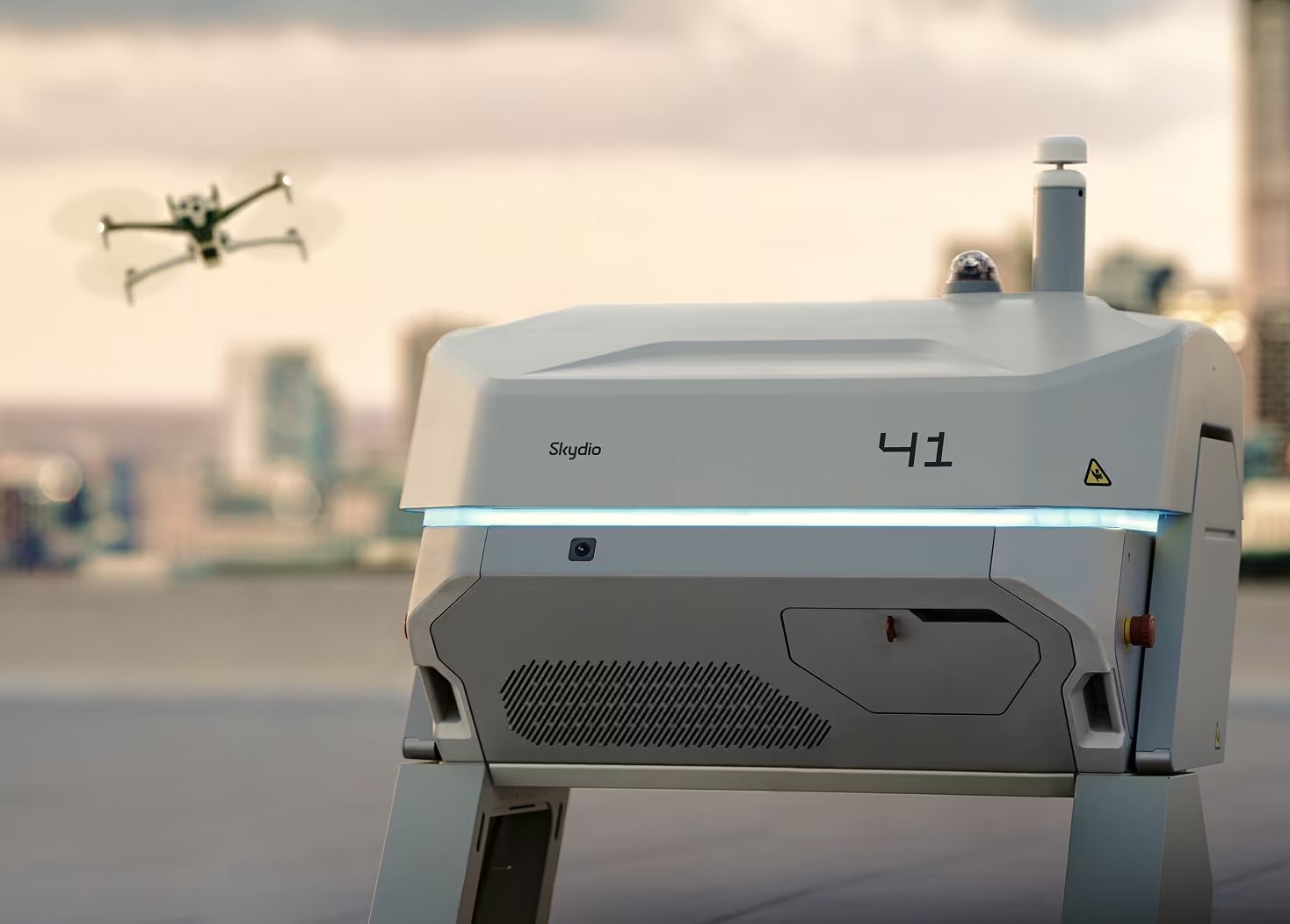
In April 2026, Ananth wrote that more than 20% of the portfolio consisted of Physical AI companies. His framework joins sensing, reasoning, and action: observe the environment, interpret it, change an outcome. A maintenance alert or a drone’s adjustment gives the abstraction a job description. Deployment also produces messy real-world data that a polished demonstration cannot supply.
The recent investments reach further. In September 2026, N47 announced leading Euno’s $23 million Series A for enterprise AI context. In October, it announced leading Longeye’s $20 million Series A for investigative software. Those are whole-round figures. They show the scope of the bets without telling us N47’s individual check size.
Borrow the discipline
The practical lesson is available without an investment. Pick a customer group. Put the product in front of buyers outside the friendly circle. Record what they question, what they use, and what they purchase. Build the selling process around that evidence. As an operating inference, this depends on having something usable and access to relevant buyers; introductions cannot manufacture demand. The ladder story works because somebody had already built a camera worth installing.