Matthew Cowan had noticed an awkward arrangement. Service professionals carried smartphones capable of finding a movie, checking a score and delivering the news. When work began, out came the clipboard. The useful computer went back into the pocket. Silicon Valley had managed to equip the customer and leave the business owner holding a piece of metal.
For Cowan, that mismatch became the opening for Breezeworks. He and Adam Block wanted small service businesses to manage appointments, customer communication and payments on the devices they already understood. Their early target included operators with several appointments a week. A phone could accompany those operators from one job to the next; a desk could not.
The idea also had an unromantic engineering requirement: the software needed to keep working without reception. A customer’s basement was a perfectly ordinary place for a service professional to end up. Any product that forgot the day’s schedule there would have failed a basic test of usefulness, however handsome it looked upstairs.
This is a good place to meet Cowan. His career contains venture funds, corporate investing and a long list of companies. Yet the phone and the clipboard give those credentials a setting. They put the question of technological progress at the beginning of an actual working day, where the answer has to be useful before anyone gets paid.
A co-founder from first grade
Cowan and Block’s partnership had an unusually long introduction. They met on their first day of first grade. By high school, their interest in technology was already turning into conversations about possible businesses. When they spoke about Breezeworks in 2015, the friendship stretched back more than 37 years. The company had a shorter history than the people building it.
There is a certain economy in choosing a co-founder you have known since childhood. The introductory coffee has been taken care of. That detail does not prove anything about how the pair made decisions, but it changes the scale of the origin story: Breezeworks emerged from a relationship that had survived well beyond school.
In November 2014, Breezeworks announced a $5 million financing led by the newly formed Obvious Ventures. Its announcement described the round as the firm’s first led investment. The roster included Marc Benioff, Max Levchin, Peter Thiel, James Murdoch, Jeff Skoll and David Sacks. Cowan and Block had brought a small-business proposition into a rather well-connected room.
The same announcement introduced version 2.0 of the smartphone business manager for iPhone and Android. That pairing matters. The financing and the product arrived together, placing the practical promise beside the names backing it. A repair business still needed to get through Tuesday. A famous investor could finance the software; the software had to justify its own place in the pocket.
The office followed the truck
Breezeworks’ development extended beyond the phone. In July 2015, the company announced a web client with dispatch and QuickBooks integration. It offered business operators a wider view of team activity and business details. The product was making room for the people coordinating work as well as those arriving at the customer’s door.
Cowan’s explanation concentrated on managing personnel and materials efficiently. For a service company, dispatch is a bridge between an appointment promised and an appointment kept. Billing is another bridge, between a completed job and money received. Joining these tasks gives the office and the field a shared account of what is happening.
Reliability received its own attention. Breezeworks worked with Applause and its uTest testing community to test the application across devices and real situations. An Applause case study described a company with fewer than 50 employees using outside testers to widen its coverage. Cowan called the relationship an extension of the internal testing team.
There is an appealing lack of glamour in that last detail. A business application has to survive the phone its customer happens to own. It must deal with the circumstances its engineers did not conveniently arrange. Cowan’s support for testing in the field fits the original promise: work travels, and software sold to working people has to travel with it.
Before the clipboard, the internet
Cowan had spent years investing in technology before he became Breezeworks’ CEO. At Intel, his work included investments in companies such as CNET, Geocities and iVillage. Those names belong to an earlier internet, when finding information, publishing online and gathering an audience were becoming businesses in their own right.
He later became the founding general partner of Bowman Capital’s venture group. His investment history there included Arrowpoint Communications, Atheros, ONI Systems and SupportSoft. He also co-founded Bridgescale Partners with Rob Chaplinsky. Bridgescale’s investments included Proofpoint and Jasper, companies serving very different parts of the technology economy.
That path gave him experience on several sides of a company’s growth. Corporate investing places a young company alongside an established business. Venture investing asks what that company might become. Running a startup makes the questions immediate: who will build the product, who will use it, and how will the company pay for both?
By March 2018, his move to Next47 was being reported publicly. Today, the firm, branded N47, lists him as a general partner. His biography identifies applications and infrastructure as his sectors, with Silicon Valley and Israel as his locations. Breezeworks remains part of his background as an operator and co-founder; his current work is investing.
One touch, then get on with it
Cowan credits Andy Grove with a principle he learned at Intel: “touch everything once.” His interest is in systems that complete a task with as little unnecessary handling as possible. It is a modest-sounding ambition. Anyone who has entered the same information twice will recognize how much room it leaves for improvement.
His interest in BuildOps connects that principle to his Breezeworks experience. He recognized another company bringing automation to service workflows, this time in the commercial market. His account emphasizes both the overlooked customer and the way the product fits everyday operations. The attraction lies in how the software is delivered as well as what it does.
The continuity is easy to see. A business owner does not experience scheduling, dispatch and invoicing as separate investment categories. Those tasks occur in sequence, with consequences for one another. Breezeworks and BuildOps both address the operations of service businesses. Their connection in Cowan’s career gives the original smartphone idea a place in a longer account of bringing software into everyday work.
For founders, he describes a combination of determination, an ambitious view of the future and a practical plan for execution. That combination suits the product problem he keeps revisiting. Imagination can propose a different working day. Implementation has to make the proposed day possible on the equipment, budget and time available.
“touch everything once”Matthew Cowan, recalling a principle learned from Andy Grove
The investor has homework, too
Cowan’s fundraising advice makes preparation a quiet activity. In a December 2024 essay, he urged founders to have their materials ready before an investor becomes serious. He also recommended choosing investors carefully, releasing information in stages and speaking with founders who have already worked with a prospective partner.
The last recommendation gives the founder an active role in the interview. Capital arrives with a person attached. Learning how that person behaves is part of choosing the relationship. The advice recalls Breezeworks’ long partnership in one limited sense: familiarity matters, although a venture investor is unlikely to have been sitting beside you in first grade.
His writing on culture in March 2025 took a similarly practical approach. Founders, he argued, must turn values into hiring decisions, daily behavior and repeatable ways of working. An organization cannot depend forever on everyone knowing the founder well enough to guess what the founder would do. Growth makes the unstated rule expensive.
Later that year, Cowan co-authored advice on looking beyond personal networks for leadership hires. In a separate essay with Jason Eubanks, he argued for a first sales leader who could sell personally while building a team. The recurring concern is fit for the work at hand. A distinguished résumé still needs to be useful on Monday morning.
New tools, familiar questions
In July 2025, Cowan wrote about small engineering teams using AI throughout development. He presented this as a change in how software companies operate, with consequences for established vendors and new entrants. His argument placed lasting differentiation in data, product experience and useful integration into a customer’s work. The code alone was becoming a less comfortable place to hide.
In July 2026, he turned to revenue reporting in businesses that charge for consumption. He warned that founders and investors could misunderstand one another even when neither intended to mislead. His prescription was to define metrics clearly and apply those definitions consistently. An unfamiliar business model needs a shared vocabulary before its numbers become persuasive.
The following month, his essay on falling AI costs asked product companies to examine what customers would keep paying for as the underlying computation became cheaper. He framed durable customer relationships, data and workflow integration as possible answers. These are his arguments about the market’s direction, rather than guarantees about how any company will fare.
Put beside Breezeworks, the subjects form a recognizable line of inquiry. A device can become widely available while useful work remains untouched. A development tool can become cheaper while the customer’s needs remain demanding. Access to technology creates an opportunity; deciding exactly where to apply it is still a human job.
The conversation continues
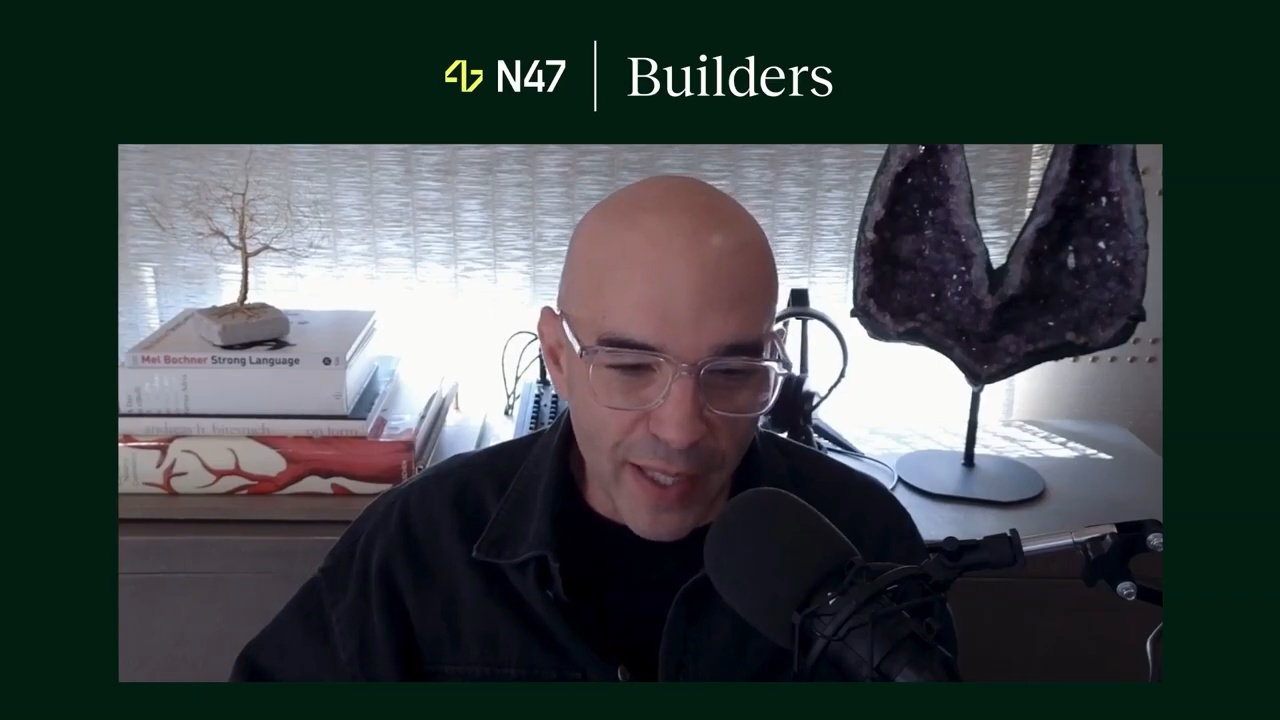
On September 23, 2026, Cowan appeared as the host of an N47 Builders conversation with Paul Lee, co-founder and CEO of Patlytics. Lee had moved from venture capital into building software for patent work. Their discussion covered earning customer trust, accuracy and the experience of crossing from investing into operating.
The connection to Cowan’s own career is plain without making the two stories identical. He has occupied both chairs. The investor can ask whether a product will grow; the operator has to live with the answer, one customer at a time. An interview between people who have made that move has a useful subject before the first question.
Cowan’s public work now ranges from service software to AI economics. The scale of the questions has changed, but the original image still carries some weight: a capable phone disappearing into a pocket while a clipboard comes out. There was work waiting to be done. For Cowan, noticing where technology stopped was the beginning of a company.