Person / Investor / Founder
Alfred & Co.
The A in BEA. The first check at Race. The operator who learned to write smaller numbers on bigger bets.
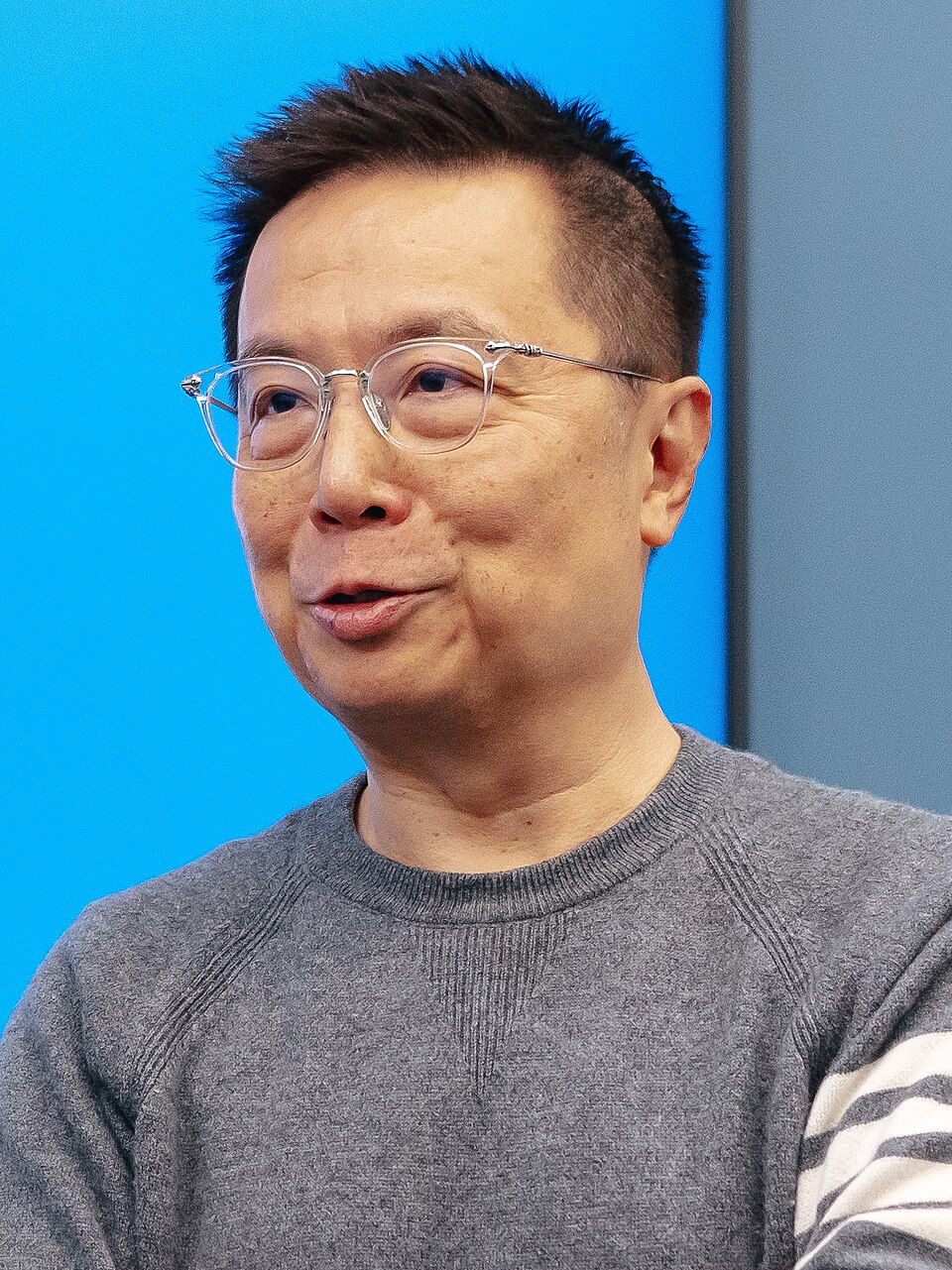
Alfred, mid-sentence.
The A in BEA. The first check at Race. The operator who learned to write smaller numbers on bigger bets.
He runs a fund whose entire thesis fits on a napkin: infrastructure. Not apps. Not memes. The plumbing under the apps and the memes.
Race Capital is the firm. San Francisco is the address. Alfred Chuang is the general partner who picks up the phone. The thesis is unfashionably narrow for a 2026 venture market that keeps stretching itself thin: back the founders building the foundational infrastructure of AI, data, and Web3, and back them early - sometimes before they have a logo, often before they have a deck.
The firm has done this twice now. Fund I came together quietly in 2020. Fund II closed at $181 million with ten investments already in the ground. The early checks were in companies that became reference points: first investors in Solana, in Databricks, in Slack, in Binance, in FTX - the latter a name Alfred and his team will discuss frankly rather than tuck away. The point of an infrastructure thesis is that you do not always know which protocols win. You know which layers matter.
What makes Chuang readable in a category of identical LinkedIn bios is that he ran one of these layers himself. From scratch. To a billion. To a sale. The receipts predate the fund by a quarter century.
BEA Systems, founded January 1995. Three co-founders: Bill Coleman, Ed Scott, Alfred Chuang. The B, the E, and the A. By 2001 he was CEO. By 2002 he was Chairman. By 2008 he was negotiating an $8.6 billion sale to Oracle - then the fastest enterprise technology company in history to reach $1 billion in annual revenue, with $1.65 billion at the time the deal closed. That is the line that does most of the introducing for him at conferences. Andreessen Horowitz coined a different one: "the Silicon Valley CEO's CEO." The line stuck because operators kept calling him.
The reason operators kept calling is the second reason Chuang is worth reading. Five C-suite titles at the same company - Chairman, CEO, President, CTO, EVP of Worldwide Operations - is not a resume flex. It is a confession that he had to learn how each seat felt before he could trust anyone else to sit in it. Founders making the same trip find that useful.
He grew up in Hong Kong and went to Wah Yan College - the Roman Catholic boys' school whose alumni list reads like a chronicle of mid-century Hong Kong civic life. He left for California for university. The undergraduate computer science degree came from the University of San Francisco. The master's came from UC Davis, where his thesis carried a title only a database person could love: "Table-Tabular Data Objects and their Use in Table Editing." Distributed data management. The thing nobody clapped for in 1986 became the thing every AI infrastructure pitch deck reaches for in 2026.
Sun Microsystems hired him after Davis. Nine years there. Software product development, network infrastructure, systems architecture, and a side mission to expand Sun's business across the Pacific Rim - he founded and ran the computer resources center for Sun Intercontinental Operations and helped stand up subsidiaries throughout Asia. By the time he left in 1994, he was Corporate Director and Chief Scientist of Sun Integration Services. That is the part of the resume that explains why he does not get nervous about hardware-adjacent bets like inference chips.
Then 1995 happened. Coleman, Scott, and Chuang. BEA. Middleware was about to eat the enterprise. They knew it before the analysts did.
The acquisition by Oracle in April 2008 was not gentle. Larry Ellison's first bid came hostile. The eventual price made it friendly. The wire transfer made it final. Chuang spent the months after the close doing what founders rarely do gracefully: nothing in particular. The not-doing did not last.
Magnet Systems came next. A mobile application server company, founded the same year he left Oracle, with $12.6M Series A from Andreessen Horowitz in 2011 and $47M Series B in 2012 with HTC joining the round. Magnet is also where he began angel investing in earnest. The list grew. Over a decade later it crossed a hundred companies.
Race Capital arrived in 2020 with a clean line: invest in infrastructure, both sides of the Web2/Web3 line, write a first check, stay close, do not pretend to know more than the founder. The fund closed Fund I at around $125 million per The Information's reporting, then went again with $181 million for Fund II.
Stylized allocation based on Race Capital's stated infrastructure focus across Web2 + Web3
"The Silicon Valley CEO's CEO."- Andreessen Horowitz, on Alfred Chuang
Race Capital backed Solana early. By 2022 Chuang was on CNBC arguing the thesis publicly while most of crypto Twitter was selling.
Early team members were among the first backers of Databricks, the lakehouse layer that ended up sitting underneath most modern AI work.
The collaboration layer for distributed teams. A category-defining bet at the messaging layer of the stack.
An early investment in the exchange that became one of the largest in the world.
An early backer. Race talks about it openly. The point of an infrastructure thesis is admitting the protocols you cannot fully audit.
From a handful of angel checks in 2008 to a portfolio that crossed three figures by the time Race Capital opened its doors.
BEA Systems is named after the founders' first initials: Bill Coleman, Ed Scott, Alfred Chuang. He literally signed his initial onto the company.
Chairman. CEO. President. CTO. EVP of Worldwide Operations. All at BEA. All him.
His UC Davis master's thesis is on distributed data management. The same field his fund now bets on, four decades later.
Plus a CIO Magazine 20/20 Vision Award. Decorations from the era when enterprise software was unfashionable.
He sits on the UC Davis Board of Advisors. The school that gave him the master's gets the board seat back.
Andreessen Horowitz's nickname for him. Operator-respect, captured in a single line.
The current move is patient. Race Capital is small by design. Fund II at $181 million in a year when generalist funds were closing $5-10 billion vehicles is a statement: there is a size below which an investor can still pick up the phone, fly to the founder, and stay close. Chuang prefers that size.
The pitch he makes to founders has not really changed since 2008. I built one of these. I sold one of these. I made every mistake before you got here. Use me.
The pitch he makes to LPs is shorter: infrastructure compounds, applications churn, our network is forty years deep, and we wrote the first check into companies you already buy from.
In the spring of 2022 he traveled to Dubai to headline "In Conversation with Alfred Chuang" at the Dubai Future Foundation, the kind of single-name format usually reserved for heads of state and a few founders. He talked about navigating downturns. The downturn had not really begun yet. By summer it had.
Race Capital's most recent disclosures emphasize AI infrastructure: workload frameworks, inference chips, AI security gateways, vector databases, AI-enabled enterprise applications. The vocabulary is fresh. The thesis is the same one he wrote out at BEA in 1995 - the boring layer that everything important sits on top of.
You can email him. alfred@race.capital. He still picks up.