Before the treasuries, there were textbooks. Tarun Gupta was studying at Chandigarh University when he noticed students travelling into the city to buy secondhand books and going home without them. The books existed. So did the buyers. Bringing the two together was proving unnecessarily difficult. In 2015, he and Rajat Dhiman started Vevsa, a marketplace with a rather tangible promise: help someone get the book they needed at a price they could afford.
The early operation involved research among local vendors, a small network of fifteen suppliers and orders taken by phone and WhatsApp. An Android app followed in 2017. By July, it had more than 2,000 users. There is something pleasingly unglamorous about this beginning. Before Gupta worked on programmable money, he worked on the problem of finding a used textbook. A book with somebody else’s notes in it still has a job to do.
An engineer follows the friction
His next market was less familiar to most of his former customers. Around 2017, Gupta began helping exchanges run Bitcoin nodes. From there he worked on Lightning Network tooling and the problem of recovering lost wallet credentials. The sequence matters. These were questions about making a system usable: how developers connect to it, how people keep control of an account, how they recover when something goes wrong.
His public code leaves a small, concrete record of that period. Bitcoin-Lightning-Nodejs implements LND’s gRPC API references in Node.js. Its examples concern the ordinary business of working with a Lightning node, including checking balances and sending payments. Alongside the founder biography sits a developer’s repository, with the less theatrical concerns that make software operate. The name is admirably resistant to the temptation to sound like a lifestyle brand.
CoinSafe tackled recovery through trusted devices and guardians. Gupta eventually open-sourced the protocol after finding fundraising difficult during a crypto bear market. He then worked on transaction infrastructure at Biconomy, including the machinery that lets an application handle network fees for its users. Each project asked for a different technical answer. All dealt with the gap between what a blockchain permits and what someone can comfortably do with it.
The business hidden inside payday
At Biconomy, another problem arrived once a month. Employees were paid in crypto, and the company had to collect wallet addresses and arrange the payments. Gupta saw room for a simpler batch-payment experience. A hackathon project became part of the road to Parcel, where he was co-founder and COO. After differing views about the product’s future, the founders separated. Coinshift’s first version launched in June 2021.
The early Coinshift, also known as MultiSafe before its rebrand, served a particular sort of customer: an organization with digital assets and actual bills to pay. Grants, contributors and operating expenses require more than the ability to transfer tokens. Somebody has to prepare the payment, somebody has to approve it, and somebody will later ask what it was for. A treasury can be decentralized and still need its paperwork.
In September 2021, Coinshift announced a $2.5 million seed round. Its investors included Sequoia Capital India, Weekend Fund, ConsenSys Mesh and Gnosis. Gupta’s ambition already extended beyond sending money: he discussed cash management and asset allocation. The eventual move toward assets was therefore present in the early plan, although the route would involve more turns than a funding announcement could accommodate.
“The context of the transaction always stays where the payment has been done.”
Tarun Gupta
That observation explains much of the original product. A blockchain transaction records movement. A company needs meaning: the recipient, the expense category, the approval and the reason. In his description, Coinshift tried to capture that information where payment happened. The accounting work becomes harder when the explanation lives somewhere else. Finance teams have enough mysteries without being asked to investigate their own spending.
September 2021
May 2022
by May 2022
Historical company figures. Funding and payments are different measures; these figures do not describe Gupta’s personal wealth.
More wallets, one organization
In May 2022, Coinshift announced its $15 million Series A, led by Tiger Global. The company reported more than 1,000 Safes, $1.3 billion in assets and $80 million in payouts on its platform. It named customers including Consensys, Messari, Uniswap, Balancer and Biconomy. These were figures for the platform at that time, rather than a claim about how much money Gupta himself controlled.
The next version addressed a structural irritation. One organization could operate several Safe wallets on several networks, while still needing a single view of its finances. Coinshift’s proposed answer grouped those wallets under one organization, with shared contacts, labels, reporting and access controls. The product roadmap followed the shape of an operating company rather than the shape of a single wallet address.
There is an almost domestic quality to this ambition. Put related things together. Make them understandable. Stop asking people to repeat information. The software had to respect the underlying approvals while making the work around them less cumbersome. For Gupta, the attraction of infrastructure was increasingly tied to the people responsible for operating it, including the accountants and finance teams who would have to explain the result.
- 2015VevsaFind the book
- 2017-18Bitcoin & LightningBuild the tools
- Before CoinshiftCoinSafe & BiconomyRecovery and transactions
- 2021CoinshiftOrganize the treasury
- 2024csUSDL announcedBuild an asset product
- 2026Private creditUnderstand the borrower
A useful product meets an awkward question
A product can make customers’ work easier without producing the economics its maker needs. By 2025, Gupta was describing an accounting effort that had run into this distinction. Coinshift had developed a subledger, but the size of the market and the difficulty of monetization complicated the plan. The team redirected attention toward asset management and csUSDL. Useful software had met an awkward business question: how large could this become?
He also acknowledged the need to understand users more deeply and preserve enough capital to keep working through changing markets. This is a less tidy account of company building than the usual retrospective in which every experiment turns out to have been a necessary step. Gupta’s account leaves room for work that proved difficult to sell and assumptions that needed revisiting. The spreadsheet gets a speaking part.
The csUSDL announcement came in November 2024. Its design brought together Paxos International’s USDL, lending infrastructure from Morpho and market curation from Steakhouse Financial. USDL’s reserves provided one source of income; lending added another. Coinshift described the resulting instrument as a liquid lending token. The ambition was to make a combination of underlying financial activities available through an asset people could hold and use.
Gupta subsequently explained that architecture in public, describing how real-world assets might connect with decentralized lending markets. It was a different job from organizing a payment. Now the product depended on an issuer, reserves, lending markets, collateral and liquidity. Convenience for the holder involved considerable machinery underneath. The more of that machinery an interface hides, the more carefully its builder must understand what remains underneath.
The old dashboard gets a closing date
That machinery also includes decisions made elsewhere. On October 8, 2025, Paxos announced that it would wind down USDL and prioritize other initiatives, including USDG. Its timetable ended new minting that day and set December 8 for the end of daily rebasing. The underlying stablecoin was a partner’s product, with a future that Coinshift could not decide on its own.
Coinshift’s Business login page later carried its own deadline: March 31, 2026. Users were asked to export their data. A closing date makes the change of direction unusually visible. The early platform’s work remains part of Gupta’s record, but it belongs to an earlier chapter. By October 2026, Coinshift’s main website was presenting iUSPC, with institutional credit yield at the center of the proposition.
This leaves a biography with several kinds of ending. A recovery project became open-source code. A co-founder partnership ended in separation. A treasury application received a sunset notice. None requires an invented moment of revelation to make the story readable. The decisions themselves are revealing enough, especially when placed beside the ambitions that preceded them. A founder’s career includes the things he stops maintaining.
Show him the loan book
In October 2026, Gupta was discussing the meeting point between stablecoin holders seeking returns and businesses seeking credit. He raised the possibility of financing AI and robotics infrastructure through stablecoin capital. Those are aspirations. His account of how to evaluate such activity was more immediate: understand the platform, the curator, the issuer and the underlying loans. He emphasized the danger of being unable to see enough detail to estimate losses.
“The upside is capped.”
Tarun Gupta, on credit
It is a compact observation with a great deal attached. A lender needs to understand the downside as well as the offered return. In Gupta’s current work, the questions concern what the money finances, who manages it and how transparent the arrangement is. The vocabulary has moved a considerable distance from textbooks. The practical demand for an intelligible transaction has travelled with him.
Gupta has described his preference for positive-sum outcomes, where success extends to employees and other stakeholders. His work has moved through markets where the interests of several participants must meet: book vendors and students, developers and users, finance teams and signers, capital providers and borrowers. The connections are an editorial way of reading the career, rather than a claim that he planned every chapter from the beginning.
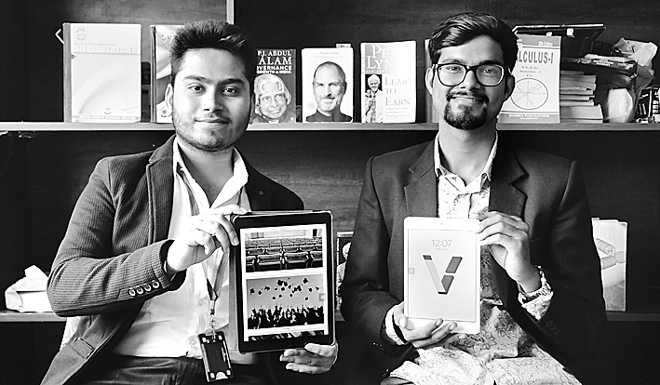
The book-marketplace photograph catches him beside Dhiman, holding a tablet in front of shelves of books. There is no need to imagine what he was thinking. The visible proposition is enough: here is something people need, and here is a way to reach it. His latest proposition involves credit rather than books. It brings harder questions about trust, obligations and loss. Gupta’s next chapter will be judged by how well those questions are answered.
Keep following the questions
More from Gupta and the conversations around his work.
- Coinshift’s current product ↗
- Tarun Gupta on LinkedIn ↗ · X ↗ · GitHub ↗ · Medium ↗
- The Vevsa chapter: First read for a second treat ↗
- The early treasury story: a 2023 conversation ↗
- The accounting decision and csUSDL: a 2025 conversation ↗
- Watch: Around The Coin, episode 559 ↗
- Watch: Gupta on private credit, October 2026 ↗
- The 2022 funding announcement ↗ · The USDL wind-down notice ↗