The dating site had a reliable audience: Taro Fukuyama’s friends and family. Unfortunately, they needed reminding to visit. For a founder, this is an awkward customer-retention strategy. People who love you will do many things. Repeatedly use your dating website, unprompted, may fall outside the agreement.
In January 2012, Fukuyama and his team were inside Y Combinator, with a presentation to investors approaching and an idea that was going nowhere. Admission had given them an opportunity. It had supplied no exemption from the ordinary requirement that somebody want the product. They changed direction seven times in their first month.
That is the useful place to begin his story. Before Fond became an employee rewards and recognition business, before its acquisition, before Fukuyama became an investor himself, he had to separate two things he had carried to America together: the determination to build a company and his attachment to the company’s first idea.
“Everybody who is on the site is either my friend or family.”
Taro Fukuyama, recalling the dating site
An American ambition, a borrowed car
Fukuyama was born in Tokyo in 1987 and studied law at Keio University. He had considered becoming a lawyer. The attraction of the internet was partly its reach: software could serve people on a scale that one professional, helping one client at a time, could not. By his university years, that possibility was drawing him toward business.
America already occupied a complicated place in his imagination. He had spent a school year in St. Louis, Missouri, where being Japanese made him the target of jokes about samurai and Japanese technology. The experience left him wanting to return and make something of himself. Ichiro Suzuki offered a more welcome picture of what a Japanese person could accomplish there.
He worked for an IT venture in Singapore while still at university, then pursued his own startup with Sunny Tsang. In 2011, he went to the United States. The destination was deliberate; the arrangements were less polished. Reading about Silicon Valley had encouraged the expectation that investors would be relatively easy to find. Finding one willing to invest proved another matter.
A borrowed Mini Cooper became temporary accommodation. Ryo Ishizuka, later known as a Mercari co-founder, had let him use it while away. Fukuyama parked at Taco Bell and slept inside. There is an economical ingenuity to the arrangement, though it is difficult to imagine the hospitality industry admiring the competitive threat.
The car makes a memorable scene. The repeated unsuccessful investor meetings explain why it mattered. Keeping expenses low bought him more attempts. The story is less romantic when considered from the driver’s seat: another day to find someone, another conversation to try, and no guarantee that persistence would improve the proposition.

A discount with a business hiding inside
At YC, the dating site’s poor usage became harder to ignore. Demo Day imposed a deadline. Fukuyama remembered Paul Graham explaining the unusual opportunity to present to hundreds of investors. That prospect prompted an unflattering question: was this really the idea they wanted to put in front of all those people?
They kept searching. The clue that eventually held their attention came from something they already had. YC founders could obtain discounts on services such as cloud infrastructure and business-card printing. When Fukuyama showed the offers to founders outside the program, some asked whether they could pay for access.
After trying to coax people back to a dating site, being asked to sell something must have made a refreshing change. Here was interest attached to a practical benefit. The founders settled on the employee-perks idea on February 1, 2012. AnyPerk launched on March 1. The calendar had become considerably more demanding than the original pitch.
- JANSeven pivots
inside YC - 01 FEBThe perks idea
takes hold - 01 MARAnyPerk
launches
2012 chronology recalled by Fukuyama in his interviews.
The premise was approachable. Big technology employers had resources to arrange attractive extras for workers. Smaller companies also wanted to offer useful benefits, without building a negotiating department for the privilege. AnyPerk could assemble access and make it available through software. Discounts on everyday purchases, entertainment and travel gave employers something concrete to offer.
By 2015, the business had attracted customers including Pinterest and Cushman & Wakefield. Revenue had grown fivefold between 2013 and 2014. Such figures belonged to a working business rather than a presentation about one. They also introduced a fresh obligation: a perk has limited value if employees forget it exists. Getting access and getting people to use it were separate jobs.
A four-letter change of emphasis
Fukuyama and Tsang’s argument extended beyond cheaper purchases. They believed employees’ experience of work affected the business employing them. In 2015, AnyPerk was introducing a rewards beta. A company could begin acknowledging particular contributions, adding a more personal transaction to the shared catalog of offers.
The distinction matters. An available discount tells an employee what they can obtain. Recognition tells them that someone noticed what they did. Building software around that second exchange brought the company closer to managers, milestones and the daily habits through which an organization expresses appreciation.
On April 4, 2017, AnyPerk became Fond. The shorter name accompanied expanded recognition features and EngagementIQ, a free six-question survey. Perks remained part of the suite. The company was trying to give employers ways to recognize people and understand their experience over time. A four-letter word had acquired rather a lot of work to do.
“Culture is a multiplier of growth, period.”
Fukuyama, at the 2017 Fond launch
Growing the business also meant narrowing its choices. Fukuyama later described adapting the product and sales approach to particular enterprise customers. Selling to smaller businesses over the phone demanded different people and habits from building relationships with larger organizations. Expansion required attention to precisely whom the company could serve well.
He brought experienced operators into the circle around him, including SaaS figures Jason Lemkin, Tien Tzuo and Nick Mehta. Their usefulness lay in the decisions they had already encountered. As the company changed, the relevant advice changed with it. A founder who had once needed a workable idea now needed help operating a larger software business.
In 2023, Reward Gateway acquired Fond. Later that year, Edenred acquired Reward Gateway. Keeping those two transactions in order helps explain where Fond went: into a broader employee-engagement group, then into Edenred. For Fukuyama, the acquisition also opened a question that running the company had postponed. What should he build his working life around next?
One partner, two countries
The answer became Rice Capital. Established in July 2024, the fund announced a $15 million first vehicle that August, aimed at startups in the United States and Japan. Fukuyama chose to operate as a solo general partner. Sourcing, meetings, scheduling, investment decisions and support would sit with him.
He had spent years learning how to organize a company. Now he was deliberately choosing a structure with fewer people to organize. The arrangement made room for direct work with founders, although a one-person fund also assigns its proprietor every calendar invitation. Seniority is no defense against administrative duties when there is nobody else in the office.
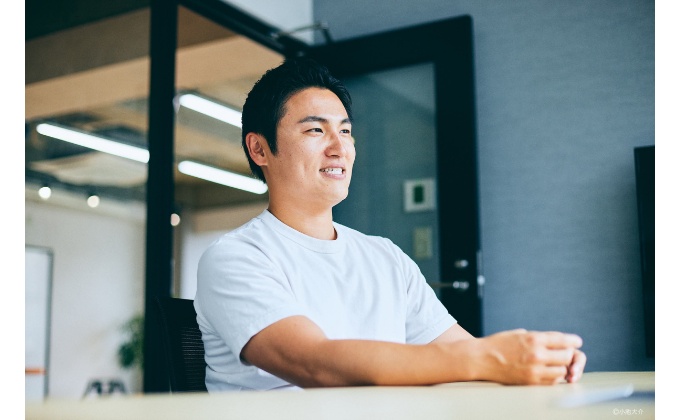
The two countries came with different assumptions. In America, his launch plan emphasized YC alumni. In Japan, it emphasized software businesses from seed through Series B. He subsequently described a broad US portfolio seeking very large outcomes and a more concentrated Japanese approach. Familiarity with both markets did not make them interchangeable.
Nor did his own American experience turn him into an indiscriminate advocate of starting overseas. He has cautioned Japanese founders about the added difficulty of understanding customers, hiring and competing in an unfamiliar language and culture. He also wants to help those determined to make the attempt. Experience has given his enthusiasm conditions.
The investor with another question
By October 2026, Rice Capital’s website described backing more than 200 founders across the two countries. Fukuyama was still closely following YC, discussing its summer batch on an October 1 podcast. His attention now ranged across AI, robotics and other businesses well beyond the employee-perks catalog that had supplied his starting point.
A recent investment in Sotas, a Japanese chemical-industry software company, offers a smaller view of how he works. He said he decided after one meeting and called an existing shareholder immediately afterward to ask about an allocation. The founder’s knowledge, the market and the potential to build outward from Japan had caught his interest.
Once invested, he described an approach that leaves room for the founder to think. Routine meetings need not consume the calendar simply to reassure an investor. The company’s operator understands the business closely. An investor who has watched other companies struggle and succeed can contribute a useful question at a consequential moment.
The trajectory gives that idea some weight. Fukuyama has occupied the chair opposite an adviser, needing to explain why nobody came back, why the company had changed direction again, or what it would do before the deadline. He now has the chance to ask questions with the memory of answering them.
Back in that first YC month, he had kept the ambition and let the dating site go. Seven changes of direction are an untidy beginning for a career. They are also evidence of a founder learning to listen. These days, when another founder sits down with him, that may be the experience he brings to the table.
Follow the conversation
Fukuyama’s writing, public profiles and longer conversations.
Photographs: Nstock; KDDI MUGENLABO Magazine. Research checked October 26, 2026.